Monday, October 19, 2009

1993 Shimano Catalog

Shimano was a fountain of innovation in the 80's and 90's. Reliable indexed shifting in the mid-80's. Dual pivot brakes and STI brake/shifter levers in the early 90's. While their competitors were either putting themselves out of business, or stubbornly clinging to their inferior hardware, Shimano was establishing itself as the #1 player in the components market.

This post will be the first of several focusing on the Shimano 1993 catalog. I'll be starting off with the Dura Ace component pages, followed by some of the cross-line technology sheets, and the tools and small hardware pages. The catalog covers their entire MTB and road range, so if you're interested in the Ultegra 600 or 105 lines, speak up!

"Embracing our world...closer to nature, closer to people." Sorry Shimano, but thats a little creepy. On with the component pics!


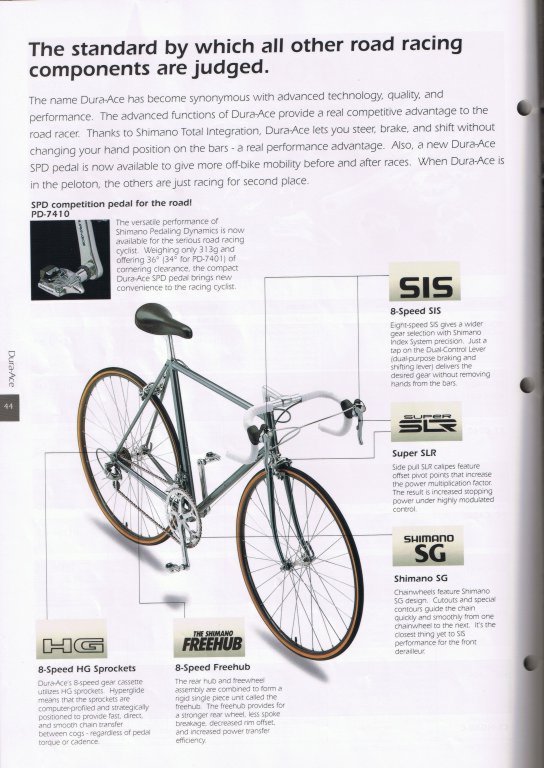
Road components on a bike.


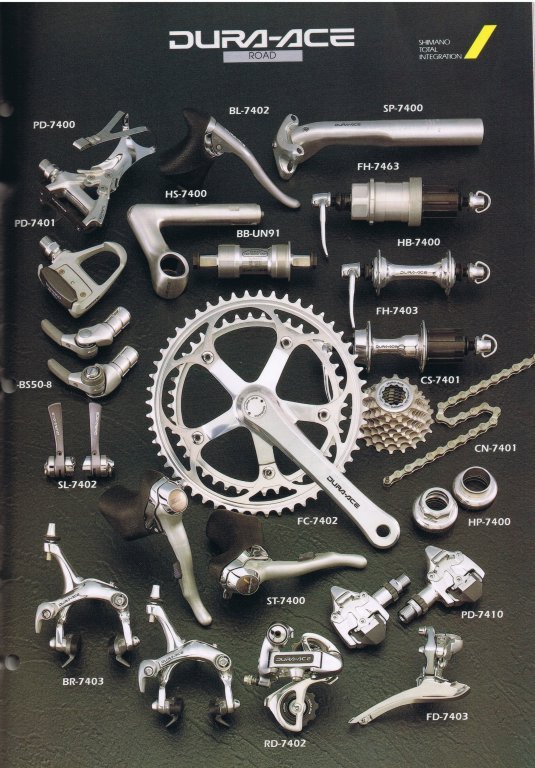
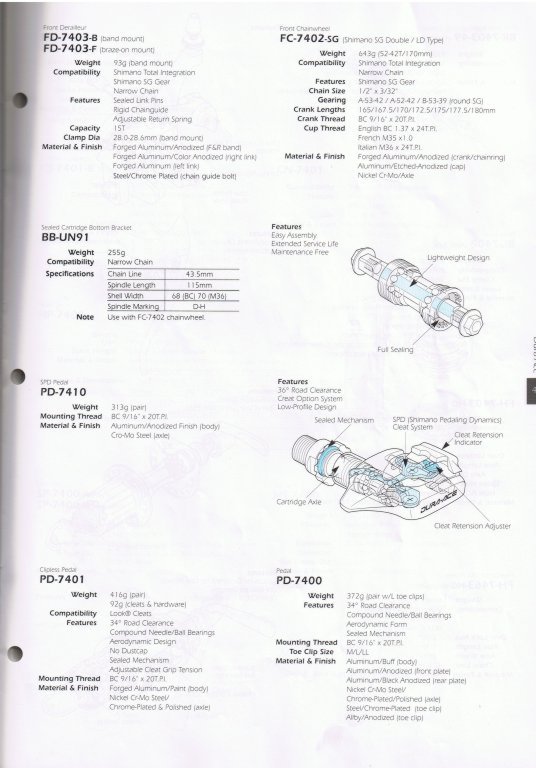
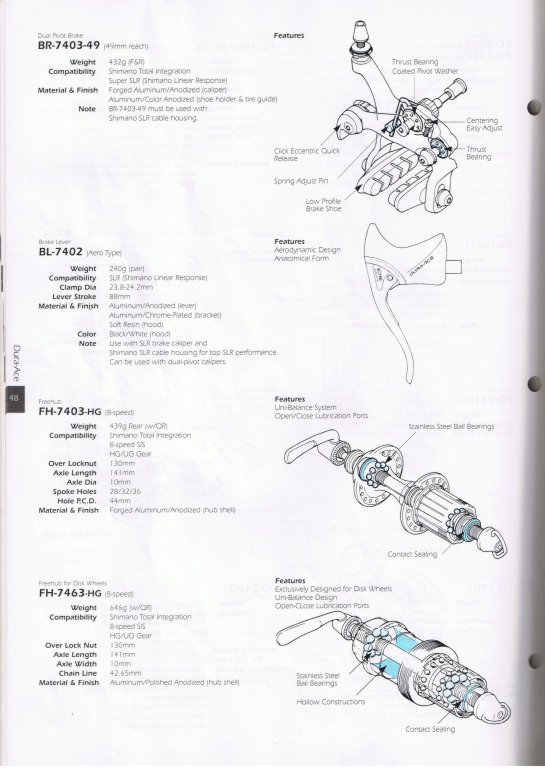
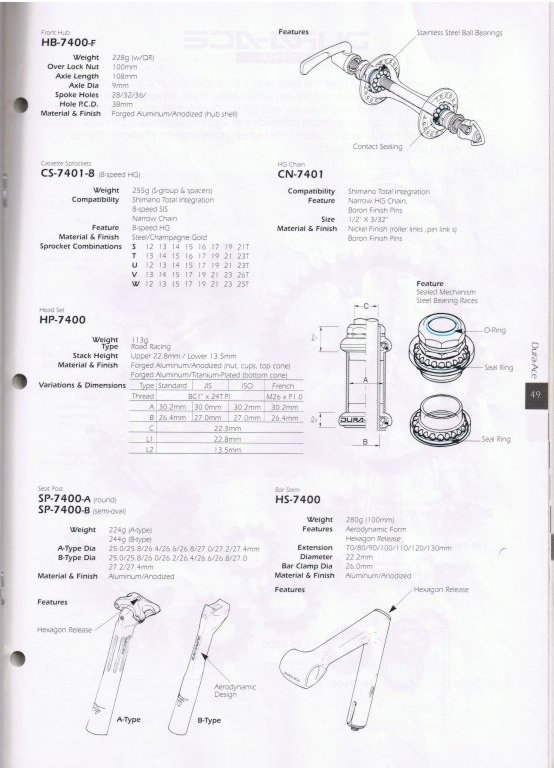
The Shimano Dura Ace road line. This represents the "correct" component combination for 1993 Dura Ace.


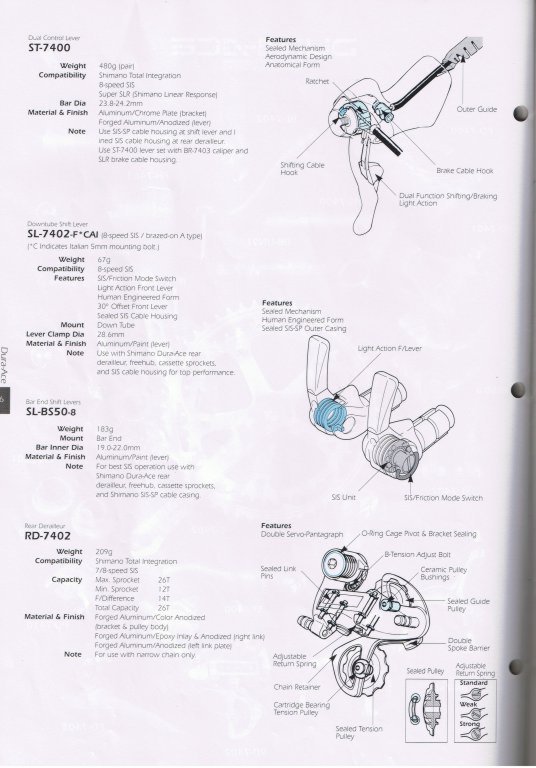
ST-7400 brifter. SL-7402 downtube shifters. SL-BS50 bar end shifters. RD-7402 rear derailleur.


FD-7403 B and F clamp-on and braze-on derailleurs. FC-7402 SG crank. BB-UN91 bottom bracket. PD-7410 SPD pedal. PD-7401 Look pedal. PD-7400 traditional pedal.


BR-7403 dual pivot brake, BL-7402 aero brake lever, FH-7403-R rear cassette hub, FH-7463 disc wheel hub.


HB-7400-F front hub, CS-7401 8s cassette, CN-7401 chain, HP-7400 headset, SP-7400A (round) and SP-7400B (aero) seat posts, HS-7400 stem.


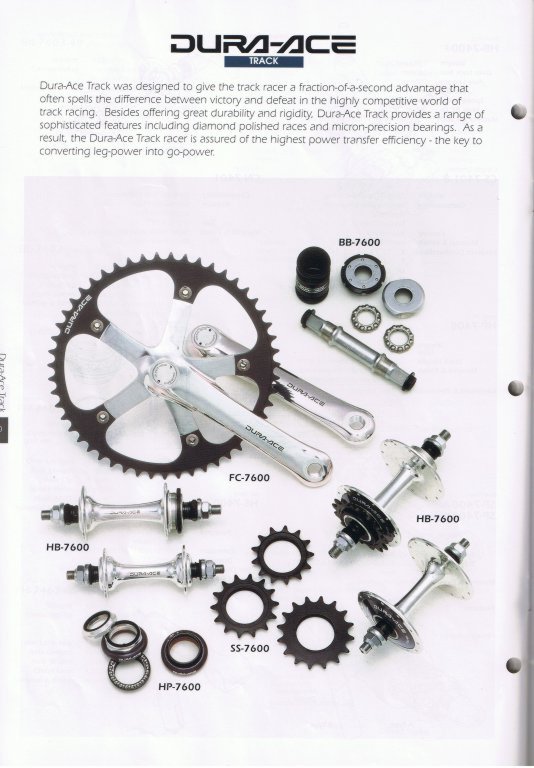
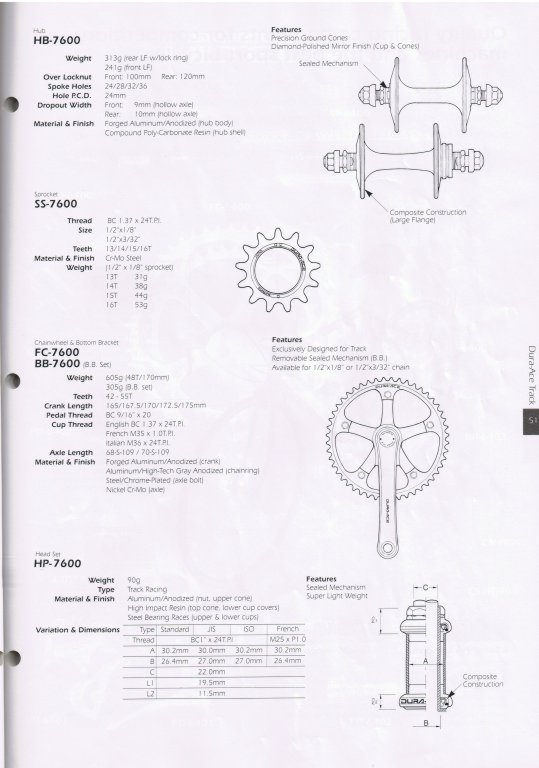
The Shimano Dura Ace track line, 1993


HB-7600 hubs. SS-7600 sprockets. FC-7600 cranks. BB-7600 bottom bracket. HP-7600 headset.

Thursday, October 15, 2009

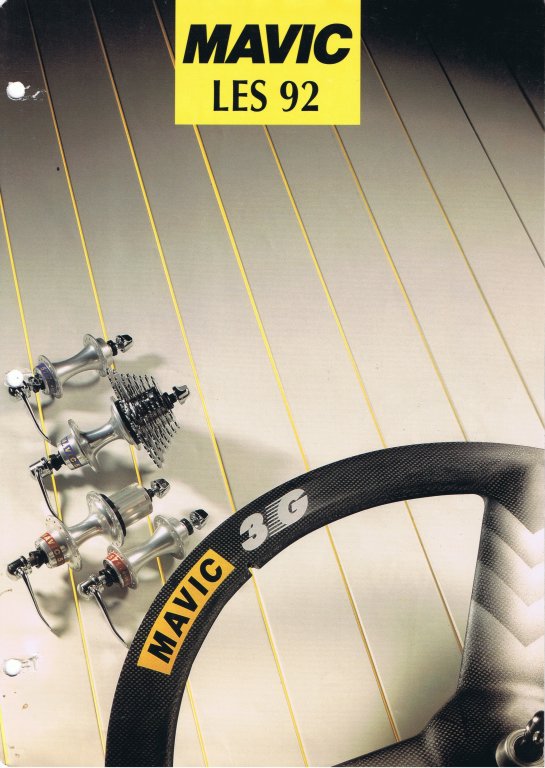
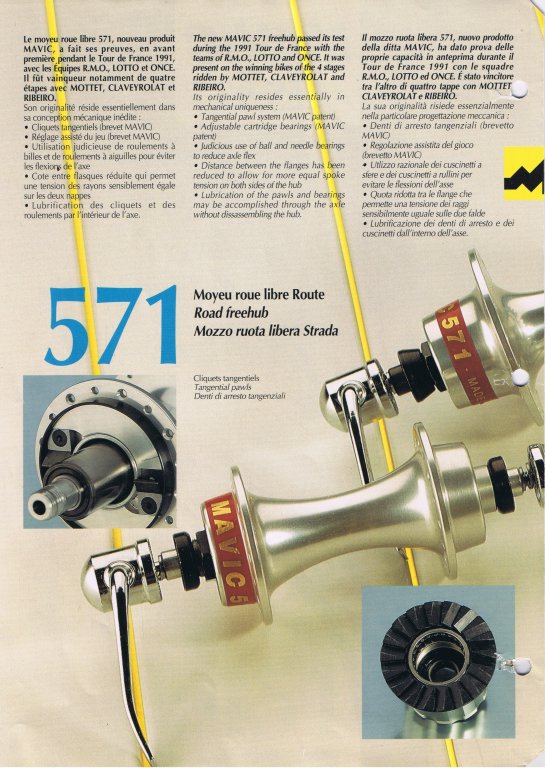
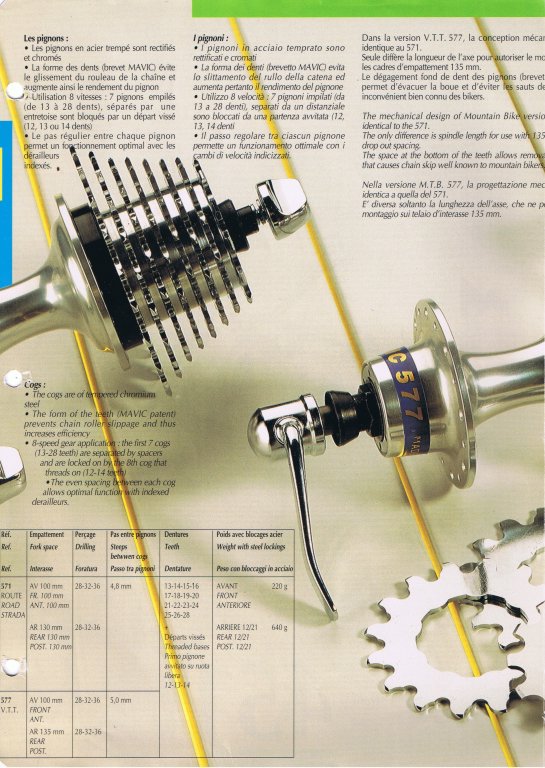
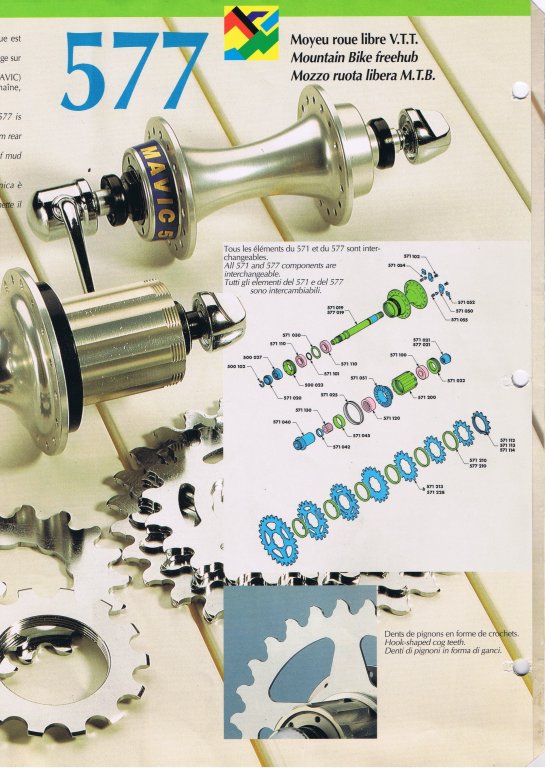
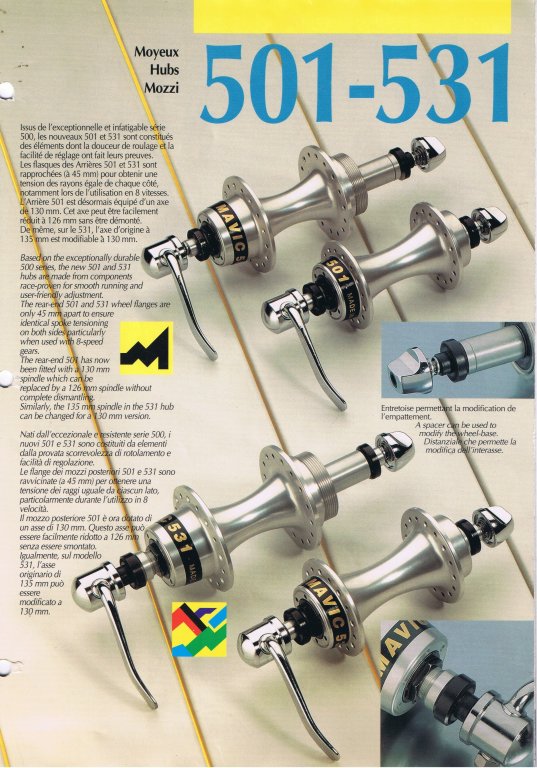
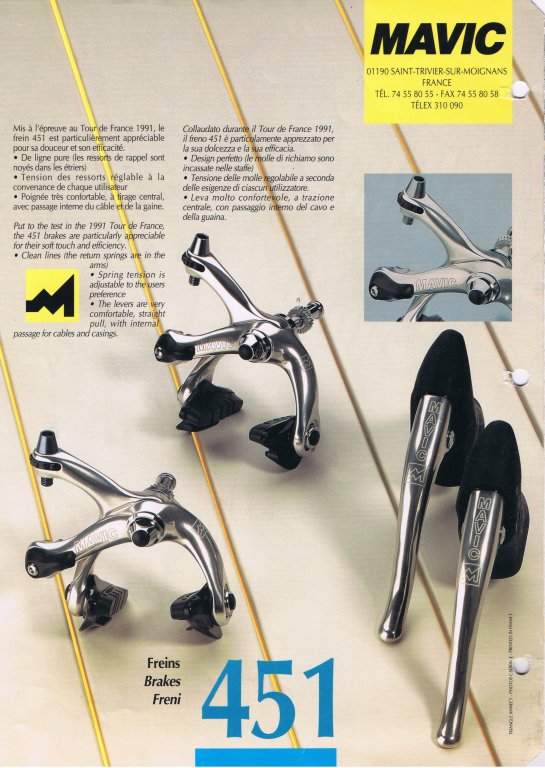
Mavic 1992 Catalog

We're totally going in to catalog mode over here at tearsforgears hq. All courtesy of Harry. He gave me a pile of catalogs to scan. Originals are cool, but scanned means instead of just me getting to pour over all the cool pictures, you can too. And given that I'm pretty sure Harry had these in his bathroom at some point, you don't have to touch them. Just me.

You know the drill. Click any image for the larger version.


Quick comment on the last page. The 451 brake levers have the Mavic 'M' logo underneath the Mavic lettering. The sets I've owned and seen don't have the logo. Has anyone seen a set that does?

Tuesday, July 14, 2009

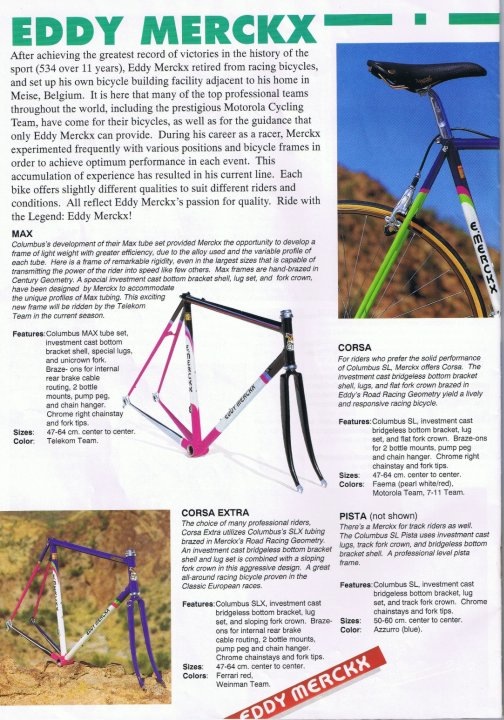
Eddy Merckx 1992 Catalog Pages

My friend Harry broke his leg a few months ago. He's back on the bike now, but for a while he was stuck sitting around a whole lot. With all of the downtime he been dug up all sorts of cool catalogs. Here's another one.


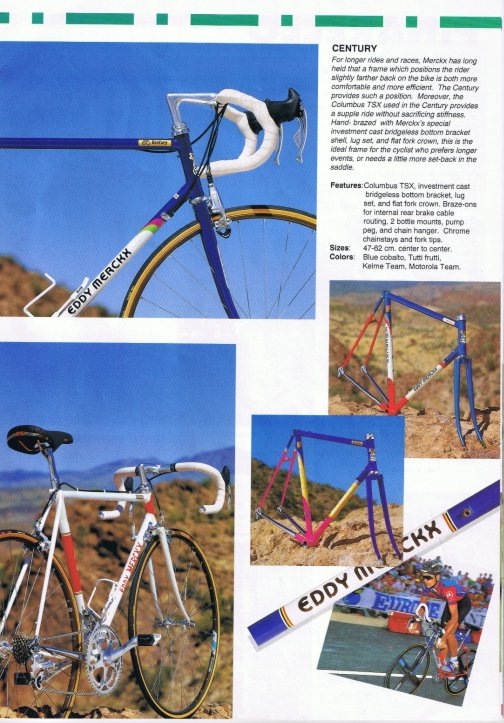
These are the Merckx pages from the Gita Collezione 1992 catalog. Let's see what we have


First on the page is the Merckx Max. Max?! Yep, the Max. The Max was the predecessor to the MX Leader. It used a non-Merckx specific lugset, with a fairly chunky looking fork crown. Fastbacked seat stays. These were only offered in 1992, and were redesigned a bit for 1993, with some slightly different tubing specs, a new fork crown, and its new name - MX Leader. The catalog shows it in the Telekom color scheme. Others were surely available as well.

The Corsa, Corsa Extra and Pista are largely unchanged from how they were spec'd starting in 1985. The Corsa was offered in the 7-11 color scheme, even though they became Motorola for the 1991 season.


The Century was still available in 1992 as well. 4 colors shown in the catalog - Kelme's "later" color scheme, Motorola (note the Motorola Cycling decal near the head tube), the always hideous Tutti Frutti, and Blue Cobalto.

Also shown on this page is a Corsa from the previous page in Faema replica livery.

Monday, April 20, 2009

1994 Merckx catalog pages

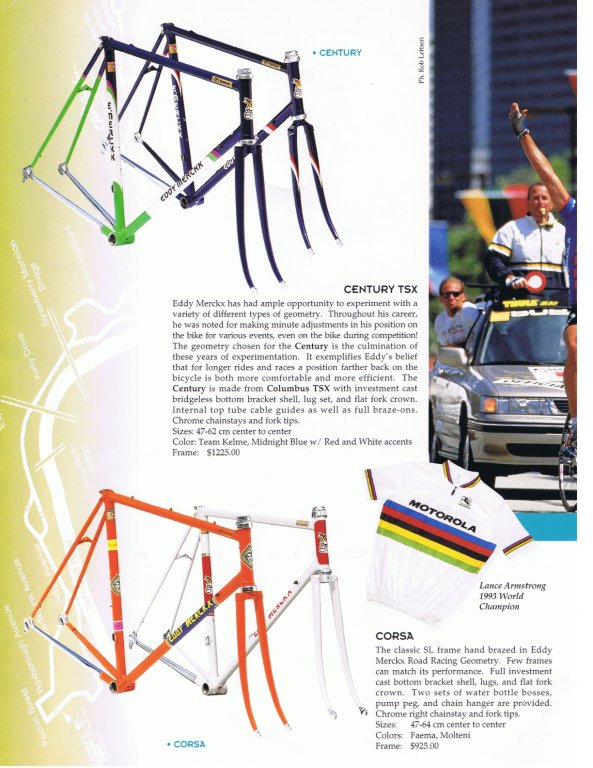
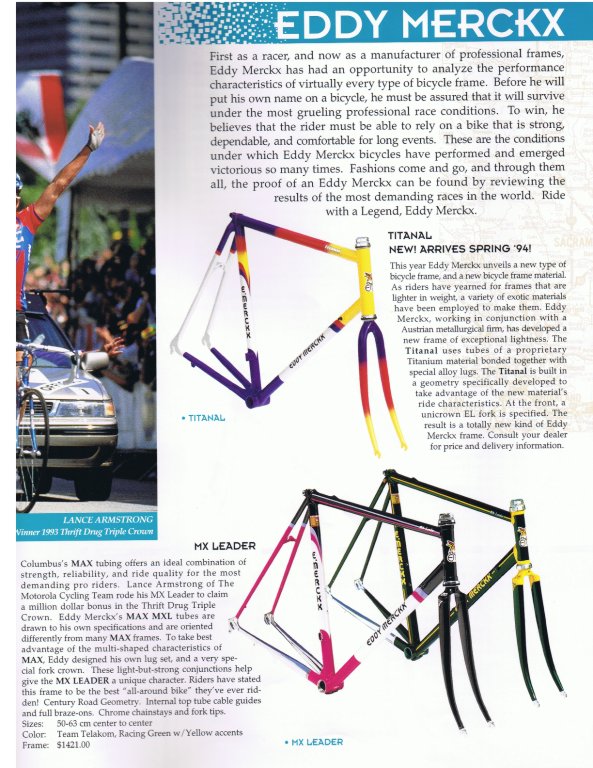
Courtesy of my friend Harry, here are the Merckx pages from the 1994 Gita catalog. There's only two, so read slowly!


The Century TSX is still available for the 1994 model year. The catalog says it comes with a flat fork crown, yet the catalog pictures clearly show one of the bikes with a sloping crown. Retail price: $1225.00

The Corsa's shown are in two replica color schemes, and both are sporting replica down tube lettering instead of the normal Merckx decals. Retail price: $925.


Oops, I cut off Lance's head in the scans. I believe thats a picture of him winning the CoreStates US Pro Championships. Whatever race its from, its prior to his winning the '93 worlds, based on his jersey.

The Titanal was new for 1994. Apparently, its a bonded Titanium frame. I've never actually seen one. Who actually produced these? What frame manufacturer in Austria was producing bonded frames in the mid-90's?

Finally, the MX-Leader. Retail price: $1421.00

Click any pic for a high res version. Enjoy!

Tuesday, March 24, 2009

Campagnolo's Century Finish

Sometime in late 80's or early 90's, Campagnolo introduced the "century" and "graphite" finishes to their product lines. Century was strictly for Record, and was a sort of smokey chrome. Graphite was available in the "lesser" component groups, and was a darker, opaque grey/black.


Graphite finish items show up relatively infrequently. Even less common are items in century finish, like these beauties that followed me home recently:


If you check out the Campagnolo catalogs, you won't see either finish pop up until the 1991 catalog. I have a hard time using catalogs as cannon in these situations - you'll also note that the last generation criss-cross style (often called the 5 pivot style) was available by then, and all delta's in the catalog sport black accordians and wheel guides.


Not so with my brakes. The Chorus cranks above have a '51' in a box for a date code, which I've been led to believe indicates 1989. Who knows when they really appeared? 1989? Possibly for the 1990 catalog year?

Monday, March 23, 2009

I guess I'm getting predictable

Just picked these up this weekend at a small local swap.


Sounds like my purchase was predicted by several parties. What can I say, I know what I like. These would have been spec'd with one of the later model Modolo brakes, similar to how a very similar style lever was paired with the Mavic 440.

Tuesday, February 24, 2009

If you like this blog, you should be on this list

A friend of mine just started a new mailing list, dedicated to the time frame I seem to keep coming back to on this blog - mid 80's to mid/late 90's. Check it out here:

http://sports.groups.yahoo.com/group/IndexThisstopat10/

Wednesday, February 18, 2009

Rumors of this blogs' demise...

have, in fact, been greatly exaggerated. This little creep just keeps sucking up all my time:


(I used the pattern available here to make the cap, and just scaled it down for baby sizing.)

More posts soon!

Sunday, December 21, 2008

Yes, it really is that easy...

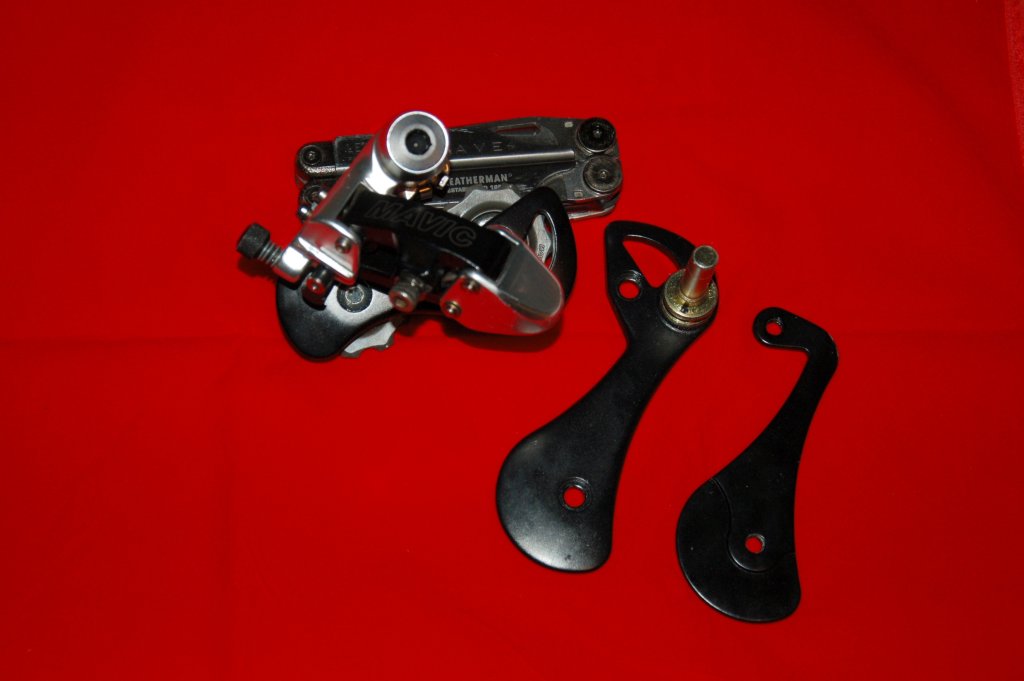
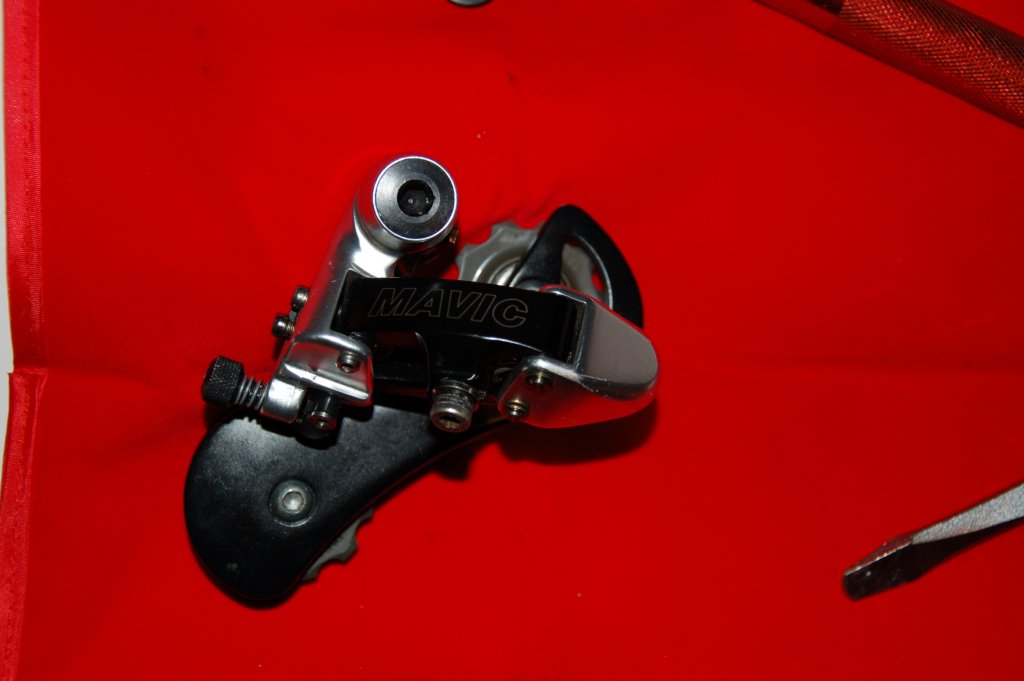
We Mavic fans often tout rebuildability as a major win over other options. Want to convert that clamp on front derailleur to a braze on? Just pop the circlips, press out the body, and pop a braze-on body on! Simple! Convert a rear derailleur from a short cage 840 to a medium cage 841? Pop a circlip, drive out a pin, replace the cage and there ya go!

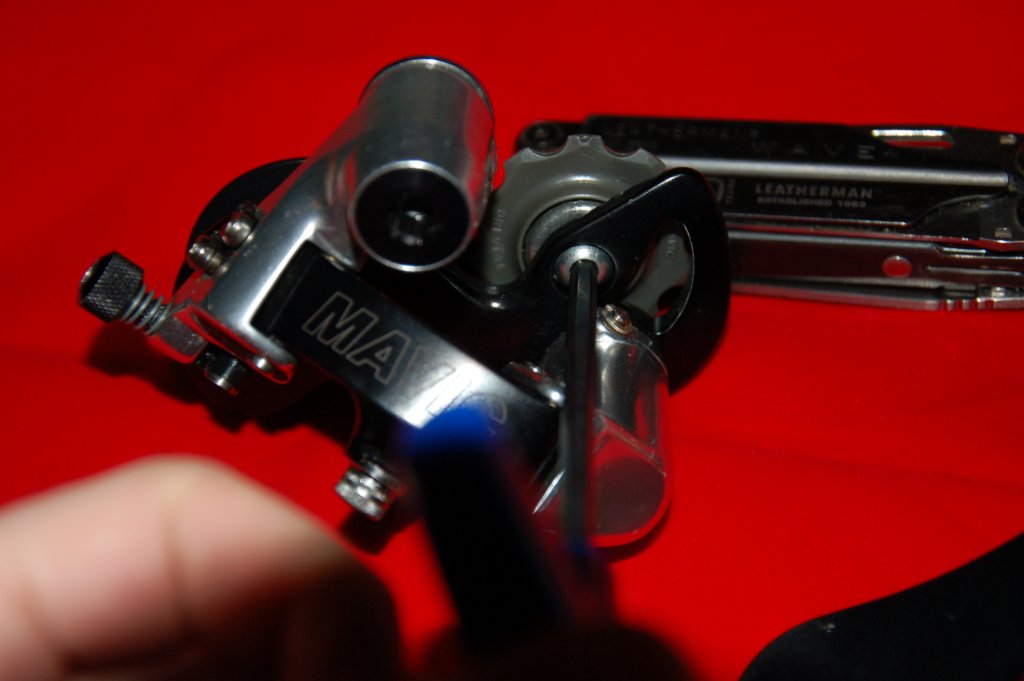
Right. Maybe its simple once you've done it, or seen pictures of it being done. I recently picked up a set of 841 cages, and set about replacing the cages of an 840 with them. Here are pictures I took along the way.


On the left, we have a standard 840 short cage derailleur. On the right, the plates that make up the medium cage for the 841 derailleur. The only difference between the two are the cages.


Step one - remove the bolts holding on the pulleys and the back portion of the cage.


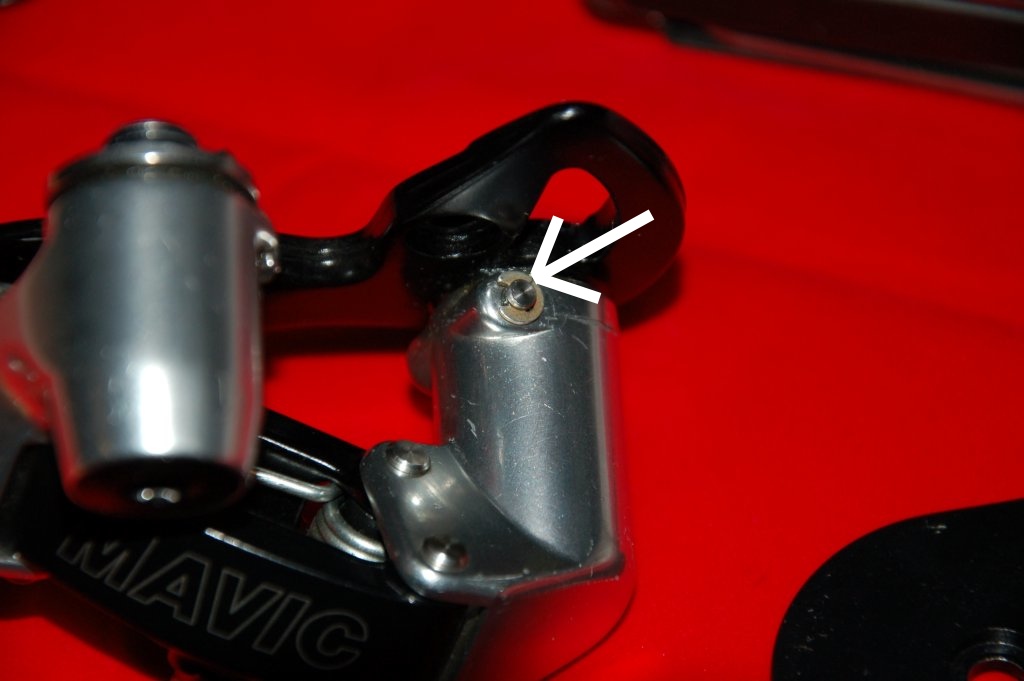
Step 2 - remove the circlip pointed to in the picture above. It'll pop off easily with a set of needle nose pliers.


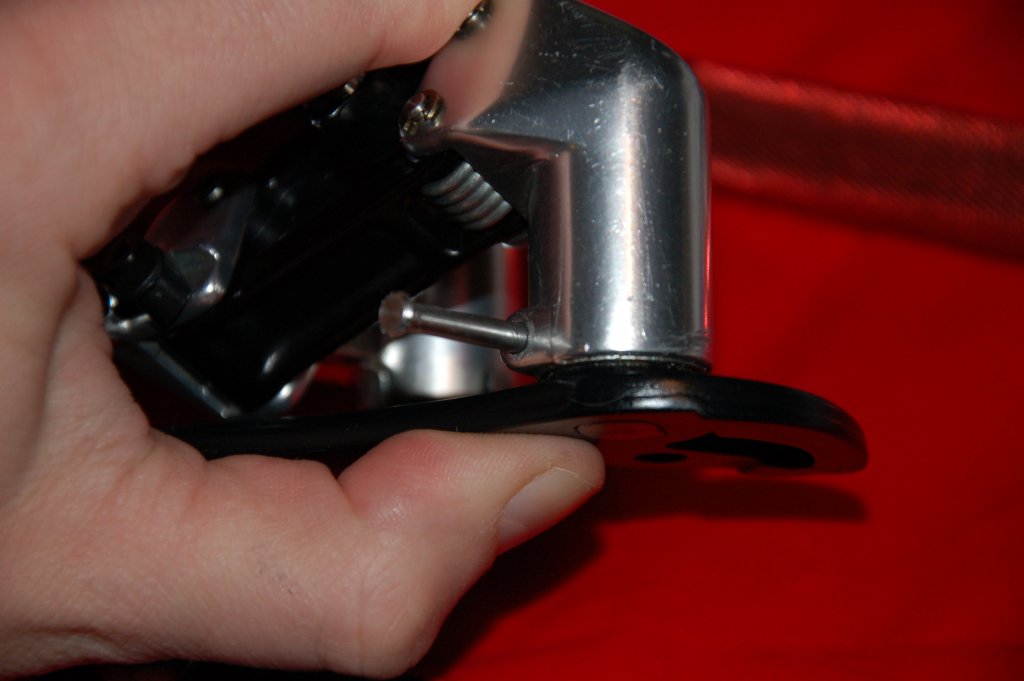
Step 3 - drive the pin out. I use the handle of a screw driver to push it out. Try twisting the cage - at the stop position, the spring's 90 degree bend is in contact with the pin, and will make it hard to remove. Once you pivot the cage, it should be easy to push the pin out.


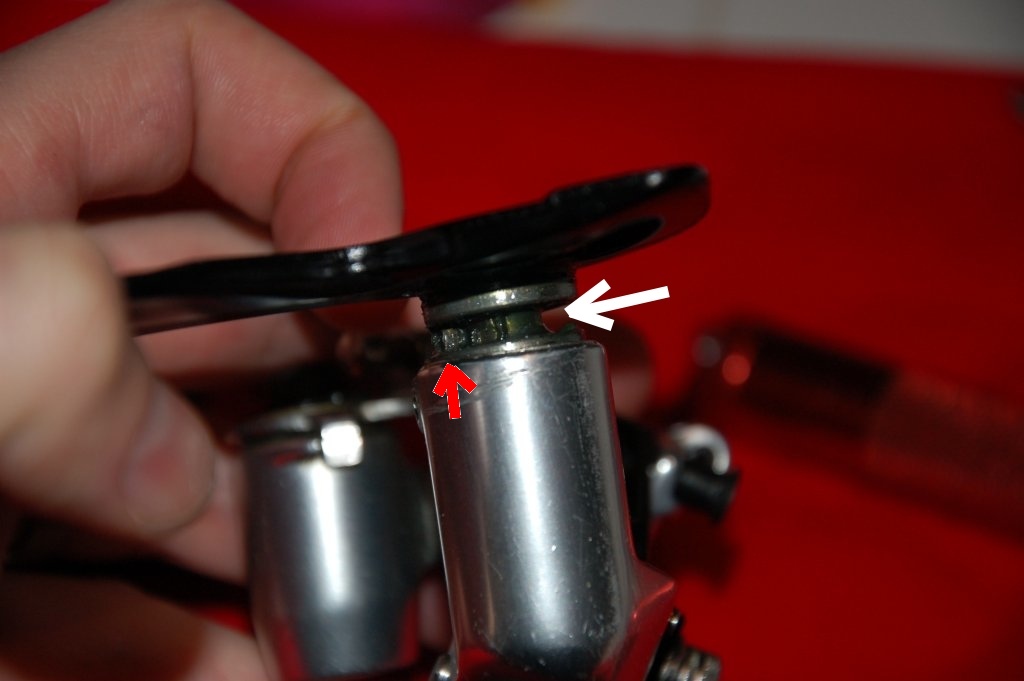
The hinge pin slides in the groove pointed to by the white arrow. It butts up against the tension spring pointed to by the red arrow. This keeps the cage from unspinning and losing tension, without any additional limit pin.

Replace the cage, lining up the spring. Press it inward, rotate it in place, and press the hinge pin back in. Replace the circlip, and you're done.


Now, what used to be an 840 short cage derailleur is now an 841 medium cage derailleur. Perfect to use with your 631 triple crank and 870 front derailleur. Total time elapsed, including pictures, was 13 minutes. Without documenting the process, it's easily a sub-10 minute procedure.

Tuesday, December 16, 2008

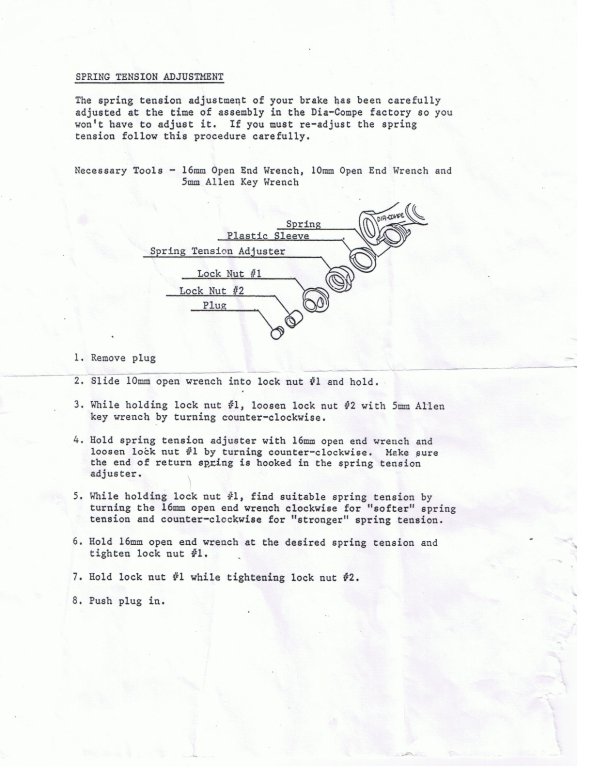
Mavic 451/Suntour Superbe Pro/Dia Compe BRS500 Instructions

As previously discussed, the Mavic 451 brake was one of many brakes that was a rebranded Dia Compe BRS500. Some consider them the pinnacle of single pivot design, combining excellent stopping power, precise modulation, and the clean lines that come with its hidden spring.

Those of us who've used them know they can be a serious pain in the butt to adjust. It's a little easier when you have three hands and the proper instructions


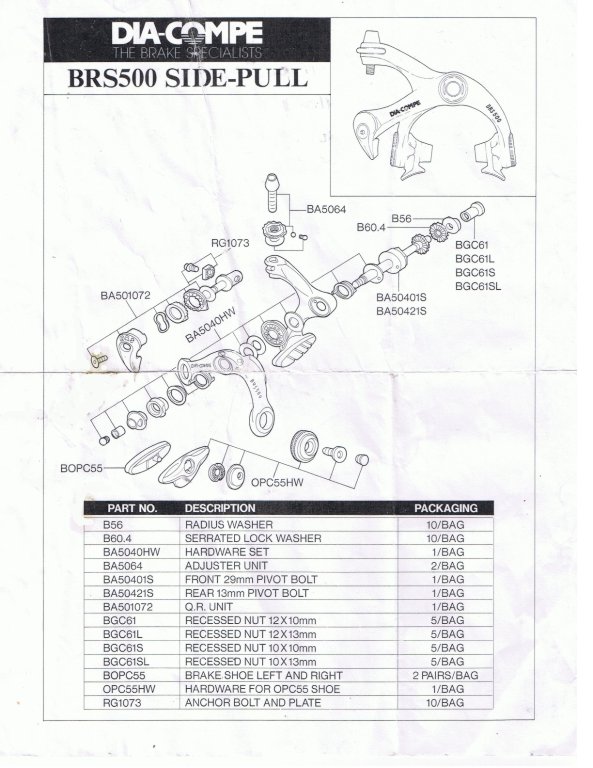
Here's a parts explosion, just in case you accidentally disassembled your brakes when you tried to adjust them.


If you've emailed to me asking how they hell to make your Mavic 451's work, I apologize for my rambling responses. Hopefully these instructions will make things a little easier. Enjoy!

Saturday, December 06, 2008

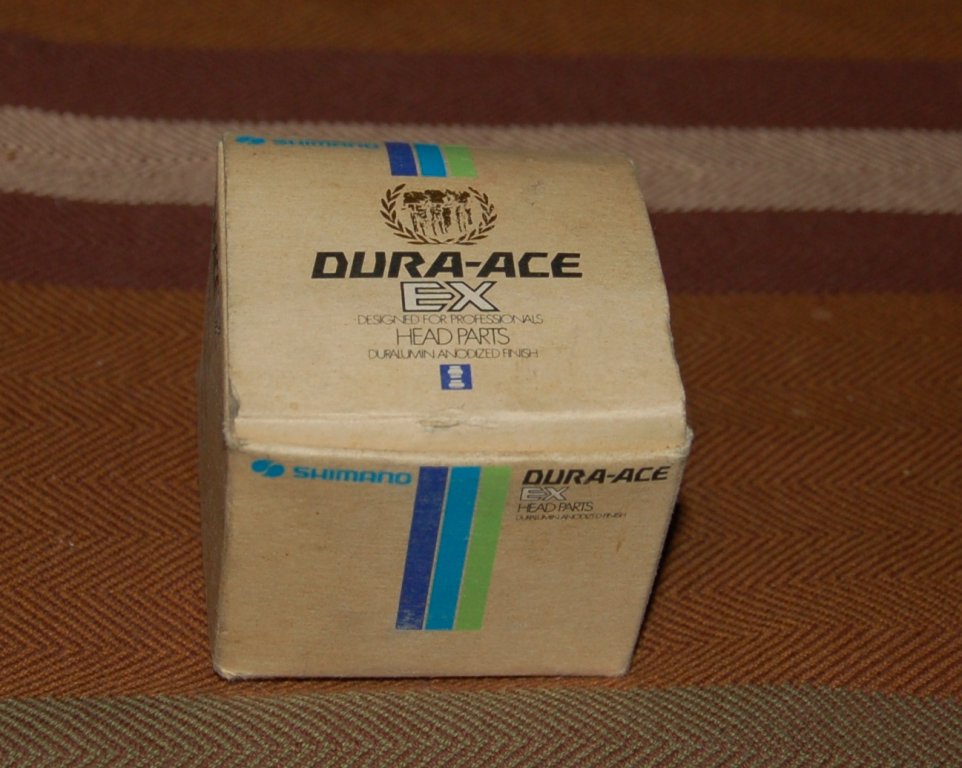
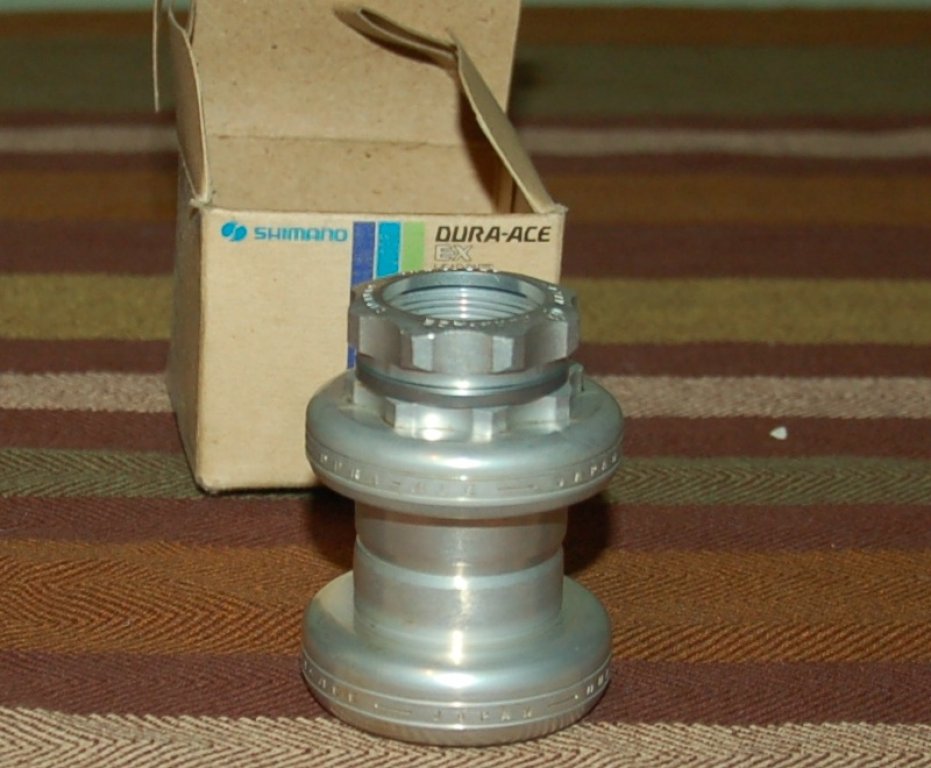
Dura Ace EX headset


In 1978, Shimano introduced the Dura Ace EX series of parts. In it, Shimano introduced a lot of new concepts to their line. This included the introduction of the Shimano Uniglide cassette. While Shimano wasn't the first to introduce the cassette, they definitely made the concept popular, and stuck with the cassette concept for a number of years before it gained in popularity. Other little things they introduced in EX included one-key crank releases, standardization on all hex-key bolts, shaved teeth to improve shifting under load.


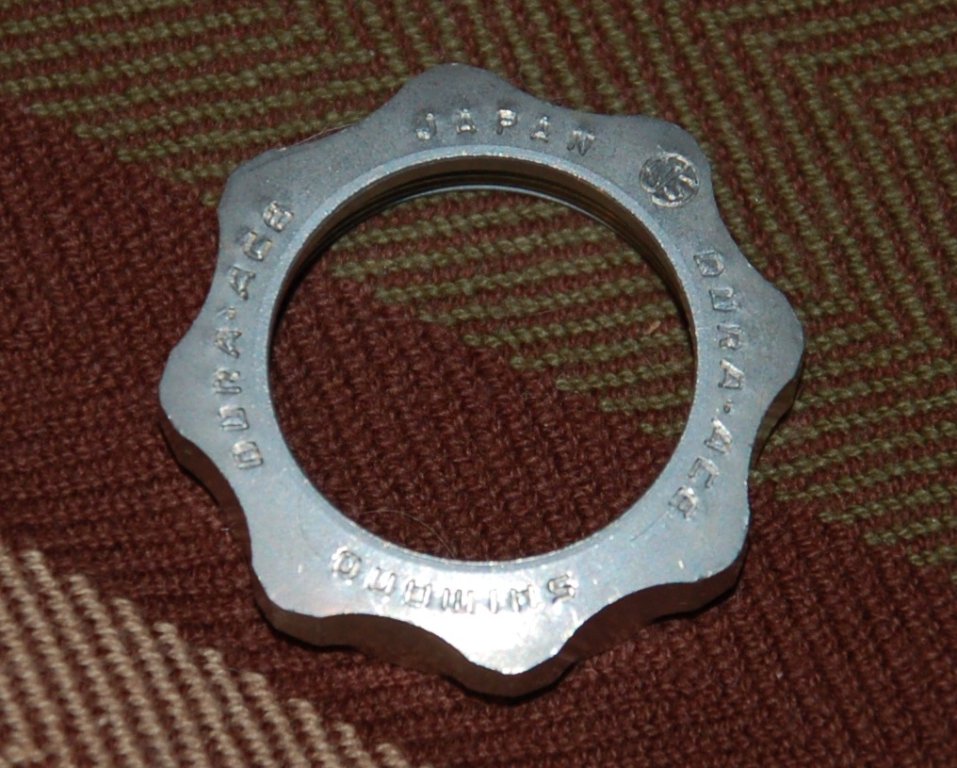
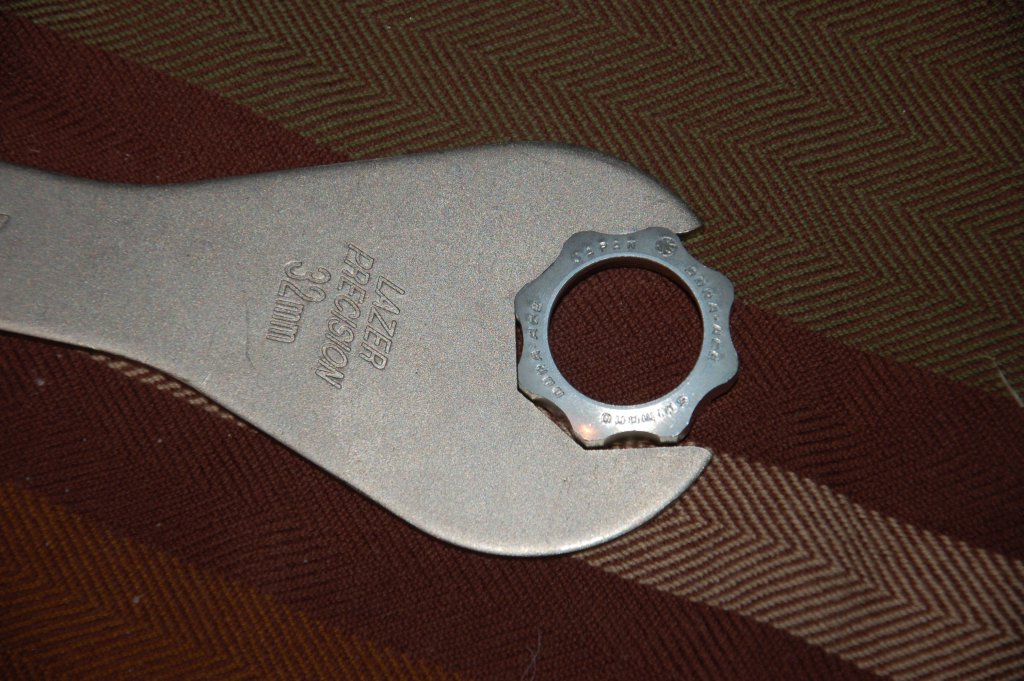
Also introduced was the UA-110 headset, better known in later years as the HP-7200. This headset is mostly known as the one with the funny wrench scallops.


While it doesn't require a special tool, a 32mm wrench isn't the greatest fit, and probably would result in marring the headset.

The HP-7200, and the closely related UB-110/HP-6200 differed only in their stampings, and in the use of an alloy crown race in the HP-7200. This resulted in a 44 gram weight difference. They were both available in parallel with an AX version, which was the same headset with a plastic fairing over the top assembly.

The Dura Ace and 600 EX headsets are often sold on eBay in conjuction with the word "rare". They were available from 1978 until 1984, so they're really quite common. Finding ones new-in-box, however, is a little less common.

Saturday, November 01, 2008

Recent find...

At a bike swap recently, I managed to score this:


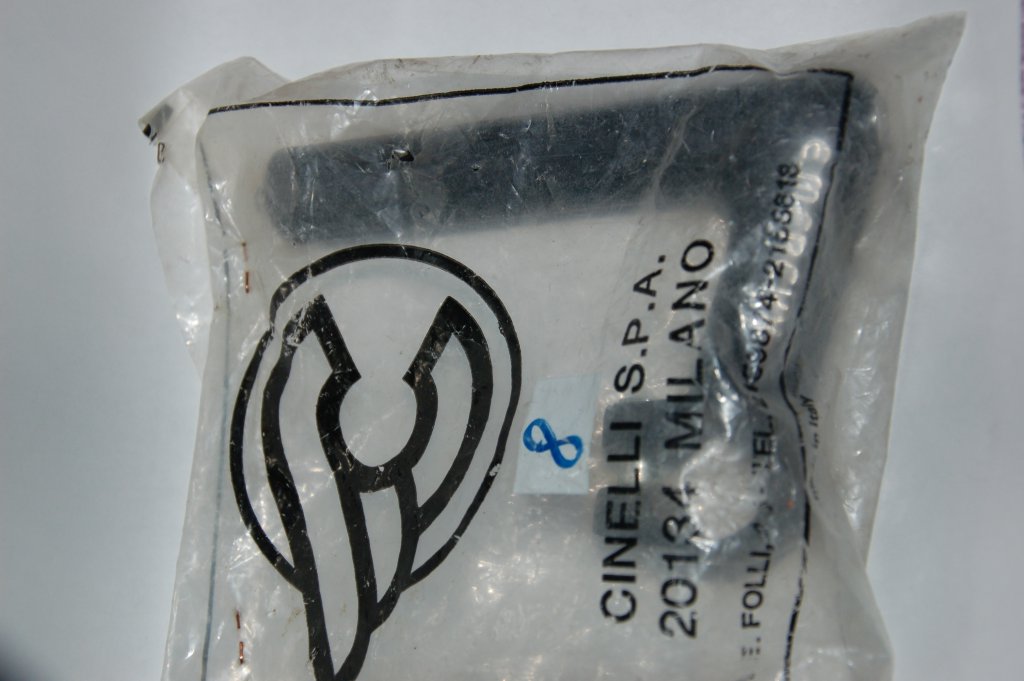
What's that in the bag???


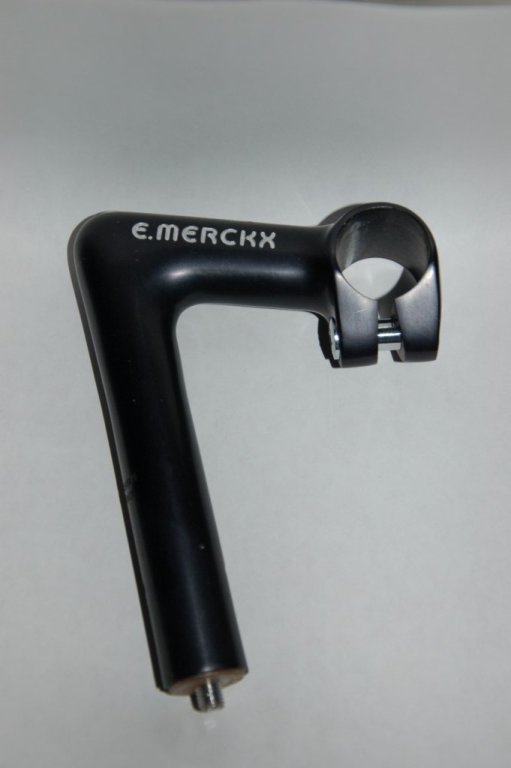
New-in-bag Eddy Merckx pantographed Cinelli 1-A stem. Probably mid-80's, judging by the bar size, packaging, and the font the Merckx pantograph uses. Too bad its so short!

Friday, October 24, 2008

Eddy sells out...

Sells out his shares of the bike company bearing his name, that is.

http://www.cyclingnews.com/tech.php?id=/tech/2008/news/10-24

I suspect he hasn't played much of a role in designing his bikes for some time, so I guess its nothing to be too upset about. Sounds like he had hoped his son would take over, and when that didn't happen, it was time to move on.

Monday, October 13, 2008

Podio Pedals

Hey! Long time no see! Thanks for stopping by - I've been pretty busy with life, and haven't had much time to dedicate to writing. Looks like things will be a little easier from here on out though. This is just the first post of a few I have planned - more DA 7400 stuff, some Mavic things, and as you might guess, some more Merckx stuff.


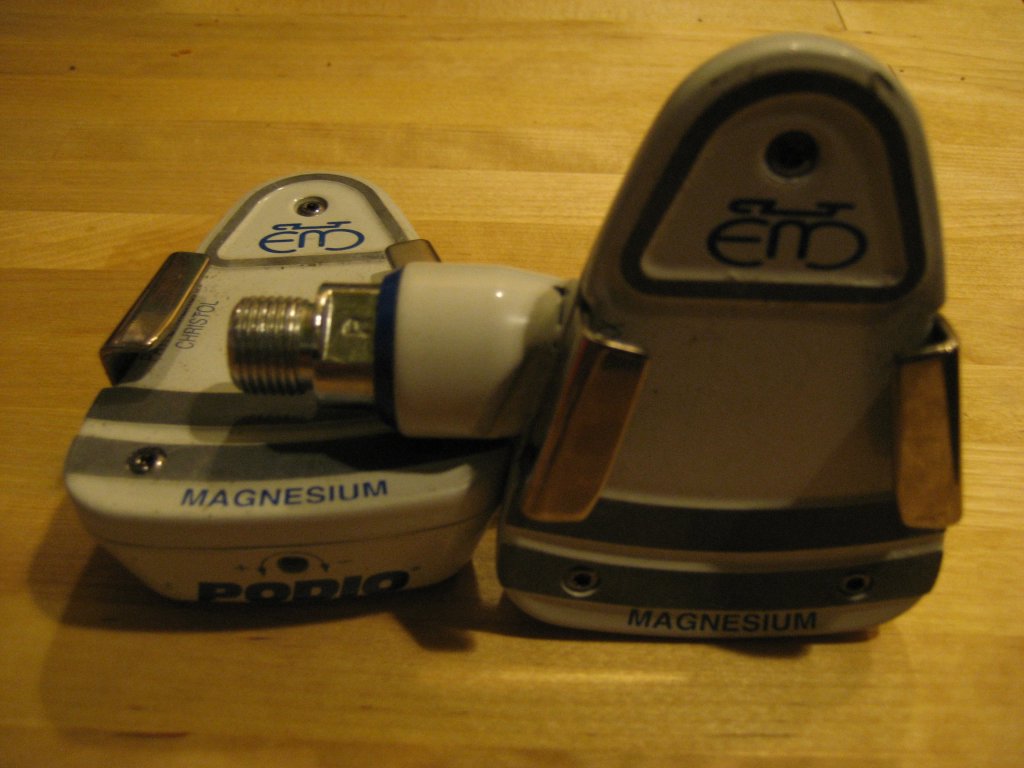
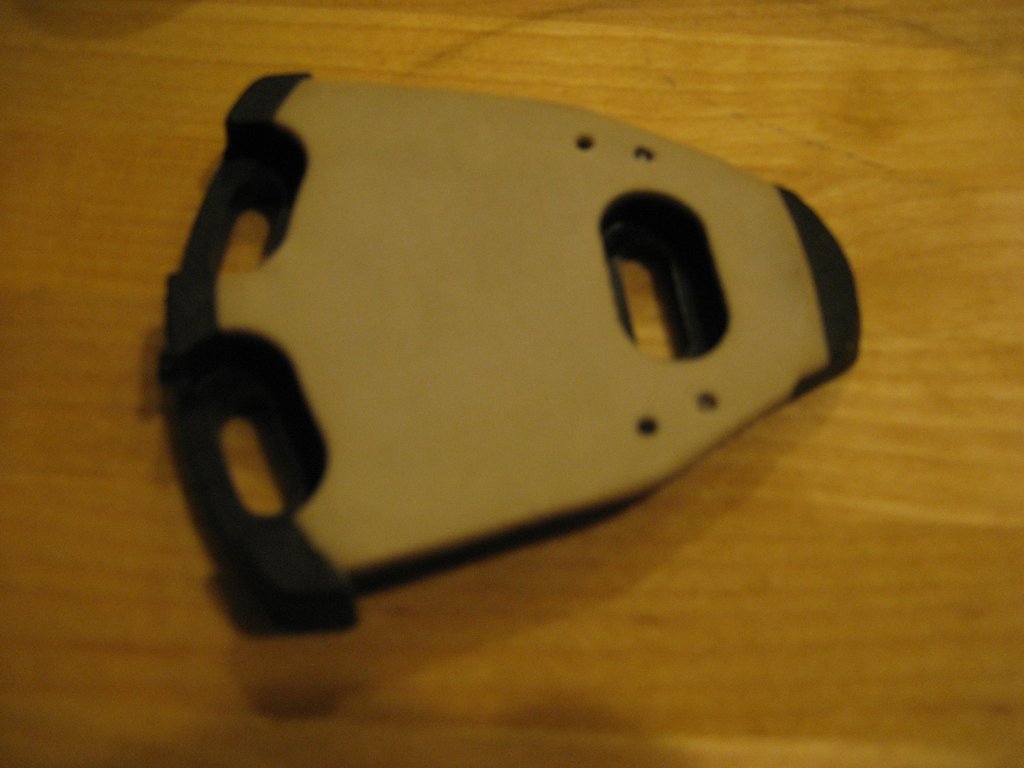
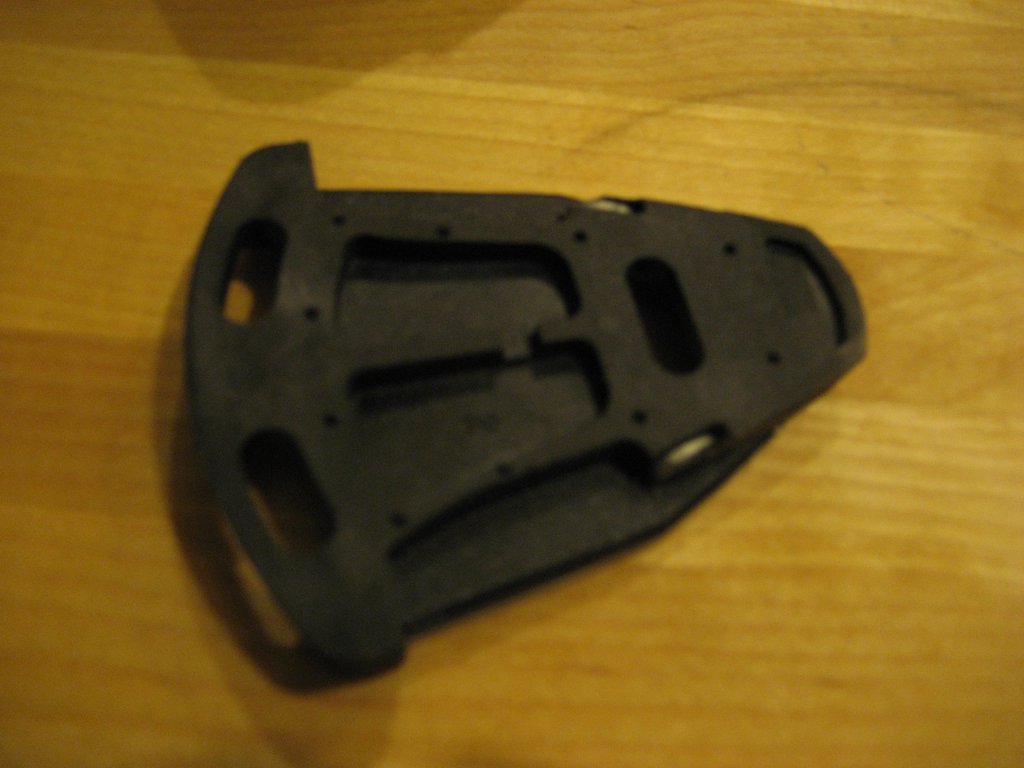
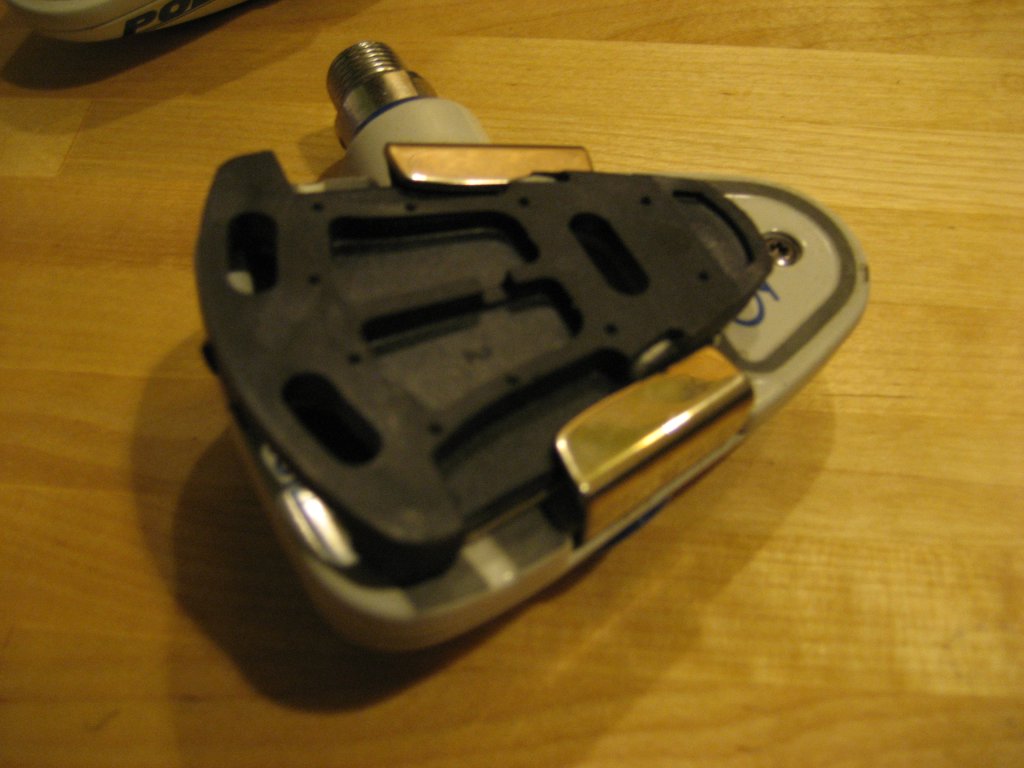
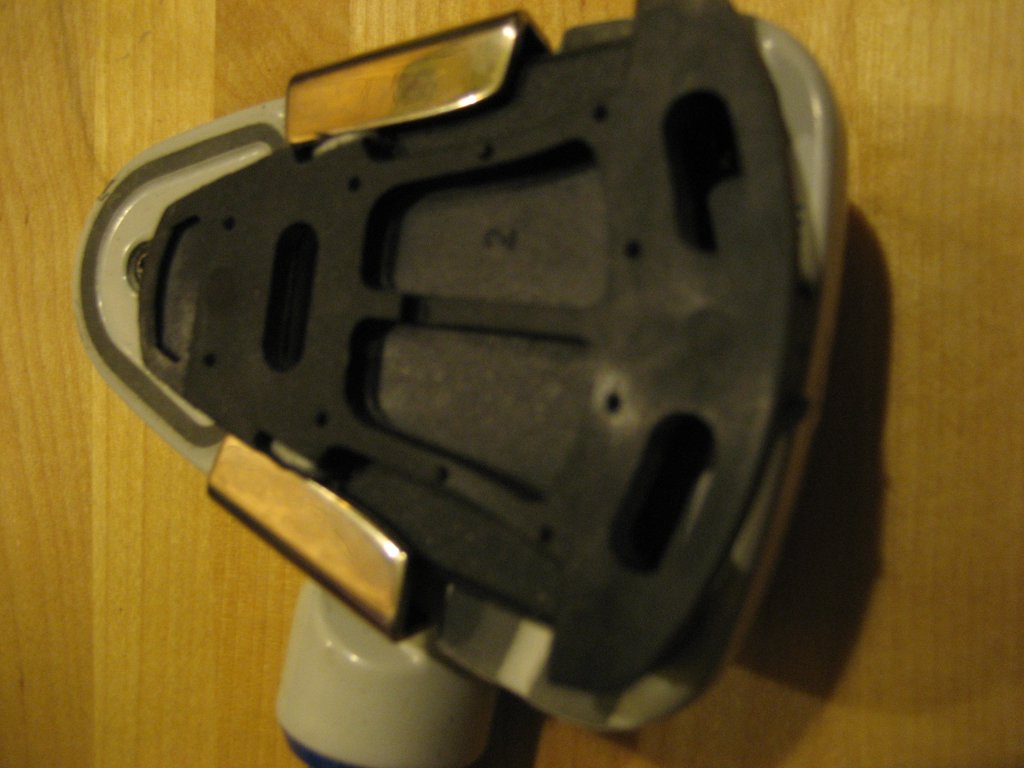
In the mid-1990's, Merckx started marketing its own clipless pedal system, called the Podio. I have no idea how they were marketed in Europe, but here in the US, I never heard about them.


The cleats are fairly low profile, with what looks to be a non-standard bolt pattern. I don't know if third-party Podio shoes ever existed - the only ones I've seen are Podio branded. I think I heard somewhere they were made by Adidas, but I don't have a pair or have any way to prove/disprove that.

Sidi makes a Podio adapter plate. Not sure how easy it is to find, but I suspect it could be special ordered.


The cleats slide in from the back, and you twist to remove. Pretty normal. Tension is adjusted via a screw on the back. I assume they have no float.

Merckx still sells these. They're not distributed by Gita Bike in the US, as far as I can tell. I've never heard of any Merckx sponsored team riding them either. Matter of fact, the only person I've heard of riding these is the man himself.

Tuesday, June 17, 2008

June 17th is...

Eddy Merckx's birthday. If you have a Merckx, grab it and go out for a ride.

Jerseys

I know I've said it before, but I'll keep saying it. When you live in New York City, its tough to have a large bike collection. Over the last few months, I've actually been downsizing, and have sold my Lazzaretti and my red and white Merckx. Don't feel sorry for me though, its all to free some space up for my soon to be born daughter! Exciting stuff worth losing a bike or two for. Not to mention, with all of the other work I've been doing installing cabinets, cleaning up our storage area, so on and so forth...I think I may have freed up enough space to justify getting another bike someday. Ask my wife about that, and I'll deny everything.

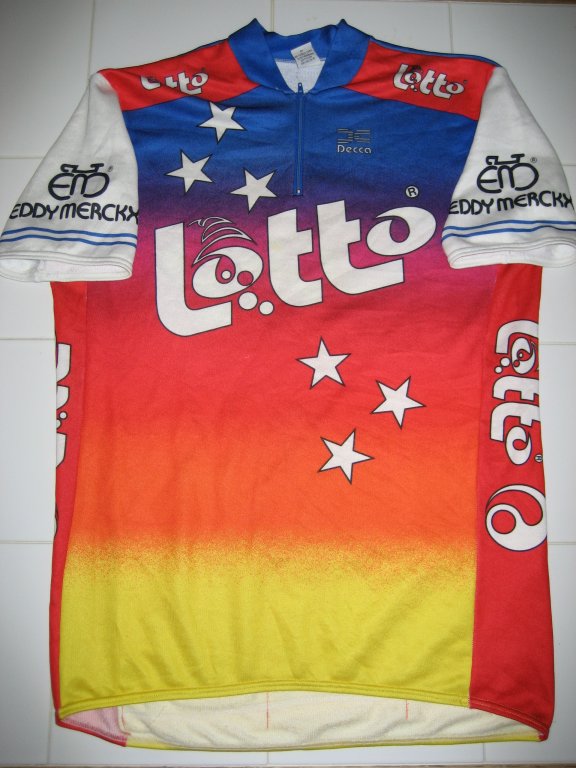
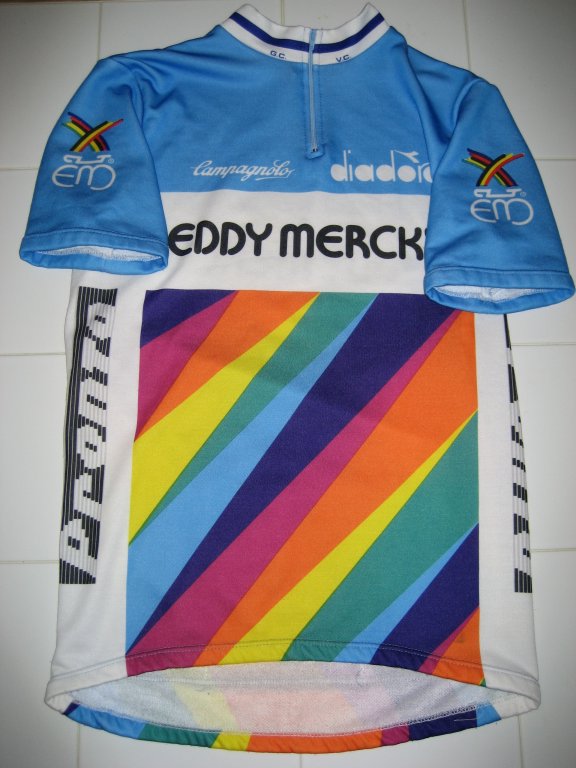
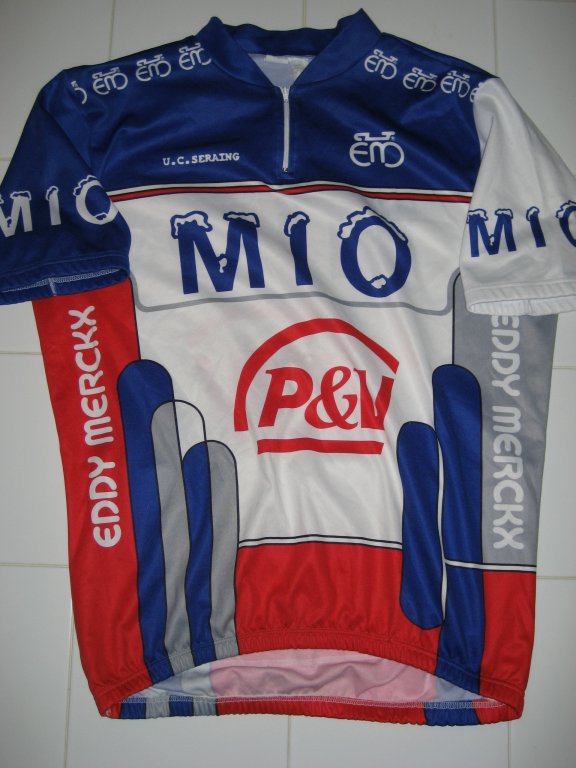
The real point to this story is that while its tough for me to have a ton of bikes, it is possible to collect some other bikey things. Jerseys, for instance, don't take up much space, don't cost much, and can be used on a daily basis. Here are a couple of the Merckx ones in my collection:


Lotto, circa 1988. The nice thing about having a nearly electric blue bike is that a jersey like this doesn't look so jarring.


Eddy Merckx team, mid-80's. Still don't know exactly what this is - most likely a jersey for a club team. Dutch maybe? More info here.


U.C. Seraing. I'd guess this jersey is from the last, say, 5-10 years. Junior club in Belgium. Fortunately, someone on the team was either tall enough, or fat enough, for me to fit in the jersey.

I have more, and sooner or later I'll get around to posting them.

Tuesday, June 03, 2008

Andy's Giro Landshark Seruffy

2008 marks the 20th anniversary of Andy Hampsten's against the odds win of the 1988 Giro d'Italia. I can't speak of what coverage was like outside of the United States, but here in the US, every cycling related magazine has given the anniversary a ton of attention - which it warrants. With all the turmoil in the racing ranks the last few years, its great to remind people that there was a time it was easy to be proud to be a cycling fan.

As a fan of late 80's cycling, you know this sort of stuff is right up my alley. But I'm also a gear geek, so as you might imagine, I started wondering about just what the deal with his bike was. We've all read he was running a "prototype" 8-speed drive train. Just what does that mean? Production components just prior to release, or special, hand tweaked equipment?

If you're a reader of the Hampsten Cycles blog, you might have caught a short message about Taliah Lempert doing a painting of the Giro bike. Or if you ever pop by Taliah's Bicycle Paintings site (go do that now, and come back when you're done - I'll still be here), you might have seen the very cool series of paintings she's working on, showing various aspects of the bike.

There's a whole convoluted story, that involves a request to borrow some DA 7400 equipment I didn't have, then found but wasn't needed...basically, Taliah was nice enough to let me come by her studio to see the bike and take a couple of pictures. And then Steve Hampsten was nice enough to give me the OK on blogging about it. I made sure to get a good look at the component model numbers, and with a little help from some friends, figured out most of the components. Let's see what we have! As always, click any picture to see a larger version.

It's probably worth pointing out that this bike hasn't been stored away in some sealed time capsule for the last 20 years. From what I gather, its mostly original, but its possible some components have been changed.


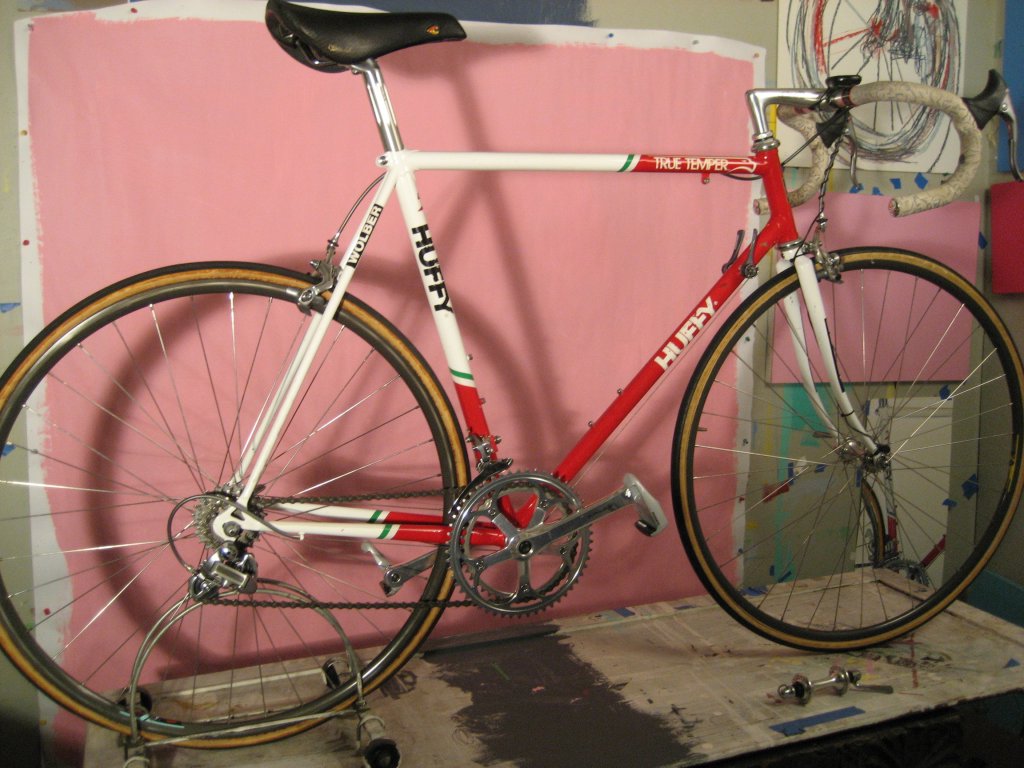
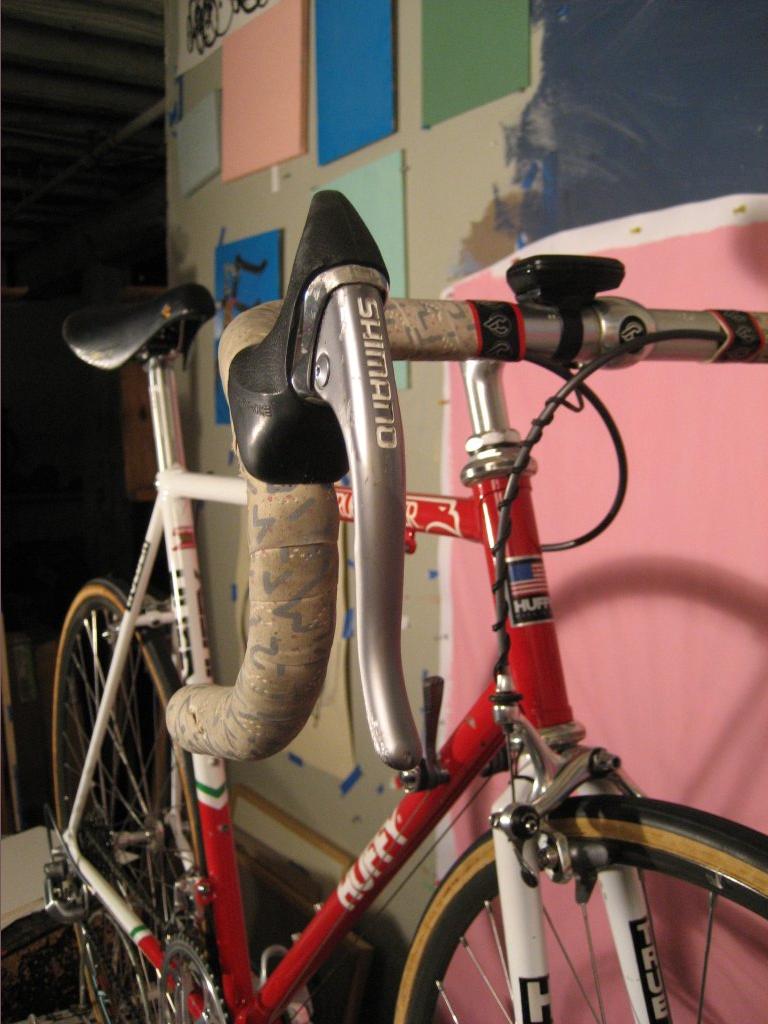
The bike! Its not much of a secret that Andy's bike was built by John Slawta of Landshark fame, to replace a Serotta built, Huffy labeled frame. The wheels its sporting are not the originals, but the bike is pretty much as-ridden otherwise. The original wheels were either FH-7401 or FH-7402 hubs, with a Uniglide cassette, laced to Wolber Profil 18 rims.

If you look closely, you'll see that the rear derailleur is an RD-7402. You can tell by the hidden cage pivot bolt, which wasn't found on the RD-7401 or RD-7400. These wouldn't be available for some time after the 1988 Giro.


The front end. Cinelli Campione del Mondo, ie 66 bars. The size stamping was obscured by the computer, but they looked to be 42's. The stem is a Cinelli XA.

The brakes calipers are BR-7400's. The levers are BL-7401's. They don't have the return (SLR) spring the later BR-7402's have, but they are adjustable for tension via the allen bolts securing the lever to the body. Non-standard Shimano engraving.


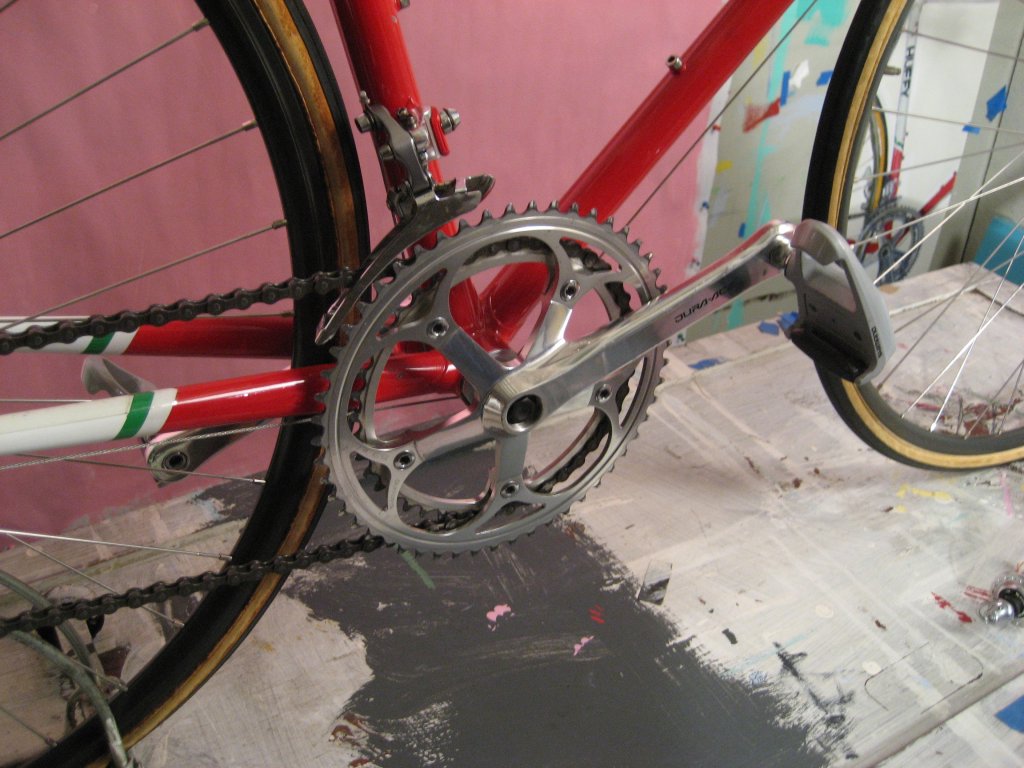
Shimano FD-7400 front derailleur. FC-7400 cranks in 170mm, with PD-7401 Shimano/Look pedals - which, by the way, are awesome pedals. I still ride the Ultegra version on one of my bikes.

Steve just informed me these aren't the original pedals. That being said, the originals would probably have been the same. And they're still awesome pedals.


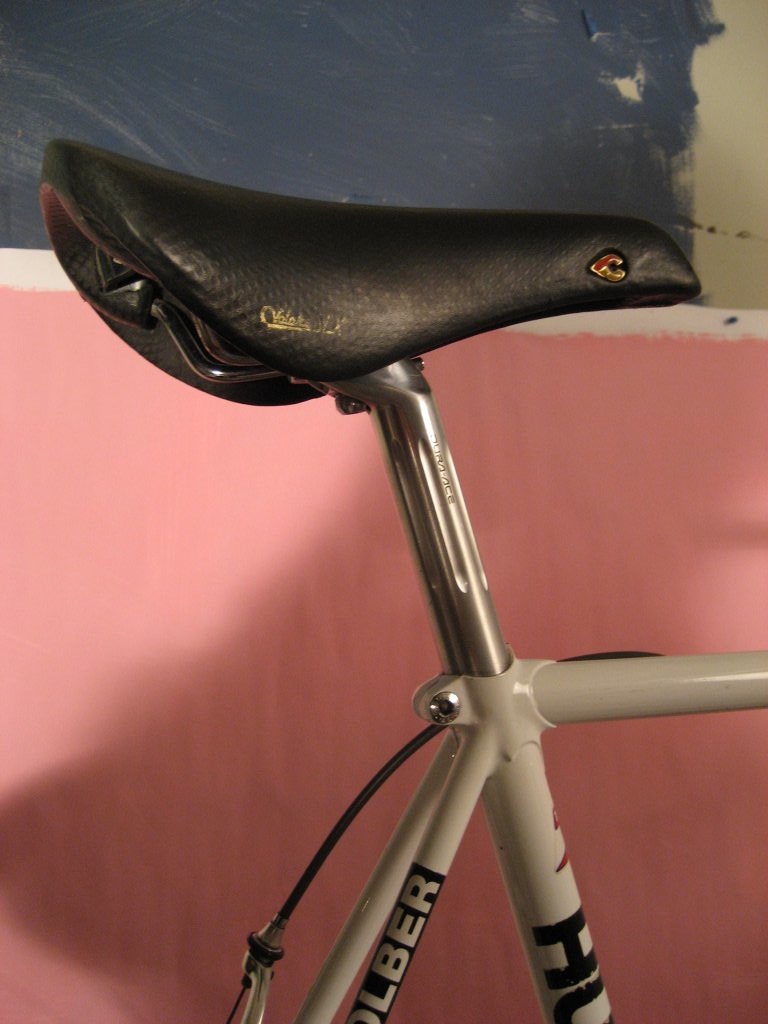
The saddle is a Cinelli Volare SLX, mated up to a SP-7400 seat post.


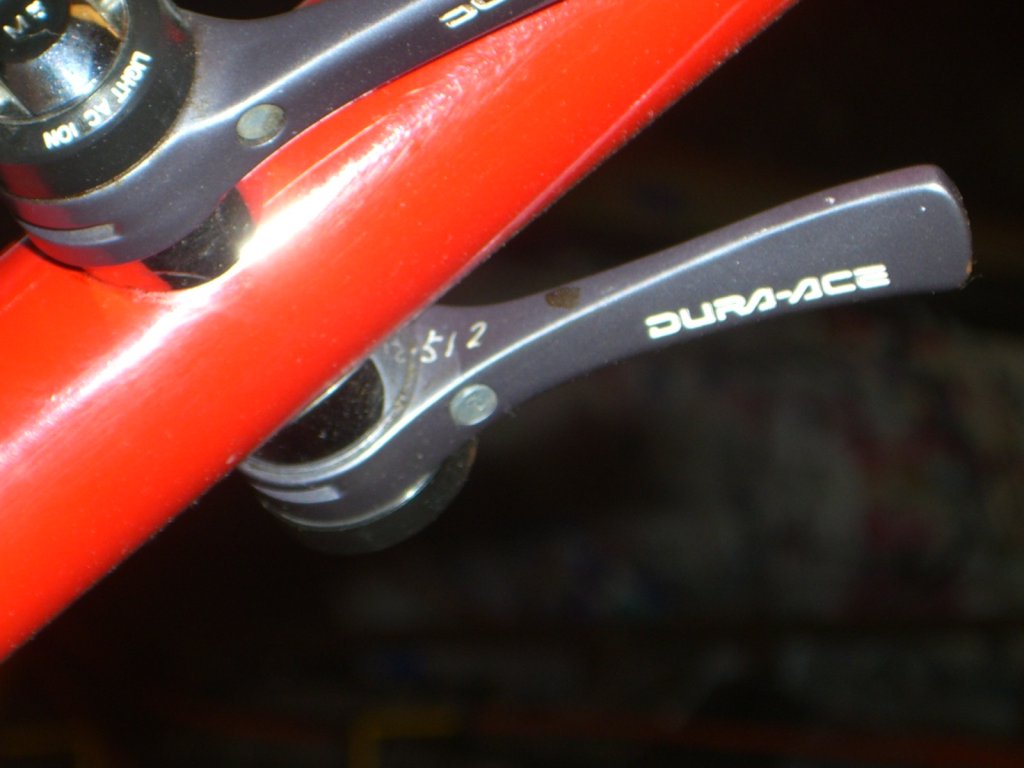
Ok, now things are getting interesting! I wasn't able to maneuver around to see the model information on the levers when I was in the studio, but when I heard a friend of mine would be visiting the bike, I asked him to take a look at the shift levers, to see if he could figure anything out. Matthew + Roberto had better access, and were able to read the model number - SL-7401. Hand engraved on the inside of the lever is a '512', as seen in the above picture, courtesy of Roberto. SL-7401's were 7 speed levers; when 8 speed levers were introduced to the public, they were designated as SL-7402's.

The most likely scenario is that the lever in question contains modified or pre-production 8 speed guts, which would be a fairly easy item for Shimano to machine. These weren't regular production levers available to a pro early - these were levers being field tested to see how an additional cog would perform in a race as grueling as the Giro.
If you were wondering what components to hang on your new Hampsten Cycles Landshark Replica, maybe the above will give you a few ideas. I highly recommend checking out Diablo Scott's 7-Eleven Bike History page. About half way down, he has a scan of the Winning magazine feature on this very bike. Take a look at the bar tape, and then check out my pictures. Is that really the original bar tape on there? Good luck finding that pattern if you're building a replica!

Did I miss any components? (Cateye computer - and yes, thats the original one) Let me know. Don't forget to check out Taliah's site and Steve's Hampsten Cycles blog - they were both extremely cool about me taking pics, asking silly questions and being a nuisance.