Showing posts with label mavic. Show all posts

Thursday, June 27, 2013

Mavic's 640 Pedals

Picking a favorite Mavic component is a lot like picking which of your children is your favorite. It's unseemly, when we should be celebrating the unique beauty of all of them. But in the recesses of our minds, we all know there's one we favor just a tiny bit more. Sometimes it's rational, sometimes it's just because.

If you pushed me - and I mean really pushed me, it's possible I might admit a slight bias towards the 640 pedal, which is a little odd given that I never ride quill pedals. It's just one of those irrational loves for an unorthodox design. A design which probably isn't Mavic's at all.

The Mavic 640 is a traditionally shaped quill pedal, with a finish quality that has few rivals - with the innards to match. The more common version was intro'd in the early 80's, though a version was available in the 70's as well. Similar inside, but with a riveted (or maybe domed/hammered on, I don't know) cage.

This generation of 640 has replaceable, hard anodized cages, secured with hex head screws. They varied somewhat over the years, with slight color variations in the anodization color, and slightly different logos. I believe the one labeled 'Made In France' on the same side as the Mavic name is the older one, with the other two cages in the picture above being later.

Inside things get get interesting. After removing the the aluminum dust cap, removing the spindle nut and spindle, the inner roller bearing and a traditional sealed bearing are exposed. Roller bearing on the inside bearing surface, traditional on the outer.

If you think the 640 bears an uncanny resemblance to the Specialites TA pedal, you're not alone. While I can't find definitive proof, I think it's a given that the 640 is at least based on the TA pedal. It's possible that Mavic licensed the design, worked from forgings provided by TA, or had TA do everything - the latter two possibilities all things they're known to have done with other components and manufacturers. By all rights, the TA version is nicer - grease port in the end cap, replaceable flip tabs, curvier cage. A very elegant quill pedal - if you're in to that sort of thing.
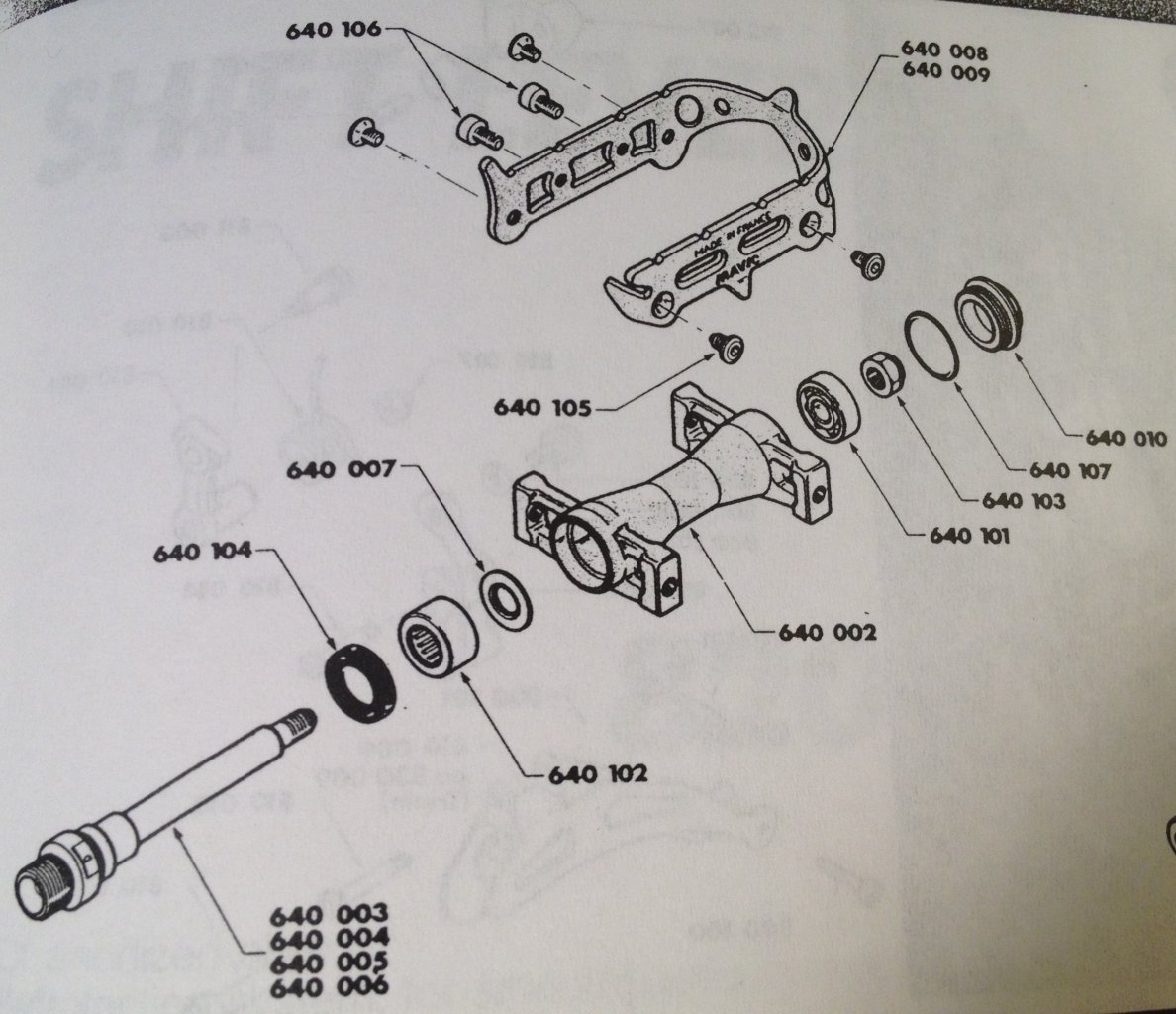
Parts explosion for those who find themselves with 640's in need of a rebuild.

Kids, if years from now you're reading this, know that it's totally you (whoever is reading this) that is my secret favorite. I never liked that other kid.

Tuesday, June 04, 2013

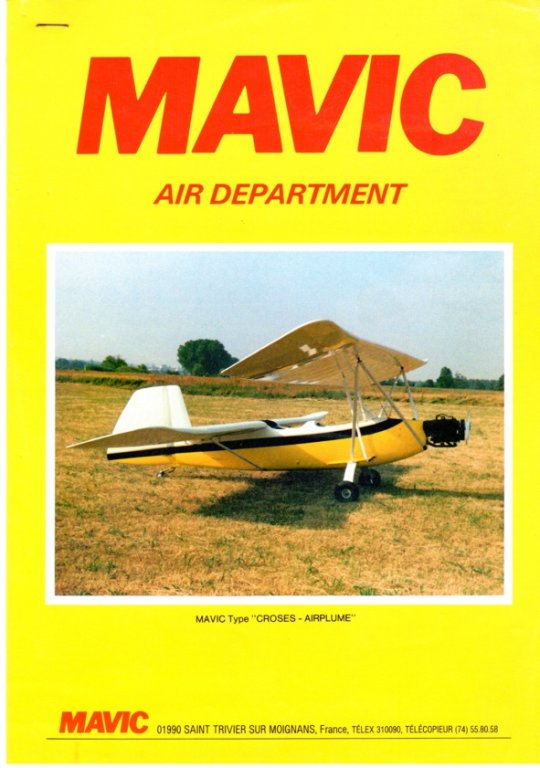
Mavic's other flight of fancy

Besides electronic shifting, that is. The scale of this, however, was a little grander...

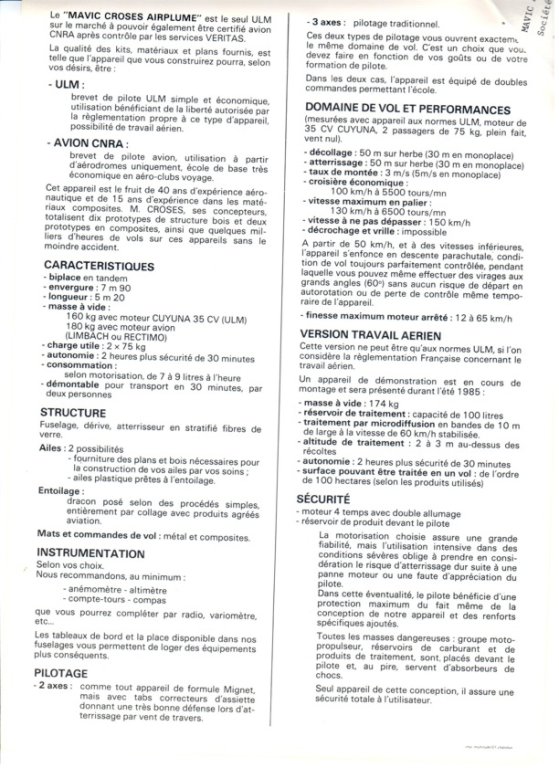
Apparently, around 1984, Mavic opened their Air Department. Bruno Gormand, head of Mavic and the driving force behind their innovation since the mid-60s, was, it would seem, something of a modern renaissance man, pushing Mavic beyond the earth-bound limitations of bicycles. Those limitations would return following his death in 1985, and the dissolution of the Air Department.


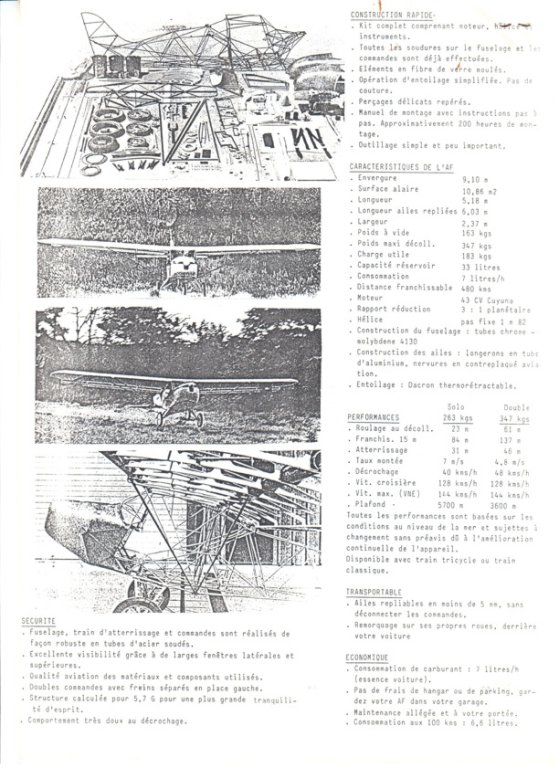
The top image is of the 'Airplume' plane, an open cockpit 2 seater. The 2nd image is its spec sheet. The third shows photos and specs for the 'Avid Flyer' variant Mavic made, which is simply labeled 'Avion Experimental' in the photocopied sheet I have. I haven't included the cover as the quality is fairly low - but would be happy to if requested.
Friday, May 31, 2013

Patent Searching

Patent searches are tons of fun. Here are a couple of patents I found that I wanted to share:
Online patent searches provide a wealth of information about the workings of some of our favorite equipment - as well as the innovations, successful and otherwise, that preceded them. The slight variations and changes that happened from patent submission to real world implementation (note the spring setup on the Syncro patent, for instance) are really cool. Even cooler are the abortive attempts - take for instance this patent from Campagnolo, which was issued around the same time - it seems to be a slip-proof shift lever where the hinged part sort of acts as a brake on the spring (???), the need for which was probably negated by their "success" with Syncro. WTF indeed.

The pictures are truly worth the thousands of words that comprise the patents. If you come across anything cool, leave it in a comment below.

The picture-linked patents above are for the Mavic 571 face-pawl cassette hub, the Campagnolo Delta Brake, the Campagnolo Syncro 1 shifter and the original Shimano STI shifters

Monday, May 13, 2013

Photographs Lie - The Mavic gruppo that didn't quite exist

Mavic's last hurrah in the complete gruppo market came in the early 00's. Mektronik, introduced in 1999, seems to have cowed Mavic enough that I can't imagine we'll ever see them market a complete group again. Expensive, quirky, and downright troublesome, Mavic was looking just a little too far ahead when they pushed their even more futuristic replacement for the Zap to market. As Shimano and Campagnolo have demonstrated, today the world is ready for electronic shifting. 10 years ago, not so much.

But a gruppo isn't a gruppo without a full array of components. Mektronic provided the integrated brake levers and electronic rear derailleur. Lesser known, but also present was the Mektronic front derailleur - a mechanical derailleur, a pretty significant departure from their 810/860 design to work with the narrower 9 speed drivetrains that were popular at the time. Mavic also introduced their leaf-spring R3 brake at the same time. All were available, for a price, with the brakes still available up until the last couple of years.

But what about a crank and headset?

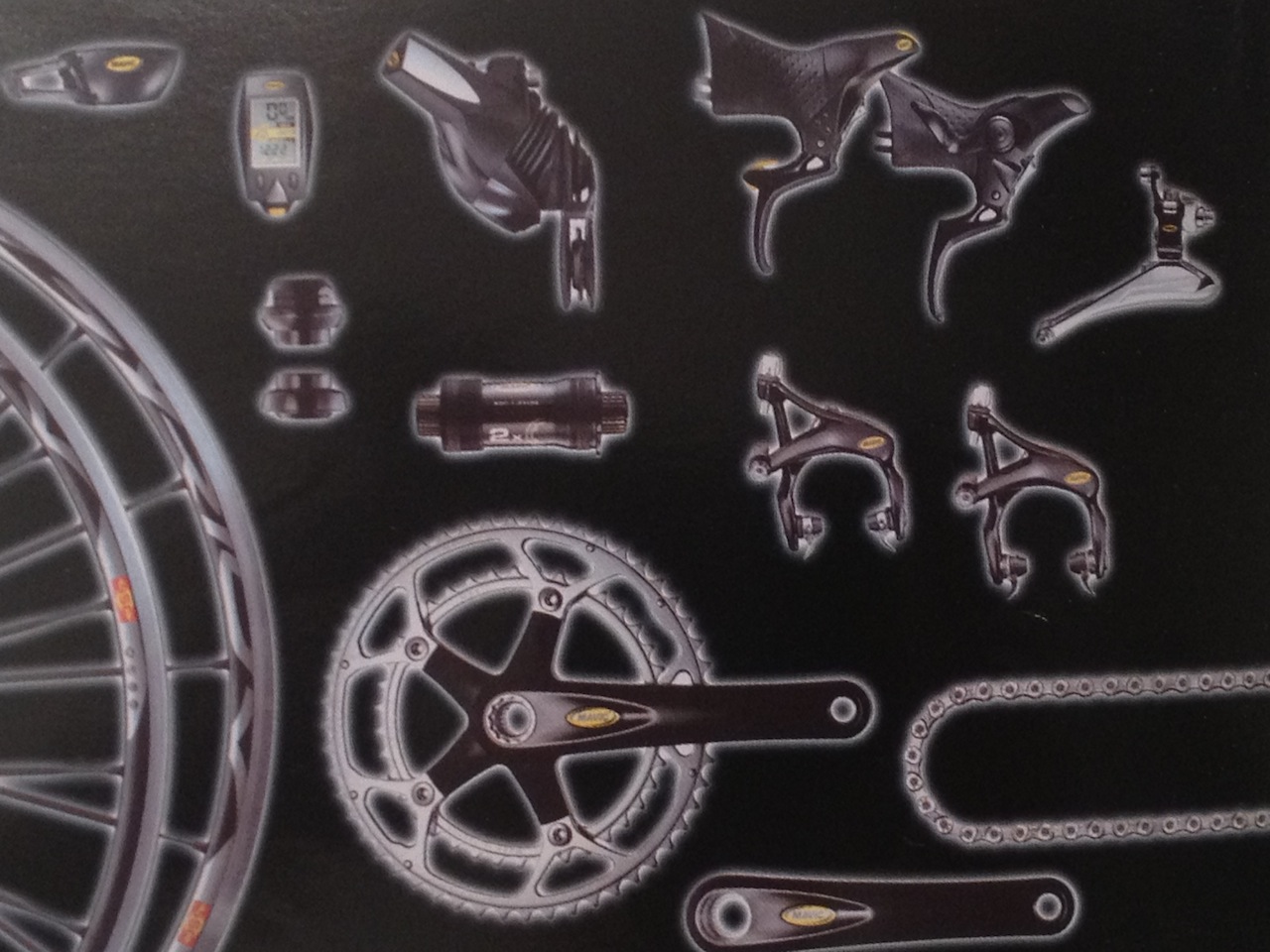
Mavic clearly had plans to offer Mektronic as a complete group. And to do that, they would need a crank/bottom bracket, and a headset. Their 2000 catalog showed just such items.

The headset, a threaded model, would be de rigueur, with 1" threadless headsets appearing on most high end frames right around that time.

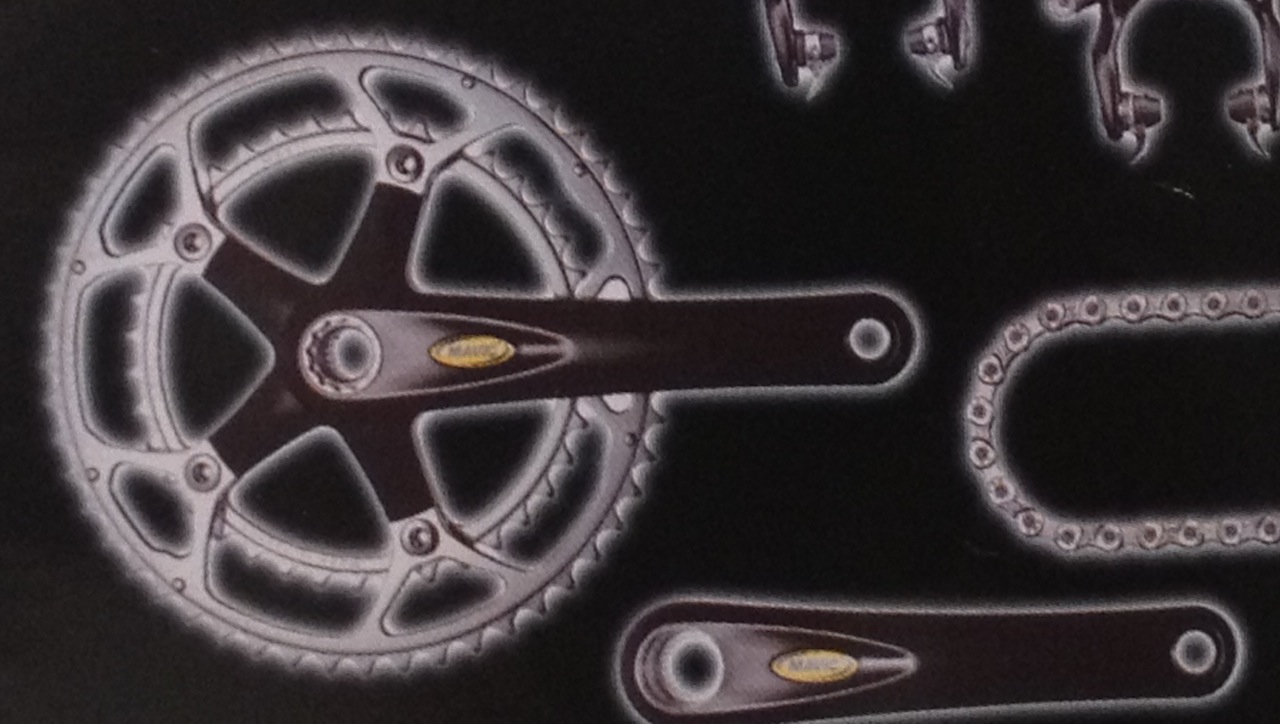
The crank looks to be ISIS. It looks familiar, but I can't put my finger on what other vendor's crank it looks like. My guess? It's an FSA crank, or one of the closely related companies in Taiwan, who was probably also the source for the brake calipers and front derailleur.

Regardless of who was going to make the crank, it seems that it never happened - or if it did, it certainly never happened in quantity. I've never seen the crank (and associated bottom bracket) or headset, other than in the catalog. Everything else was produced, though certainly not in the quantity of earlier Mavic components. If you have a crank or headset, please send me pictures!

Huge thanks to John Liu for providing me the images from the 2000 Mektronic catalog!

Wednesday, November 14, 2012

Un bref historique de retrofriction Simplex

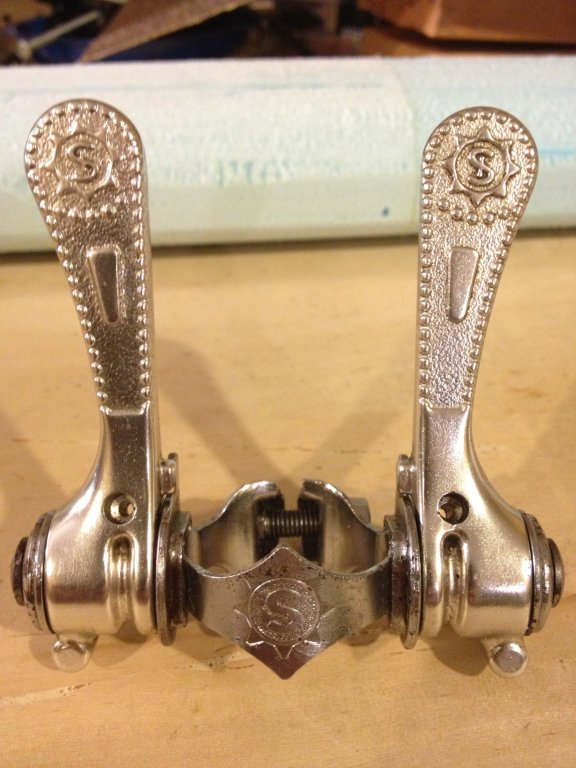
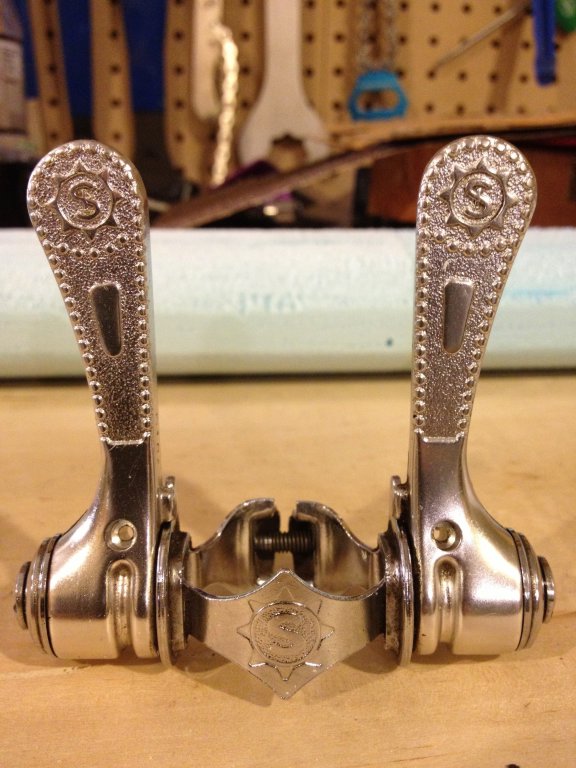
In the 70's and 80's, one of the most popular off-sponsor upgrade seen in the pro peloton was the Simplex retrofriction lever. Where the Nuovo Record might slip from the frame wrenching inflicted by a pro rider, the Simplex Retrofriction would hold its gear while allowing effortless shifting. Where traditional shifters relied solely on friction to hold the derailleur in place, Simplex utilized a novel spring clutch mechanism - pull back and the friction plate is disengaged, while the spring holds it in place when pushed forward, giving a balanced feel in spite of the pull the rear derailleur spring.

There were a few versions of the Simplex. Introduced in 1973, the mechanism lived for a very, very long time under a different of guises and vendors.

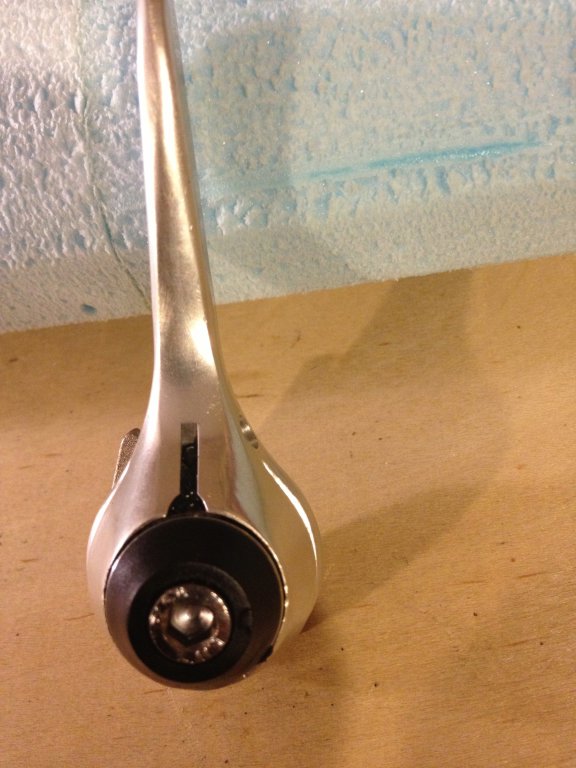
It'd be easy to label the first of the Simplex levers to be the above left, with the weird growth on their bottoms, and the example on the above right, with an internalized spring to be the more recent. Unfortunately, this may be incorrect, as the right example is detailed in their 1974 catalog, followed for the next 7 years by goitered example. In 1981, the clean hidden spring version returns. If you're looking to outfit a bike of the period, I suppose, technically, you'd be safe with either example. They were also availbale in gold and black anodized aluminum, as well as a delrin version.

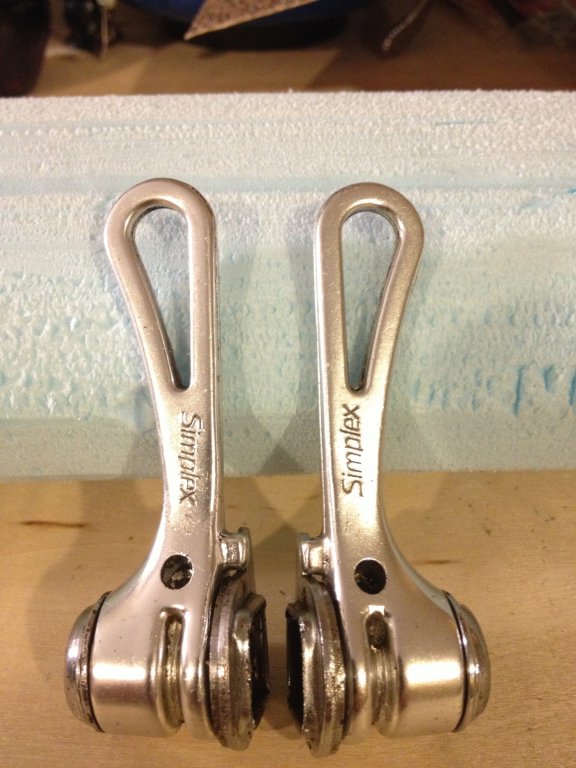
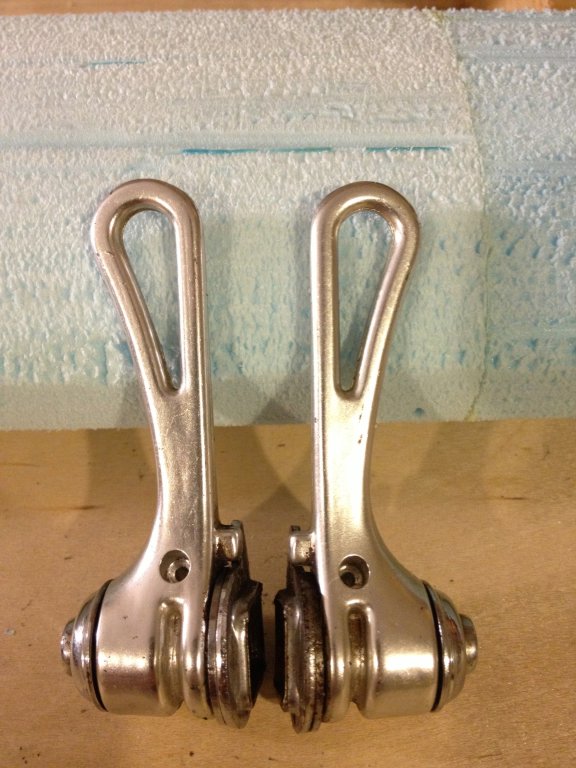
By the 1981 catalog, the lever shape changed to the "tear drop cutout" shape. I believe this version was introduced in 1978 or 1979.

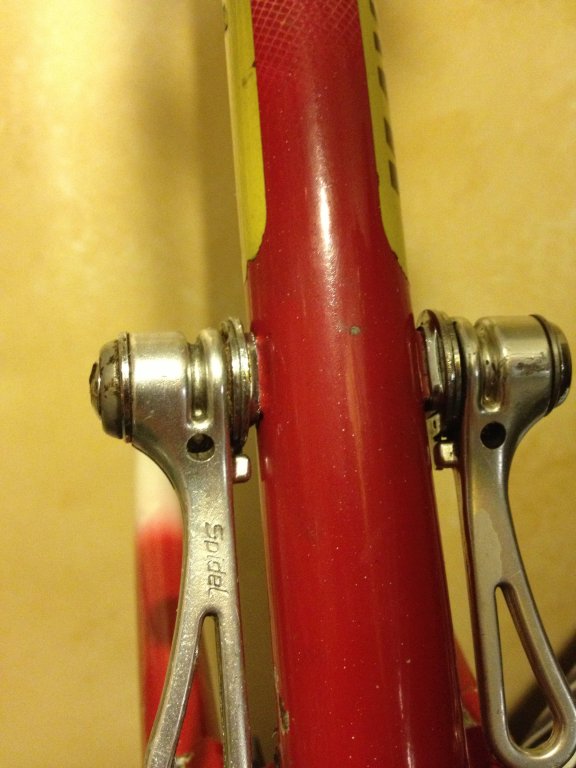
A few different brandings of this lever are found. The unmarked version was sold both as Simplex and Mavic. In the late 70's, Simplex was a member of the Spidel "collective", and labeled it's levers as such.

While this is the last lever people often associate with Simplex, there were a few versions that came after.

The front shift lever supplied with the Mavic Zap group was produced by Simplex. Simplex also sold a pair of these in the early 90's.

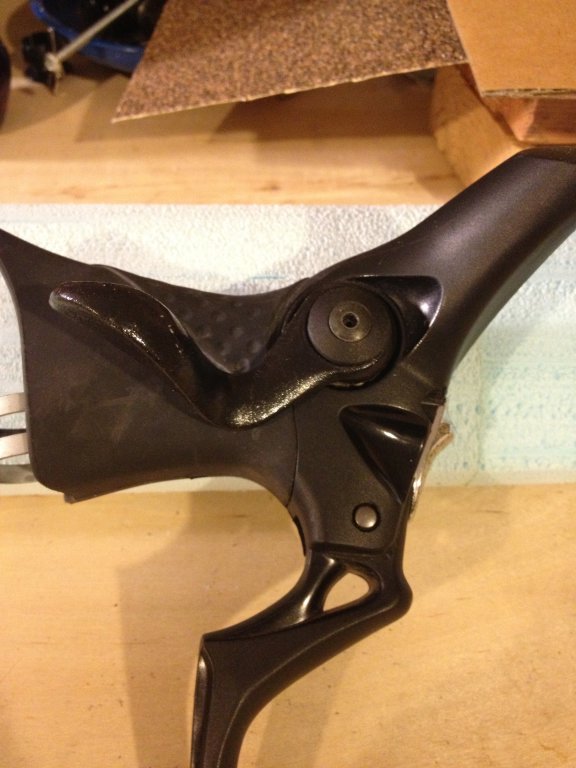
The Mavic Mektronic front lever might just give a view in to what might have happened had Mavic been first to introduce integrated shifters, instead of Shimano. Retrofriction lever sort of grafted on to the side of the lever body. Every time I'm in a less than optimal gear on a Shimano equipped bike, I wish I could have the infinite trim afforded by this sort of setup.

There were more variants! Gipiemme sold a version of the Simplex retrofriction lever, and I'm sure others did as well. Have any cool examples to share? Drop me an email with a picture!

velo-pages.com is a phenomenal resource. If you ever find yourself looking for a catalog, check it out - chances are good you'll find something there. It's also a great place to get lost in exploration!

Friday, September 28, 2012

Mavic Tools


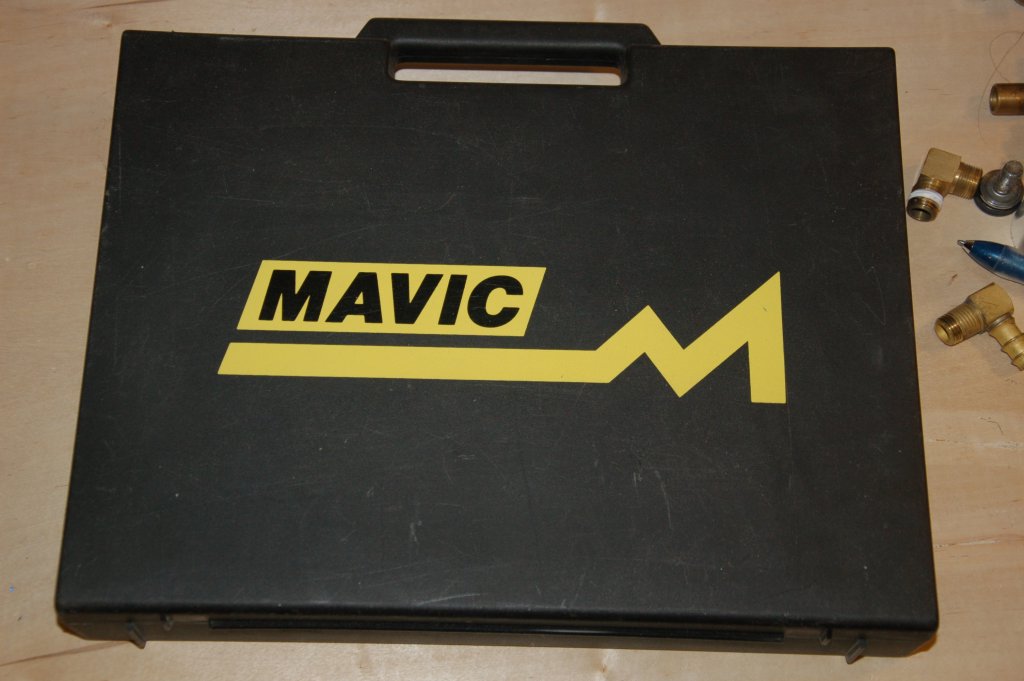
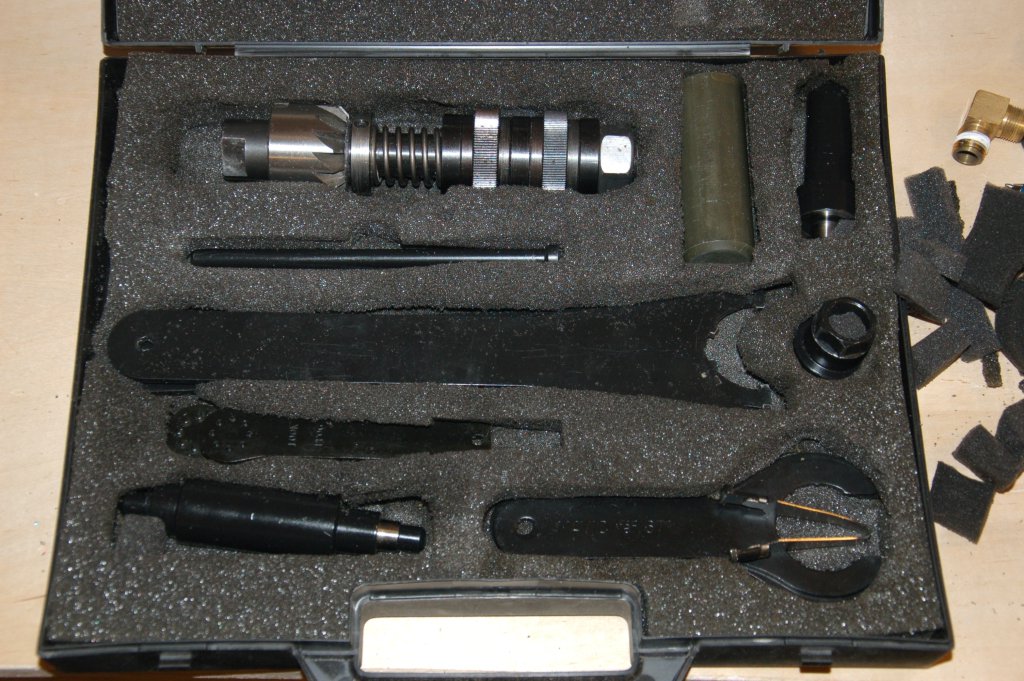
Here's something you don't see every day - the "full" Mavic tool kit.


Being a something of an out-ed Mavic nerd means I get contacted from time to time by other Mavic fans, either working on cool projects or who have some obscure/hard-to-find item they're looking to pass along to someone who'll take good care of them.

That description fits me to a T. You've got Mavic stuff you want a good caretaker for, I'm your guy.

I was contacted a bunch of months ago by someone who came across the blog who had been carting around a Mavic toolkit since the 90's, when a well equipped shop might actually have one of these. Now my relatively well equipped (work)shop does, and I'm really excited to put it all to use.

Some of the tools are familiar - or at least, tools you've heard about, while some of them aren't as common. Here they are, along with pics of them in use where I could find them.


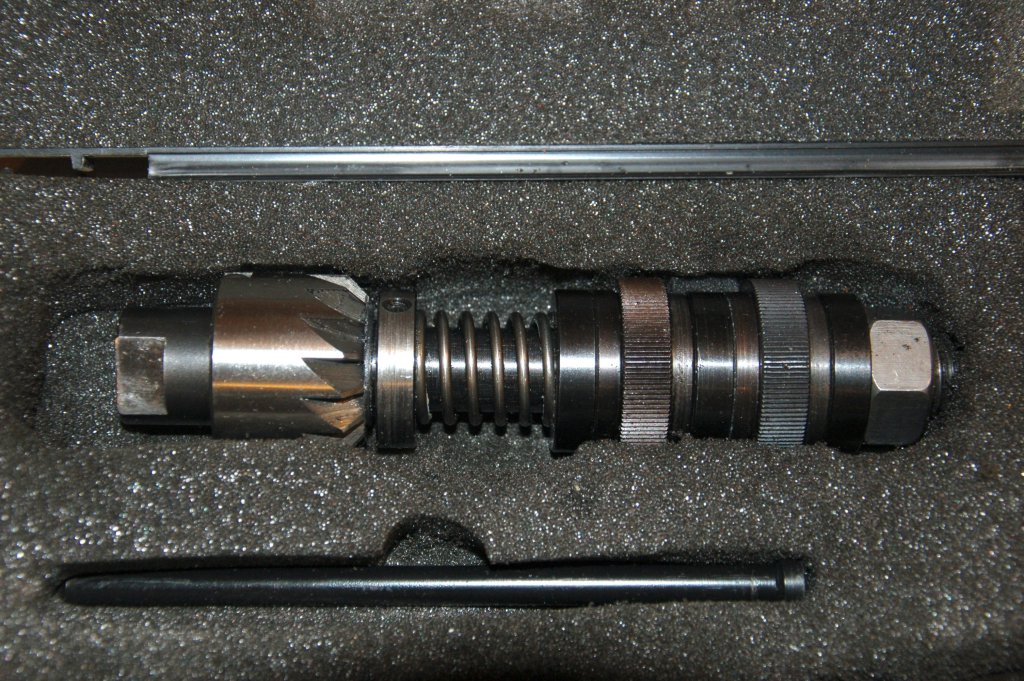
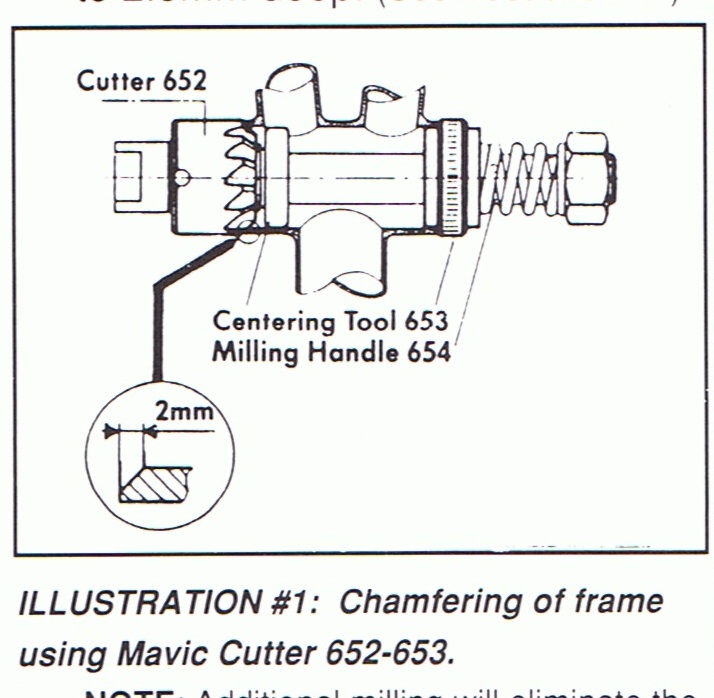
The Mavic bottom bracket cutter is probably familiar to most of you. It was sold in pieces, designated 652 (cutter), 653 (centering cones), and 654 (the handle). This one has two sets of centering cones mounted. They're reversible to handle cutting English/French or Italian sized bottom brackets. (Yes, I know French and English aren't the same size, but for the purposes of the centering cone, they're close enough.)

The drift is Mavic's 6703.


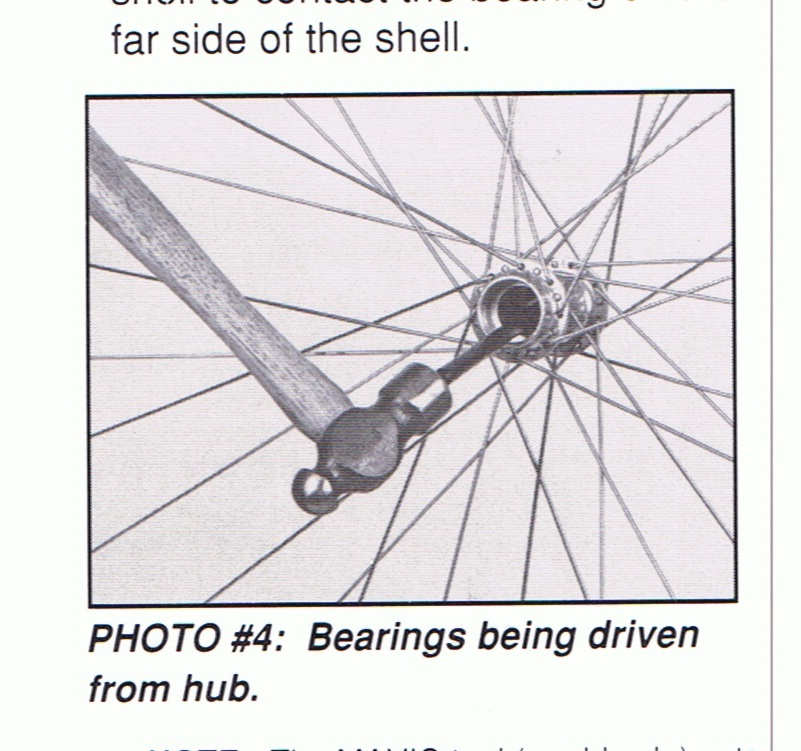
Mavic's 6702 bearing set. Used to gently persuade bearings in to bottom brackets.


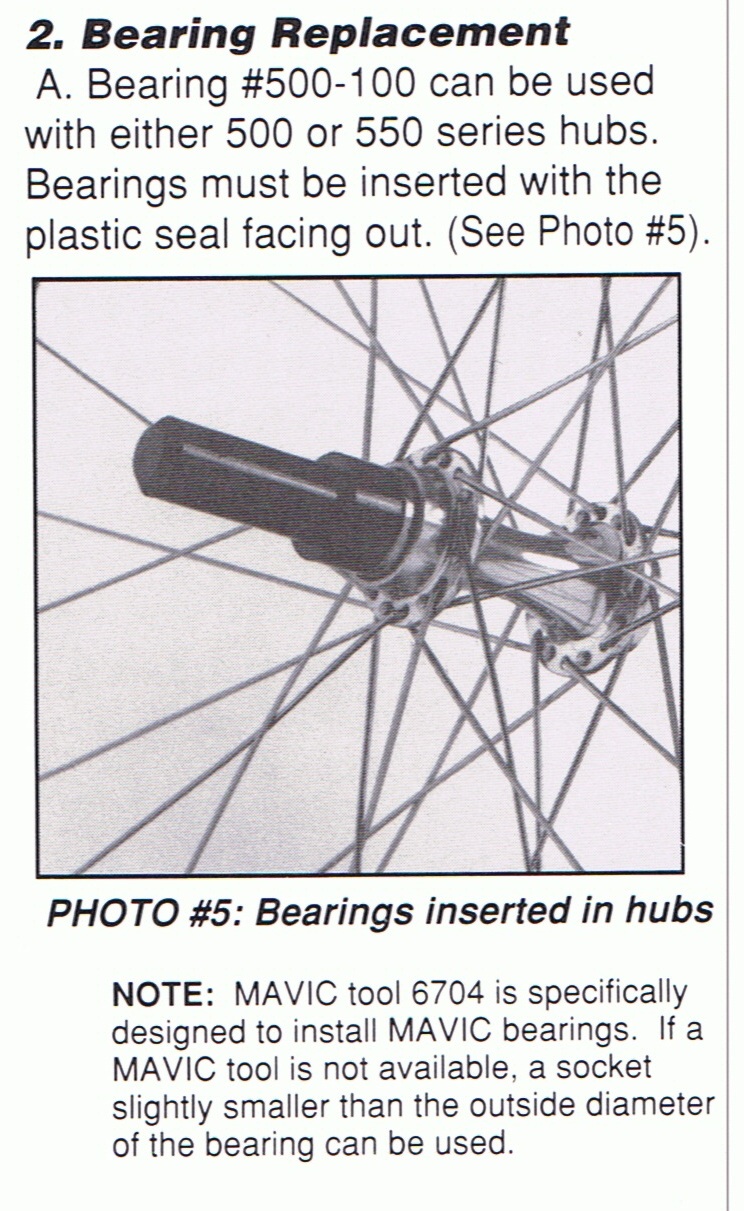
6704 hub bearing set.


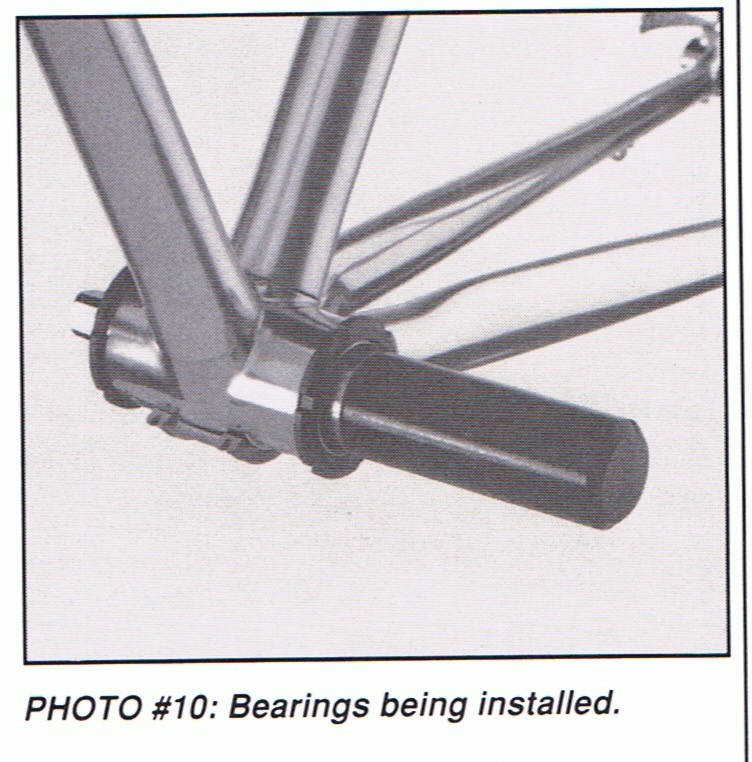
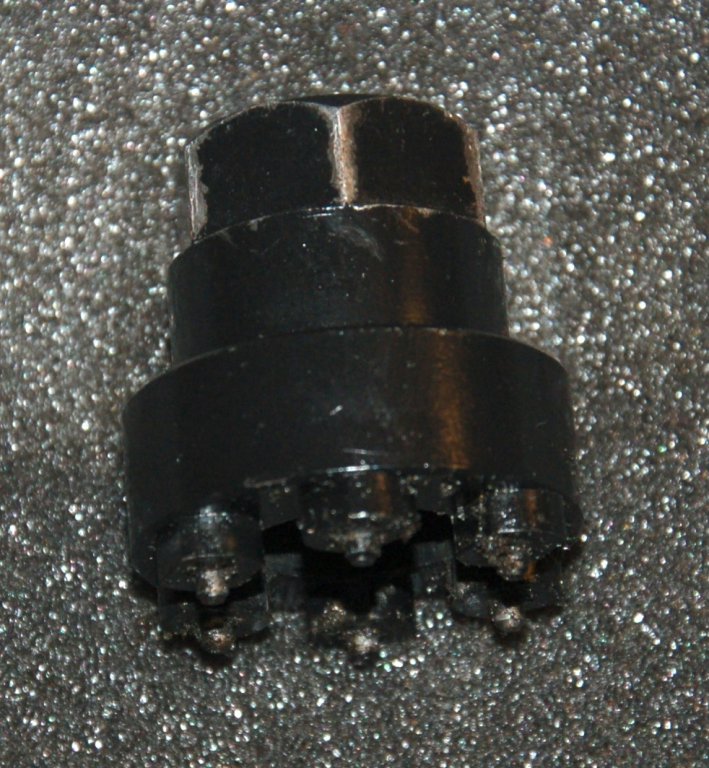
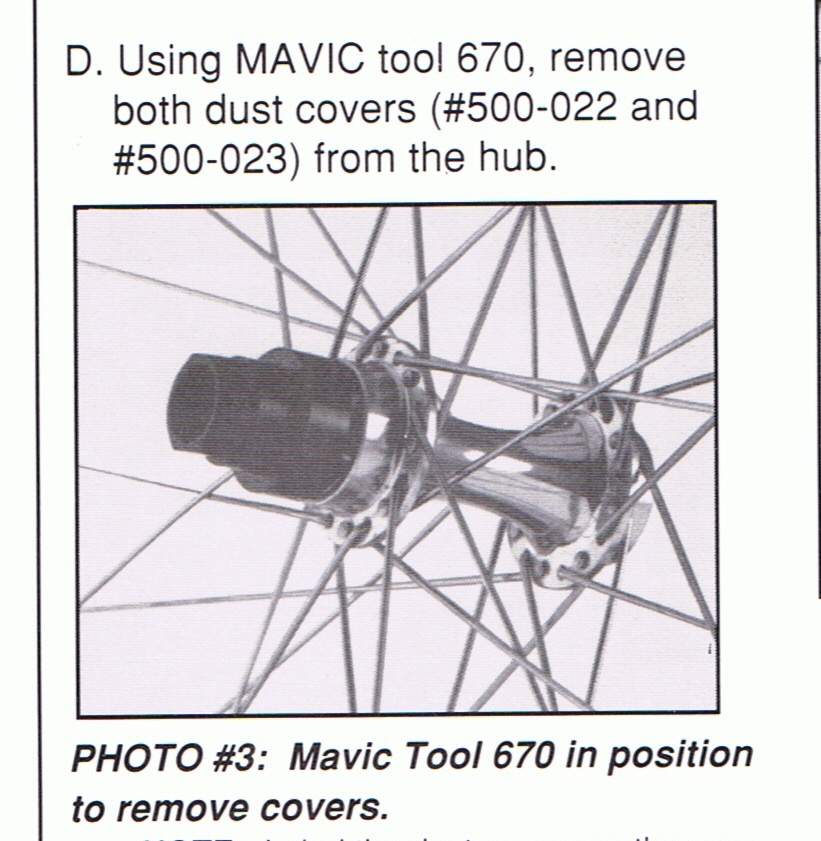
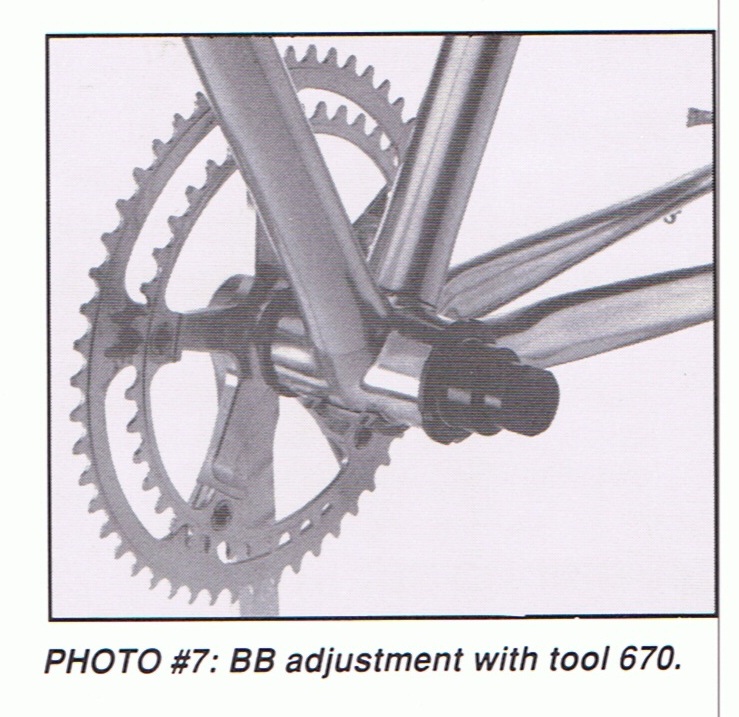
The 670 bearing adjustment tool. Used to install, remove and adjust bearing covers on the Mavic hubs and bottom brackets.


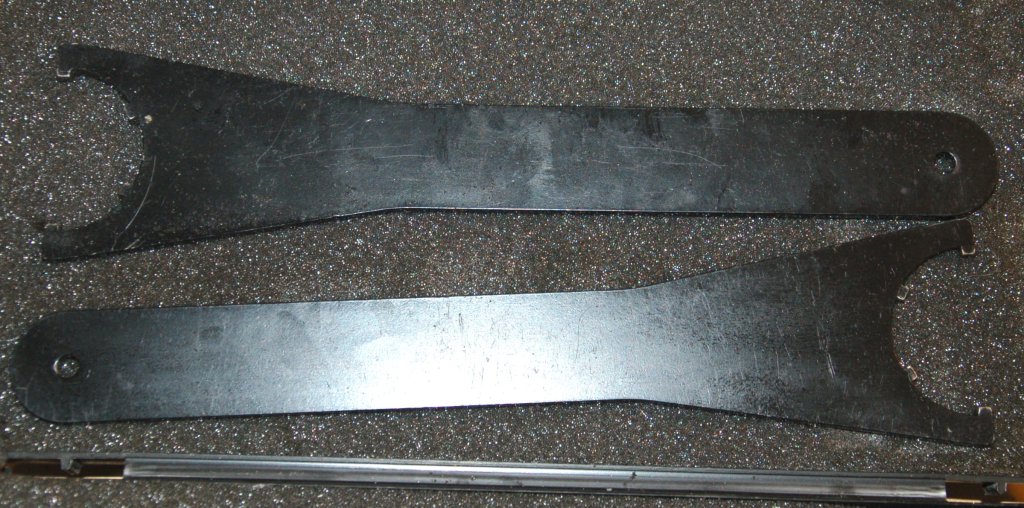
The 6705 bottom bracket installation wrenches.


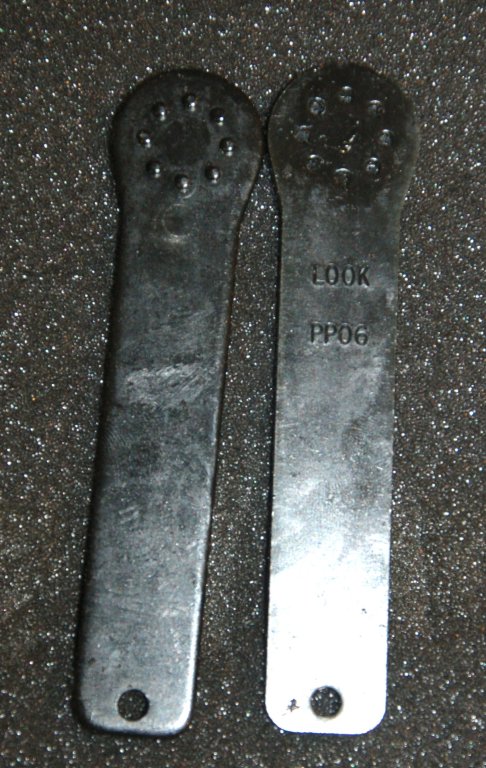
These are actually LOOK pedal wrenches, used to remove the outer bearing covers on the early Delta pedals, like Mavic's 646 LMS.


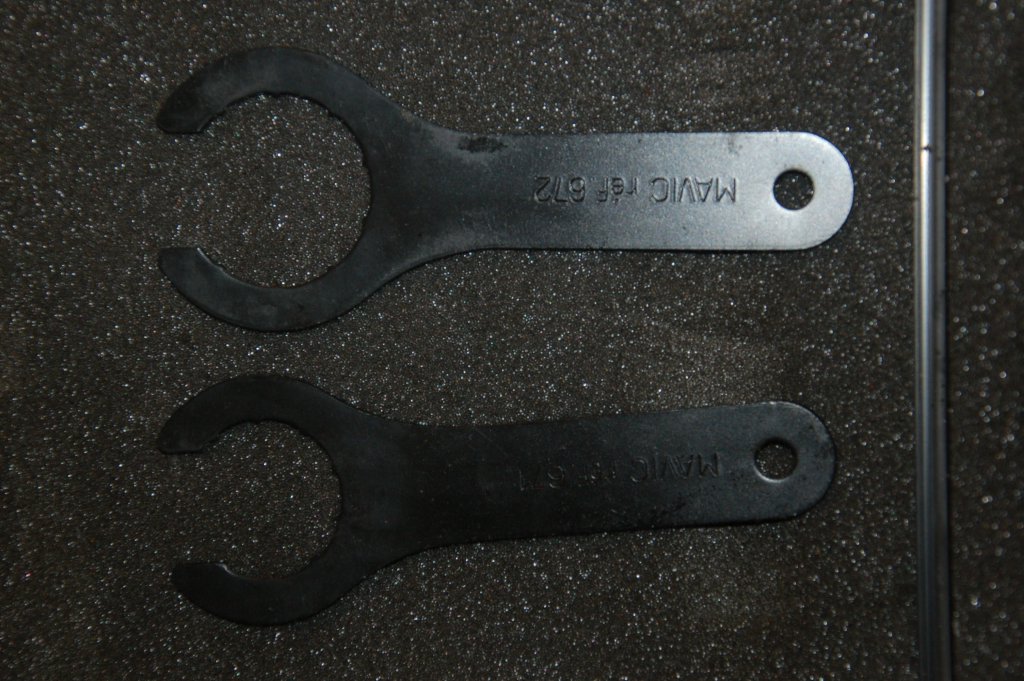
The 671 and 672 headset wrenches, used with the 300/310 series headsets.


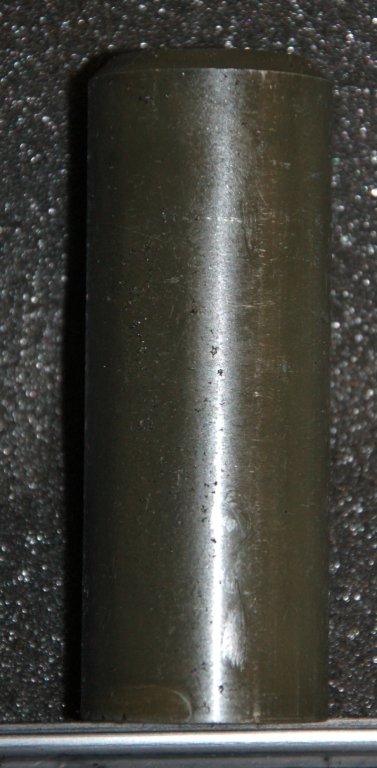
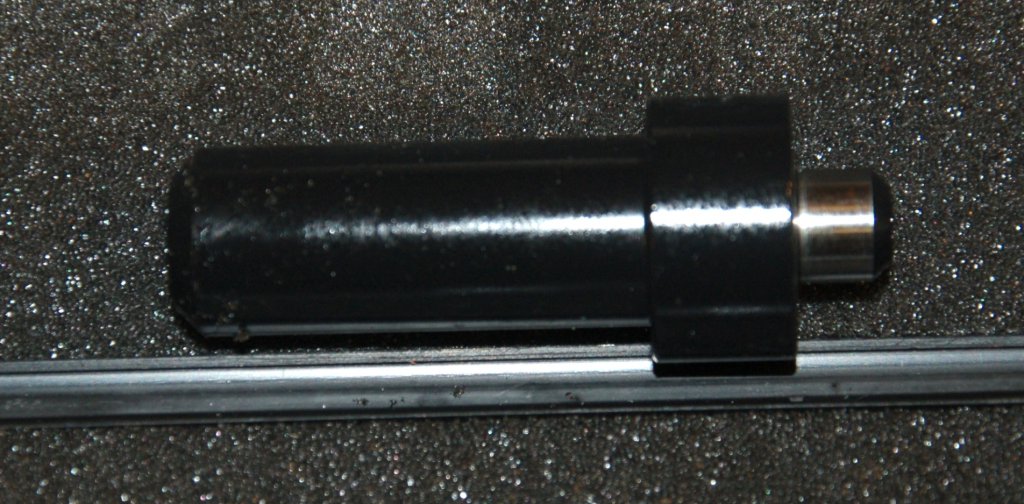
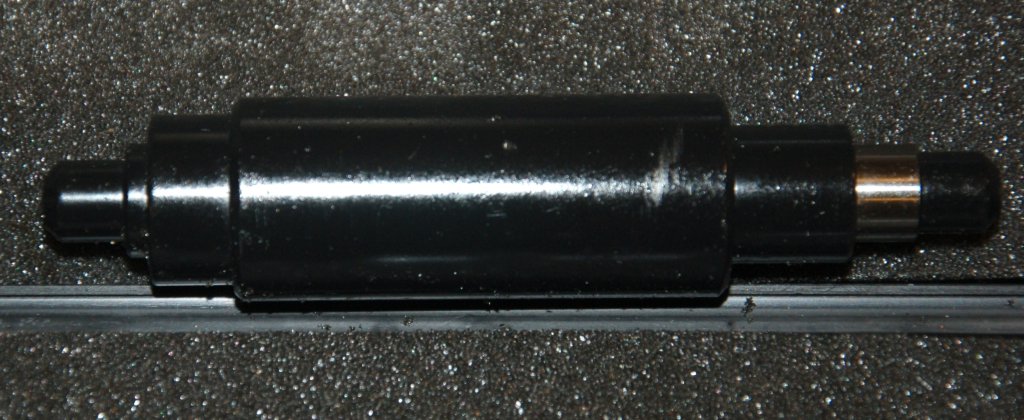
Finally, the 6701 pedal bearing set. Used to insert the bearings in to a variety of Mavic pedals.

The foam in these toolkits is always deteriorating, some 20 years after they were manufactured. I have an empty spare toolkit case that sooner or later I'll cut replacement foam for.

What are the compressor/vacuum fittings for in the topmost pictures? Another project altogether! More on that shortly...

Monday, August 20, 2012

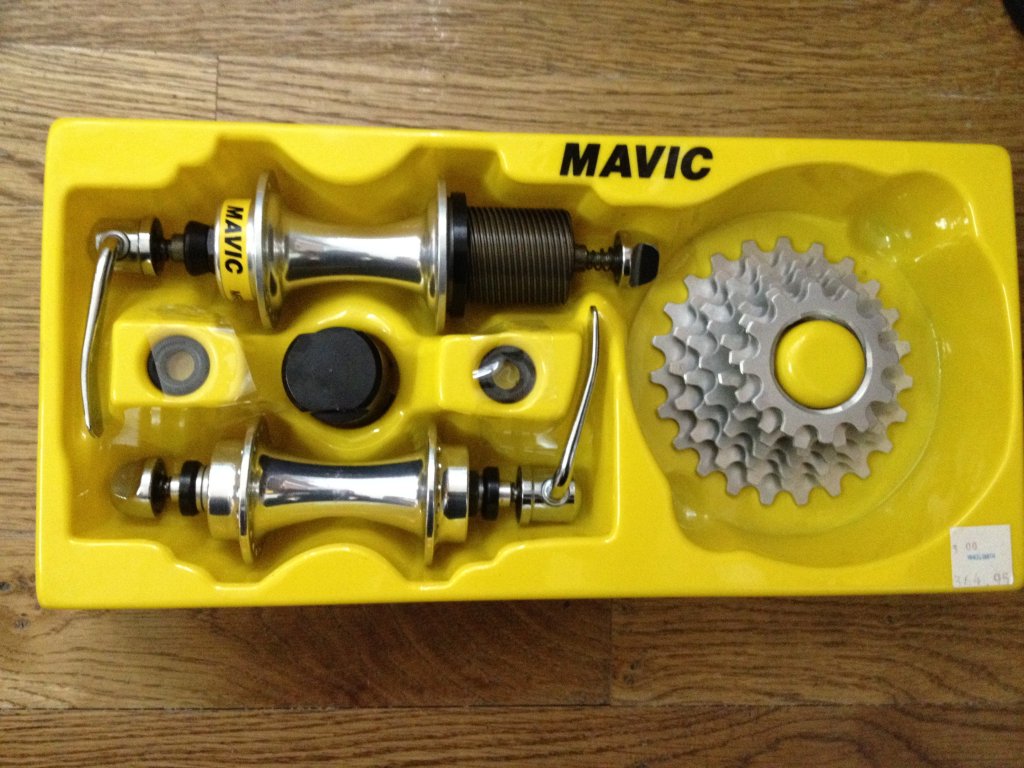
Mavic's first cassette hub - the 570

Mavic's first "successful" cassette hub was the often talked about (on here at least) 571. The 571's design was similar to the other hubs of the era - a driver with a spline pattern, cogs held in place by either a threaded outermost cost (571) or a lockring (571/2).

The 571 wasn't Mavic's first cassette hub, however. That distinction goes to the MRL 570 hub. Also known as the Z-Hub, the 570 was an interesting, albeit quirky French take on the cassette.

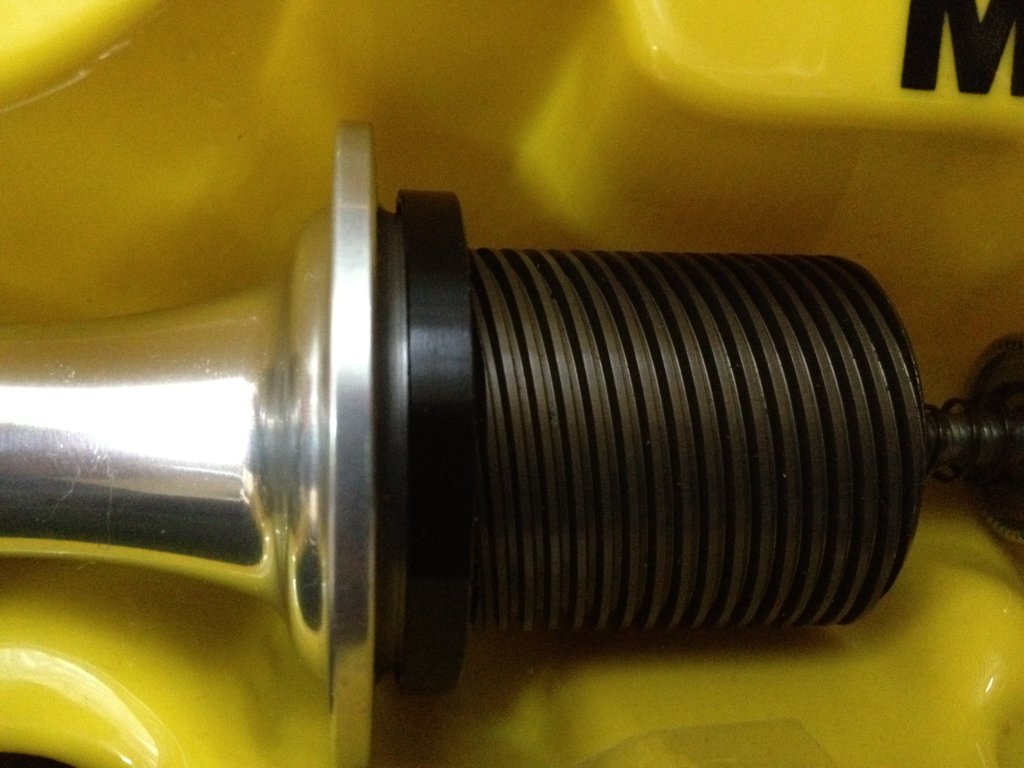
Where a modern cassette would have its splines, the 570 has threads - what might be called by some an Acme thread, they're similar to the threading often seen on the lead screw of a lathe. Mavic made a number of claims about design that were of specious validity. The design of the 570 (and the 571, 575 and 577, for that matter) allowed the cassette driver to be removed from the hub using only hex wrenches. This, Mavic claimed, would allow you to have drivers loaded with cogs, ready to go for quick changes of your gear ratios. Aside from the fact that spare drivers were non-existent, one attractive quality of a cassette is the ease with which you can swap cogs - having a pre-populated body doesn't sound all that attractive. The 570 also had its issues. The driver was prone to splitting - perhaps it was machined rather than forged, and the loads it sees either from cogs snugging themselves down too far or through torque could cause it to crack perpendicular to the threads.

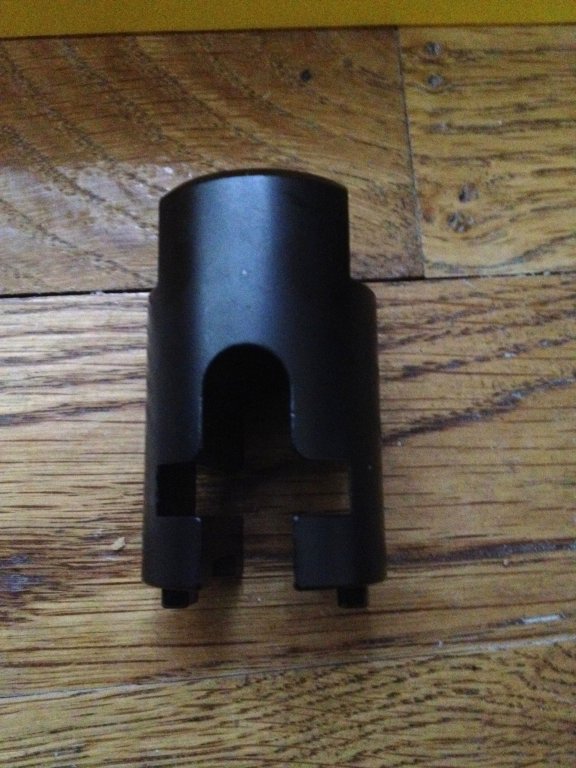
It was also possible for the cogs to overtighten, making their removal a chore - and given that they all threaded on, it was easy to land in a situation where you needed to wrestle all 7 cogs off by hand. Fortunately there was a tool to hold the cassette mechanism in place, lest that 7th cog stay on there forever...

A cheap hub this was not. With a retail of close to $400 with a front hub and alloy cassette, it's no surprise there aren't many to be found.

The 570 was available for a year or 2 before it was replaced by the much more refined 571.

Wednesday, April 25, 2012

A box-sectioned eulogy

Not that long ago, the cobbled classics were an anomaly in the cycling calendar. While a team might employ the same frame, component and wheel choices for 95% of their race calendar, the month or so bounded by semi-classic Omloop Het (Volk, Nieuwsblad) and Paris-Roubaix was a special time. The ubiquitous, obvious choices went out the window, replaced by cobble specific setups. Custom frame geometries, cantilever brakes, doubled-up seat clamps, chain catchers, aluminum rims—a myriad of hardware rarely seen outside of the season. For the tech-junkies among us, it was an assault of unique, purpose driven bikes, and it was glorious.

By the early oughts, teams stopped with the total insanity the 90's had introduced in to these races—the Rock Shox and full suspension rigs replaced with frames like Specialized's Roubaix, or in some cases, teams employing cyclocross bikes. Sure, there'd was the occasional one-off custom, carefully hidden under paint, but they became the exception rather than the rule. The last bastion of unique was the rim.

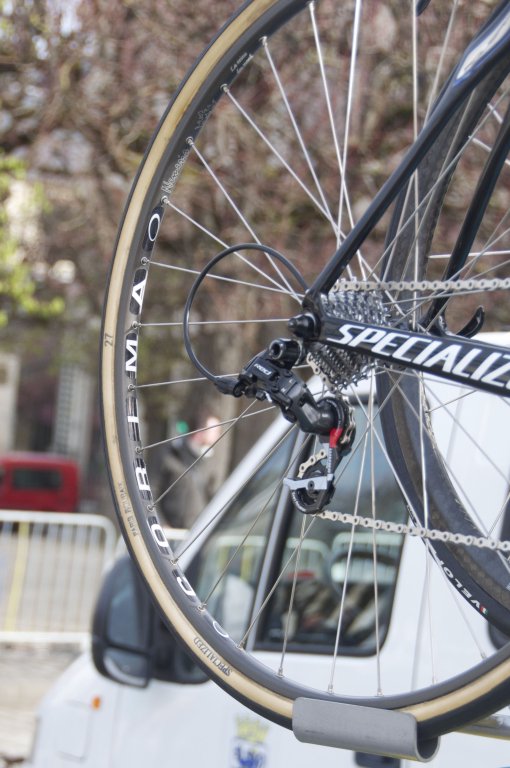
Up until the last handful of years, box section aluminum rims were the only option for the cobbles. Rims like Mavic's Paris-Roubaix SSC dominated. As the supply of SSC's dwindled in the late 90's, the Ambrosio Nemesis became the rim of choice. A similar extrusion to the SSC, it was easily identified by its polished brass badge, supposedly placed to compensate for the imbalanced introduced by the drilling of the valve hole, but just as likely there to make sure no one would question what rim you were really looking at—for although everyone knew they were being ridden by a majority of the peloton, only a handful did so without some token attempt at rebadging them.

The last few years have been unkind to the box section. To butcher a quote often credited to Andy Hampsten, it would seem the only thing scarier than riding the cobbles on carbon rims is not riding the cobbles on carbon rims. The past three years have seen all of the cobbled classics won on carbon—the last win on an aluminum rim was Boonen's in the 2009 edition of Paris-Roubaix. The SSC, Nemesis or similar aluminum box section, once the rims of spring, have been largely replaced—and while 6 out of 9 of the last cobbled classics wins came on Zipp 303's, the other wheel vendors have also gotten in on the wins as well, including Mavic, Campagnolo and HED. Their reputation for fragility, whether ever warranted or not, has fallen by the wayside as they've demonstrated they're ready for the rough stuff.

2012 saw few aluminum box sections actually hit the cobbles, being mostly relegated to spare wheels or also-ran teams. Mavic tubulars, in particular, are few and far between, save a relic or two riding neutral support. While we'll probably a few of these aluminum shod wheels around next year, their day seems to be coming to a rapid—and unfortunate—end. So long old friends.

Wednesday, April 11, 2012

1999 Mavic Mektronic Catalog

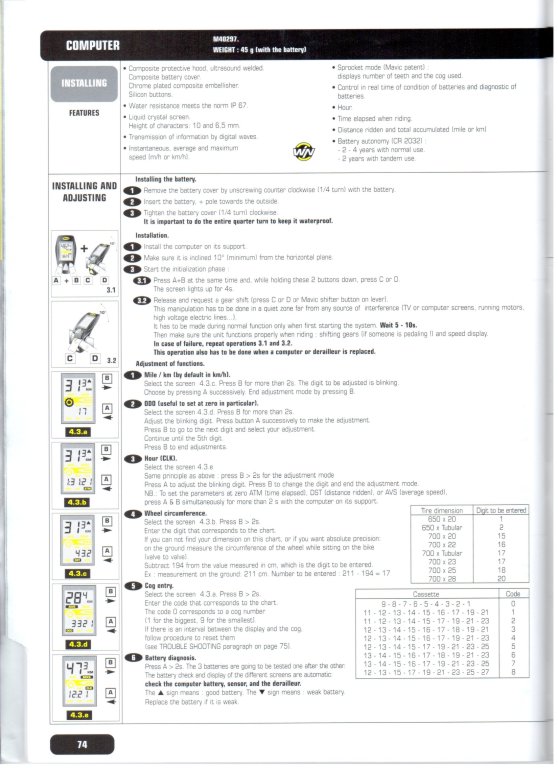
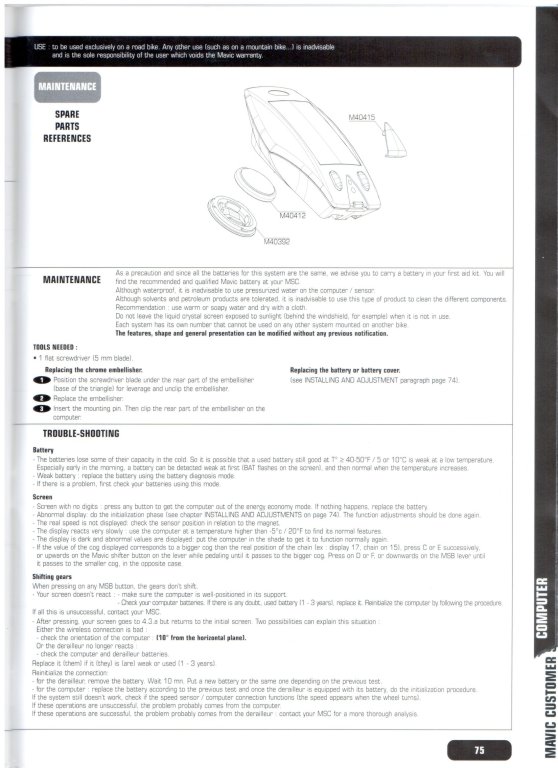
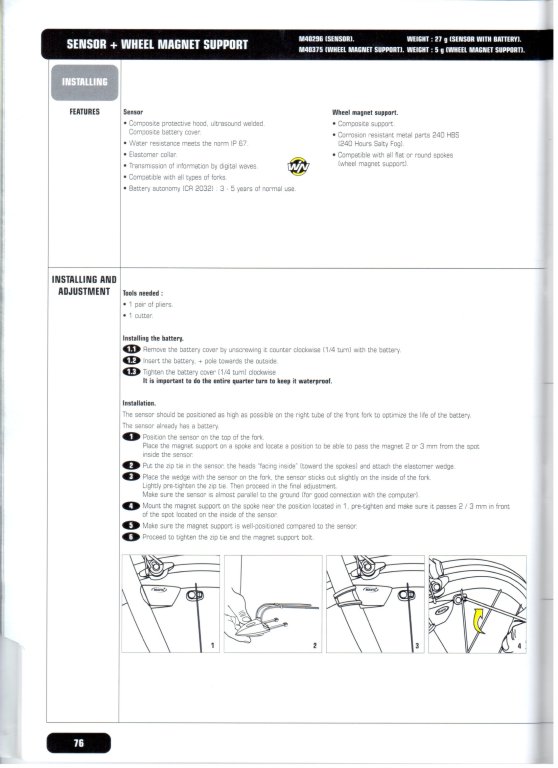
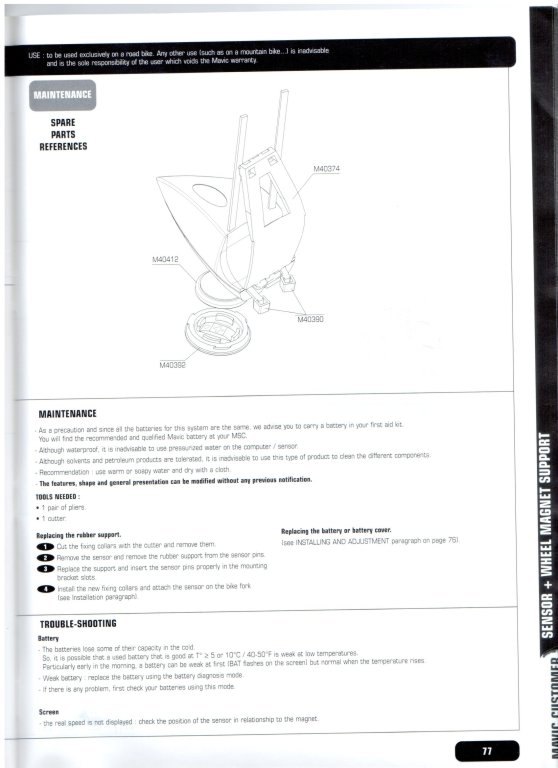
So just the other day I found myself at dinner with former French pro Jacky Durand. The sole non-French speaker at the table, I spent a pretty ridiculous amount of time nodding and smiling when I really had no clue what was going on. In between stories I'm pretty sure were about Jacky's mom dropping her friends on rides on the farm and how the sound of a pig being slaughtered can carry for kilometers, I picked up an all-too-familiar story about Mavic Mektronic. Power lines in the distance, Jacky related, were a sure sign that he and anyone else in the peloton stuck riding Mektronic were about to be in for a sufferfest - the system, when encountering interference, would cause the derailleur to reset it self, dumping them in to the smallest cog in the back.

Apocryphal or not, hearing Durand (and watching him act out) the effects of this on his performance were very comical - the guy can tell a story. I never got to play with Mektronic when it was new, given what it cost. I've since acquired a couple of sets, but haven't been able to bring myself to use it - a combination of fragility, obsolescence, and stories involving my already poor climbing abilities suffering in the presence of overhead power lines have killed any curiosity I once had about what it was like to ride.

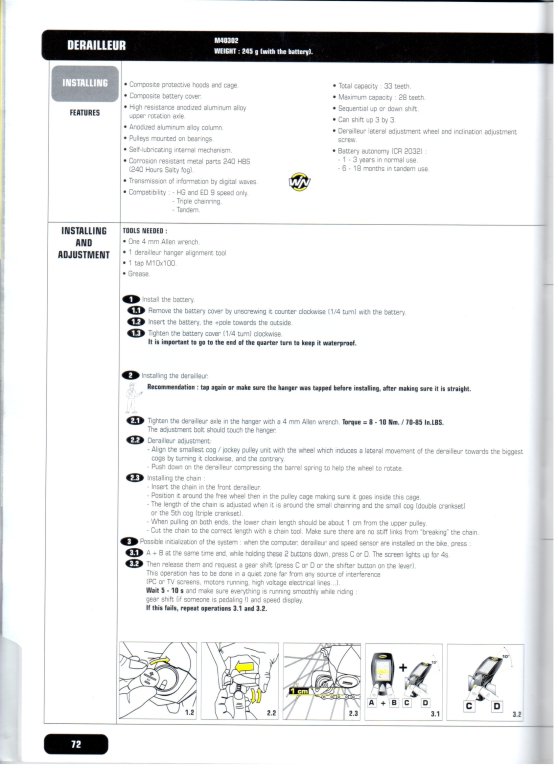
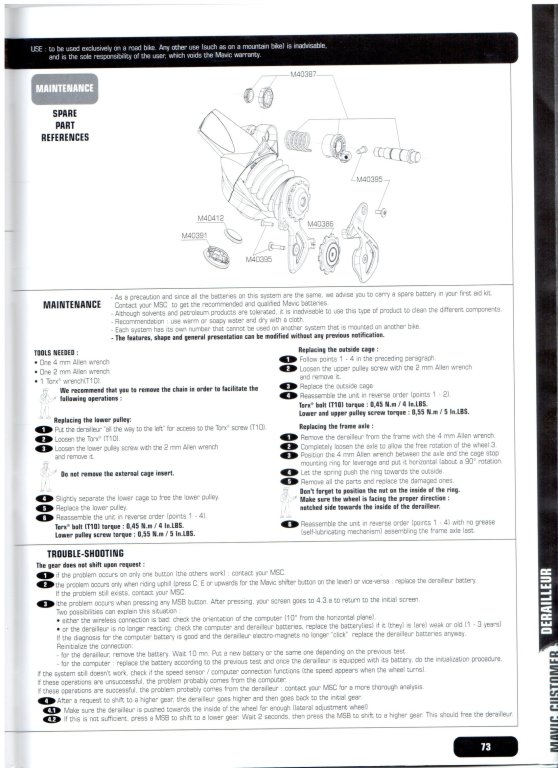
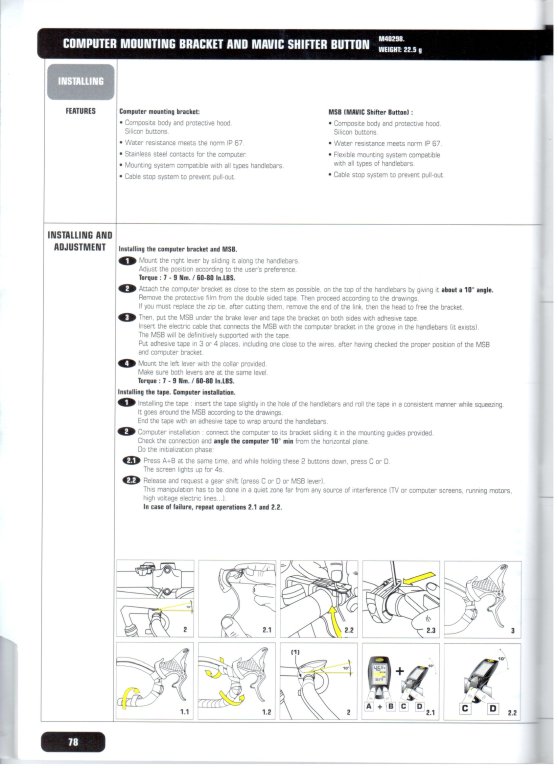
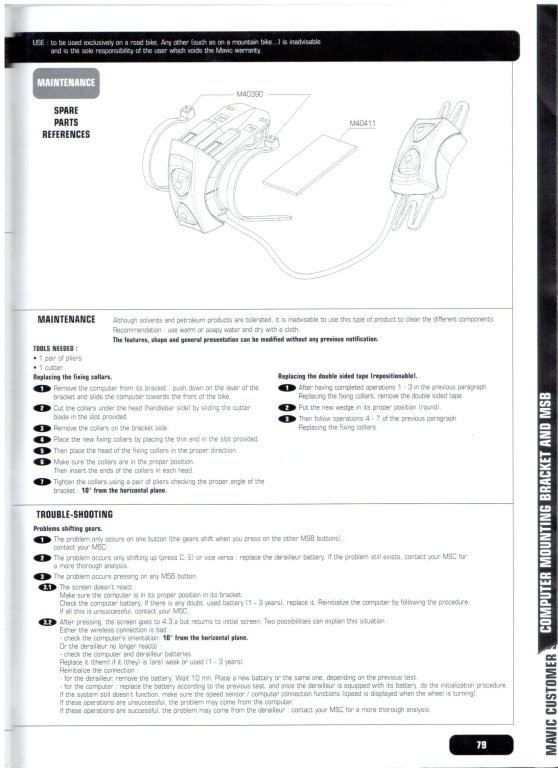
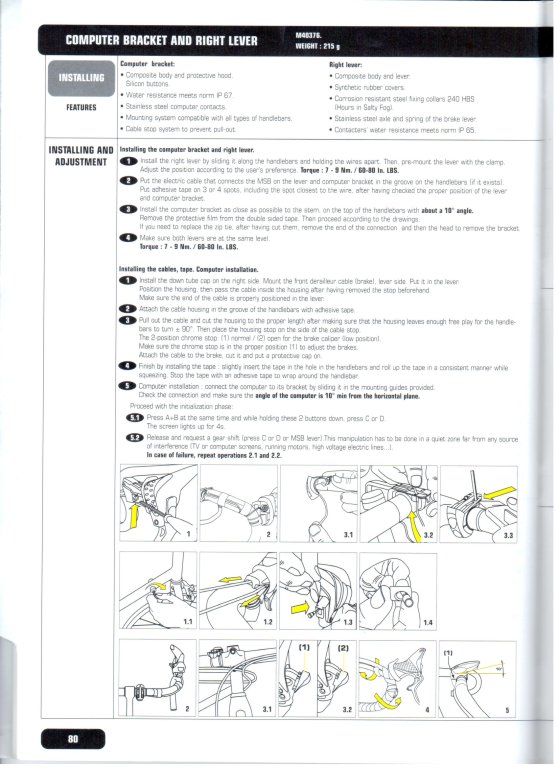
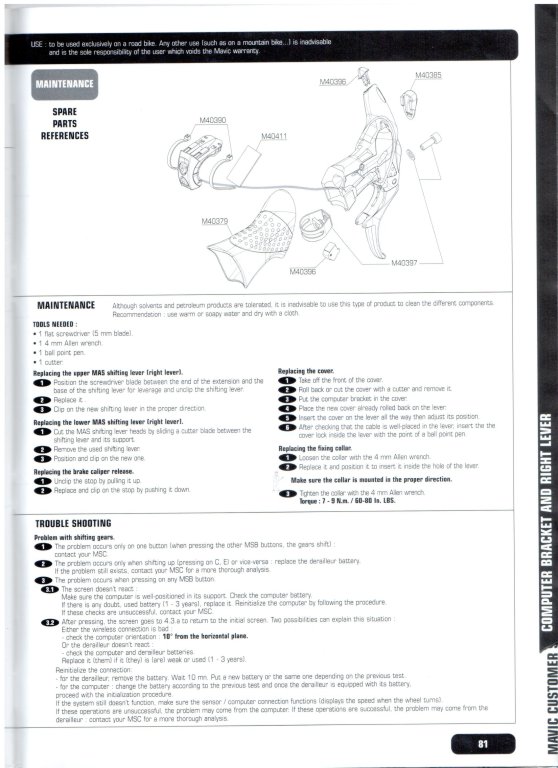
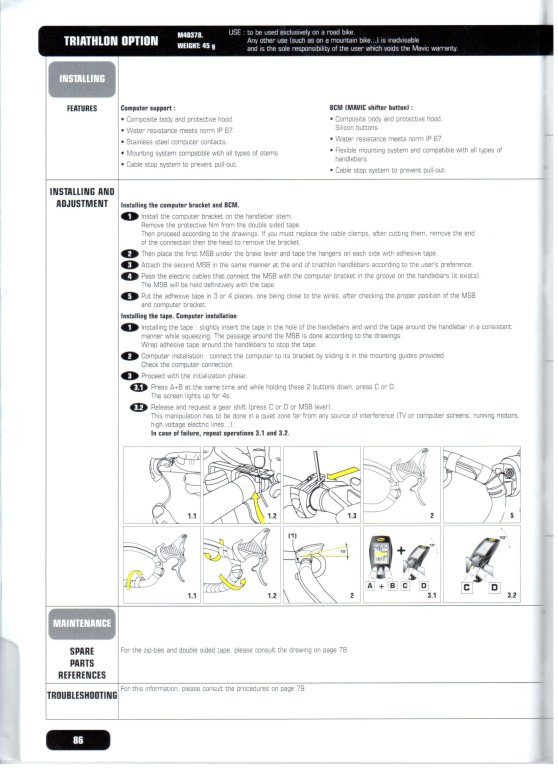
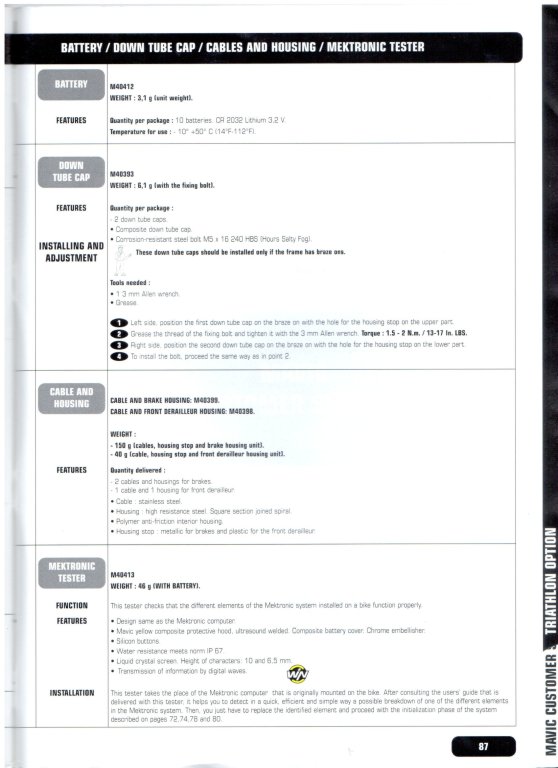
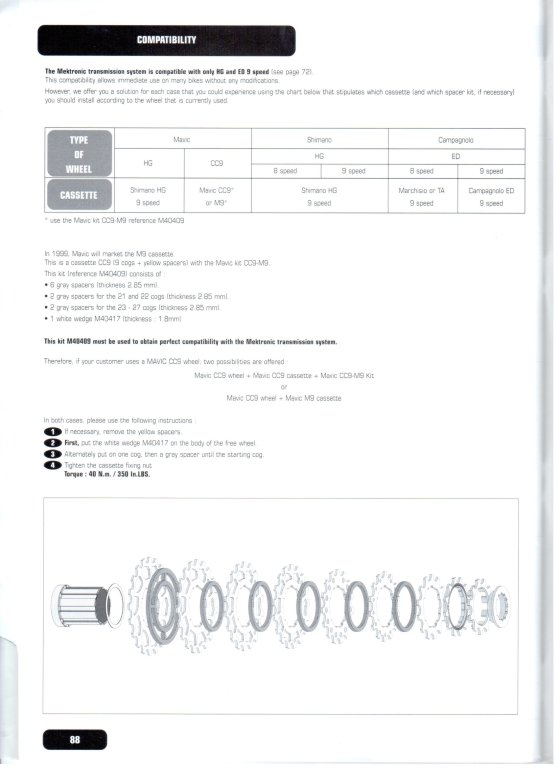
Should you find yourself in possession of a set, and feel motivated to give it a try, I hope these manual pages come in handy.