Tuesday, January 03, 2012

The Different Mavic CXP Rims

Do you know the differences between all the Mavic CXP rims? For me, its always felt like a bunch of quasi-aero rims with different characteristics were opaquely lumped together under the CXP designation. Very confusing. If you can keep them all straight, I'm impressed.
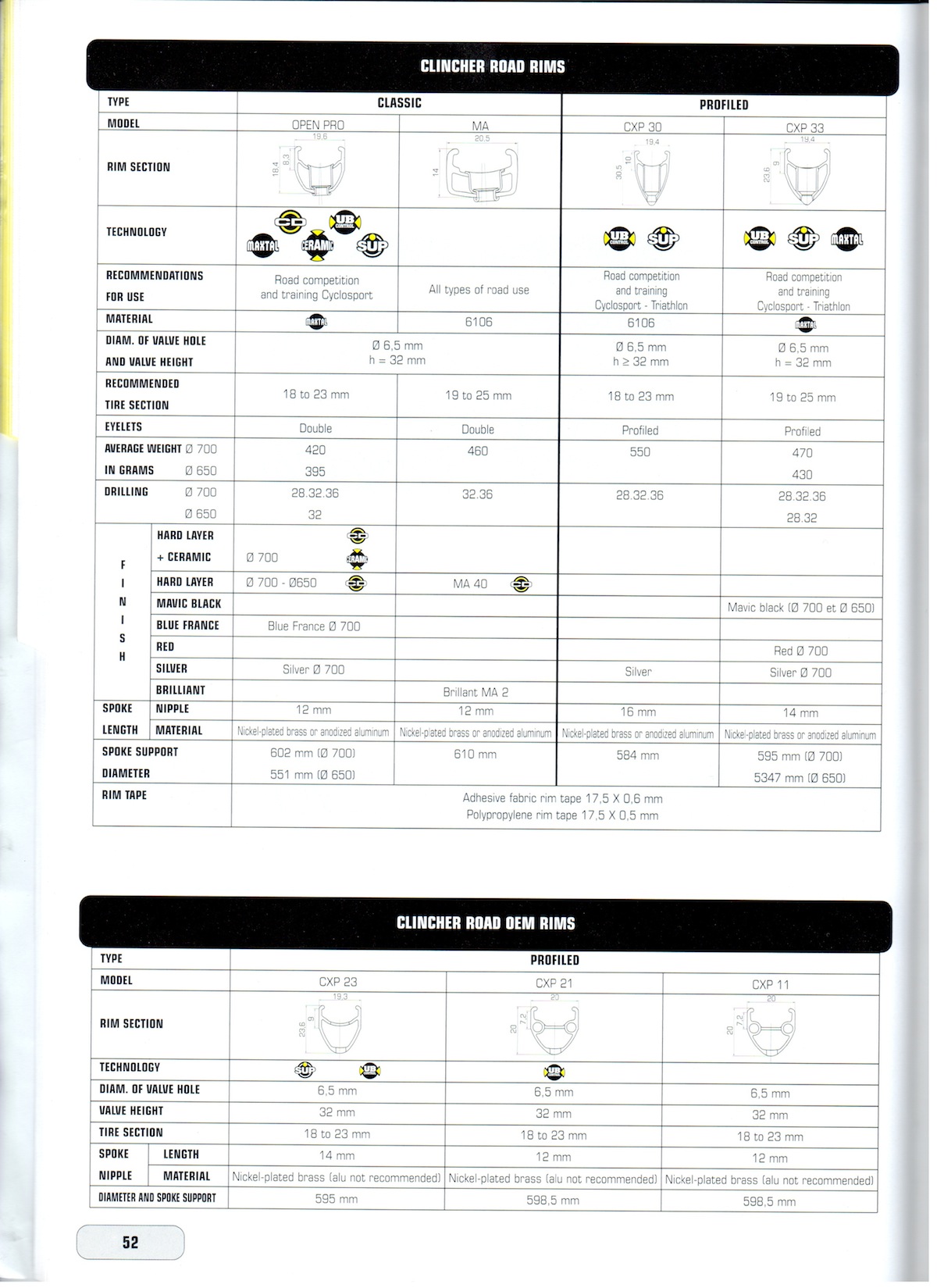
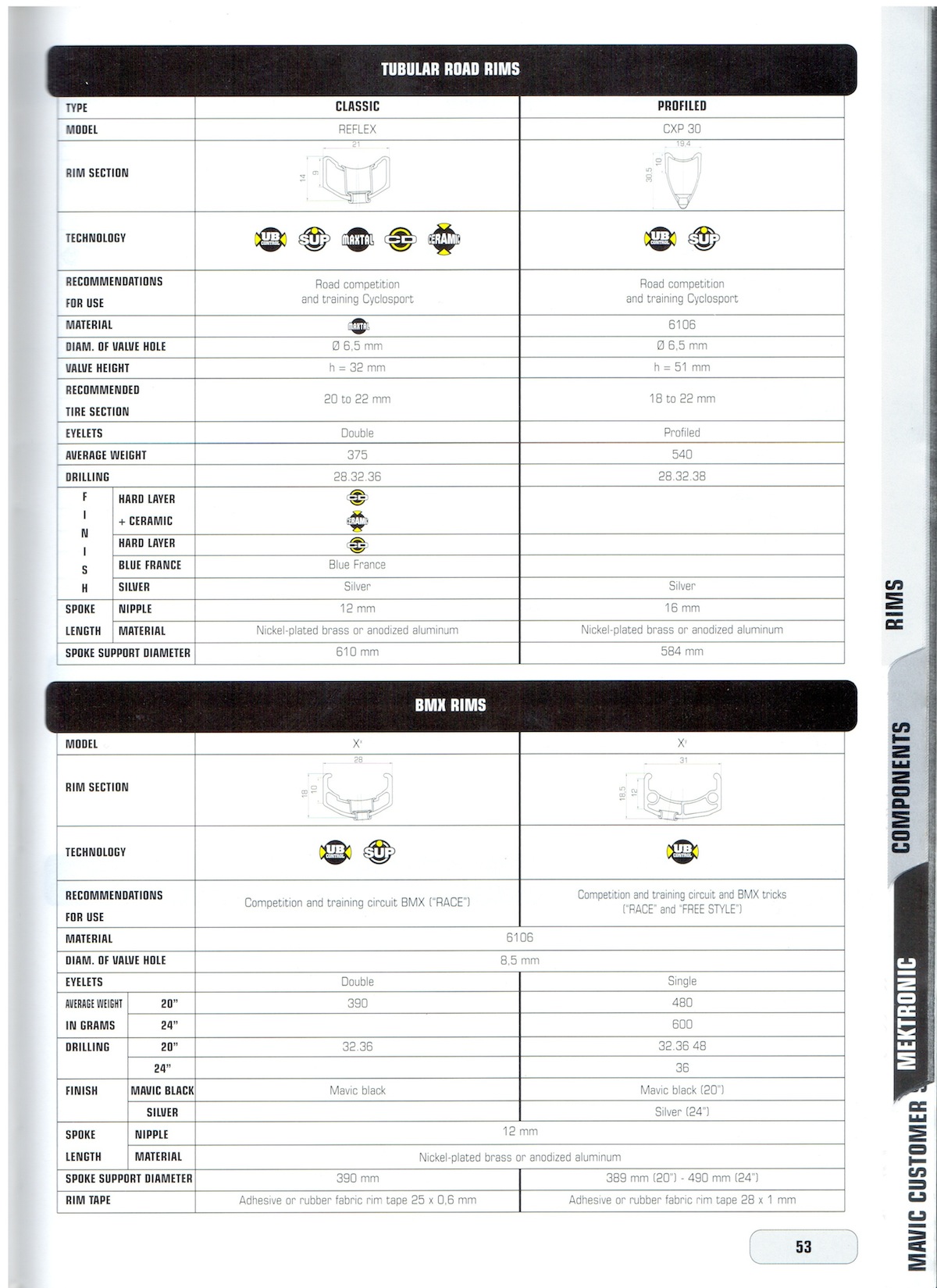
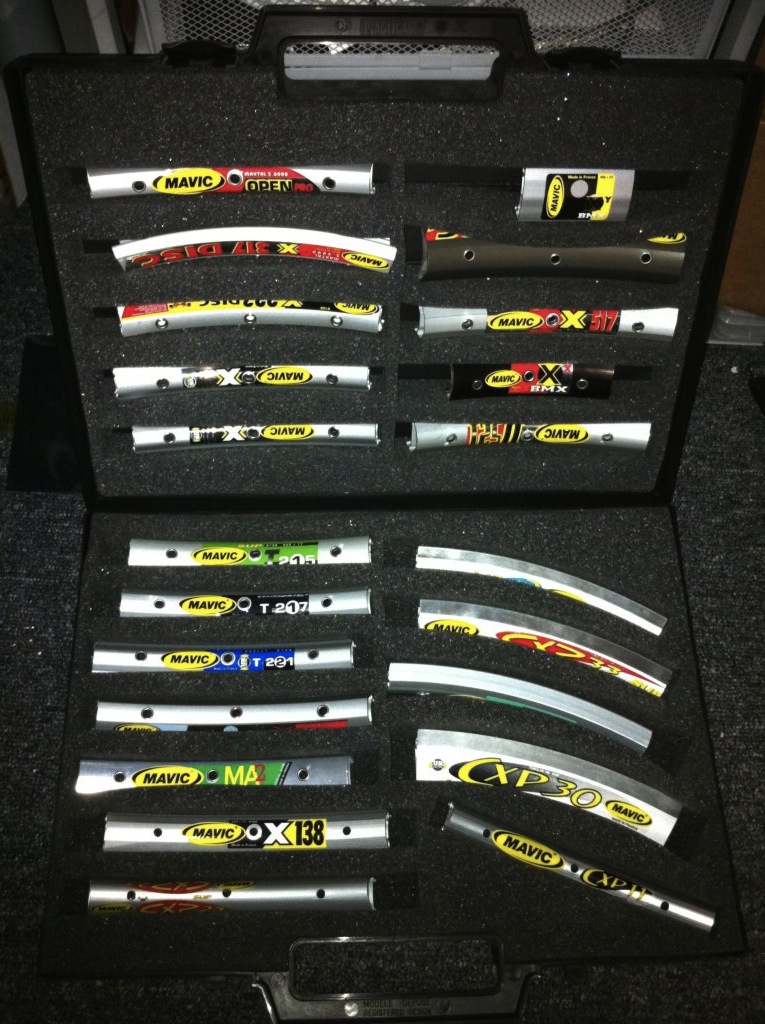
Hopefully, my confusion (and yours, should you have any) will end along with 2011. From Mavic's 1999 catalog, here are the CXP catalog pages for the family members that existed at the time, along with profile and extrusion shots for each of them. Let's start with the highest number and work our way down.
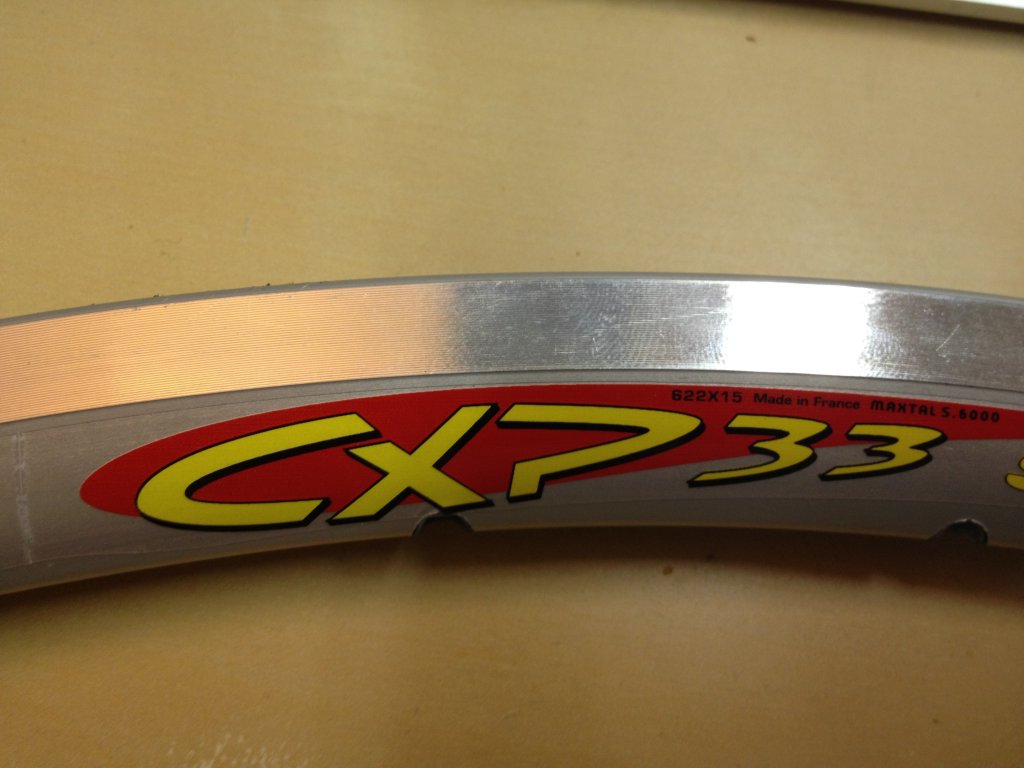
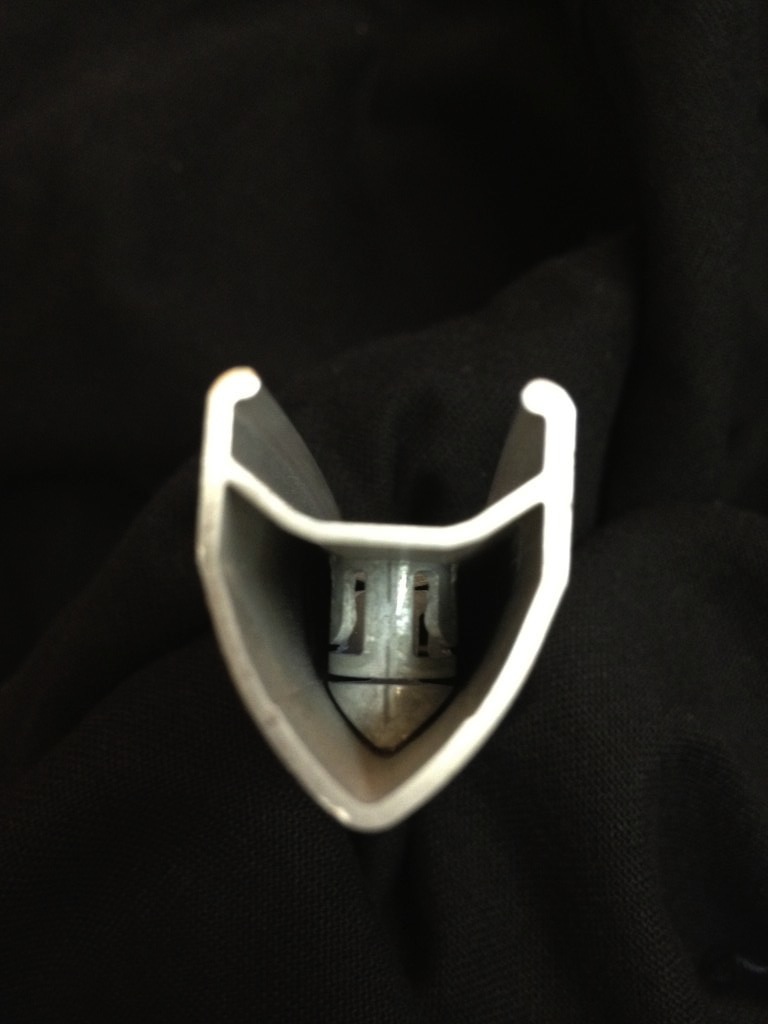
The CXP33. 19.4mm wide, 23.6mm high. Welded + machined. "Profiled" eyelets.
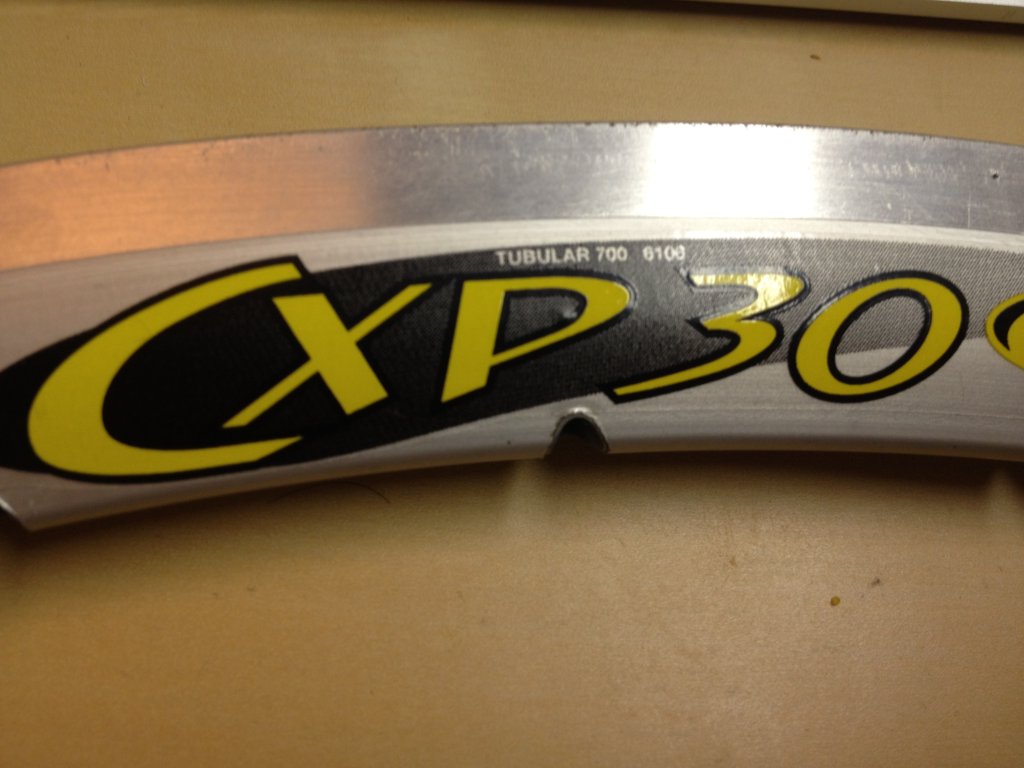
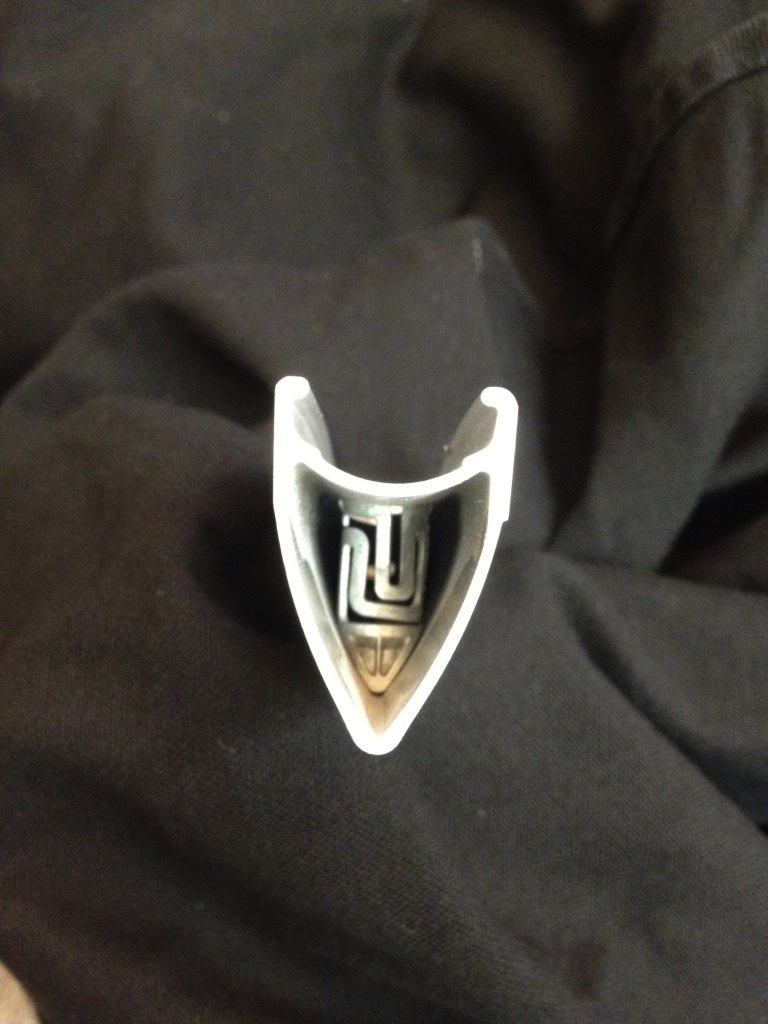
The CXP30. 19.4mm wide, 30.5mm high. Welded + machined. "Profiled" eyelets. This rim was available in a tubular AND clincher version.
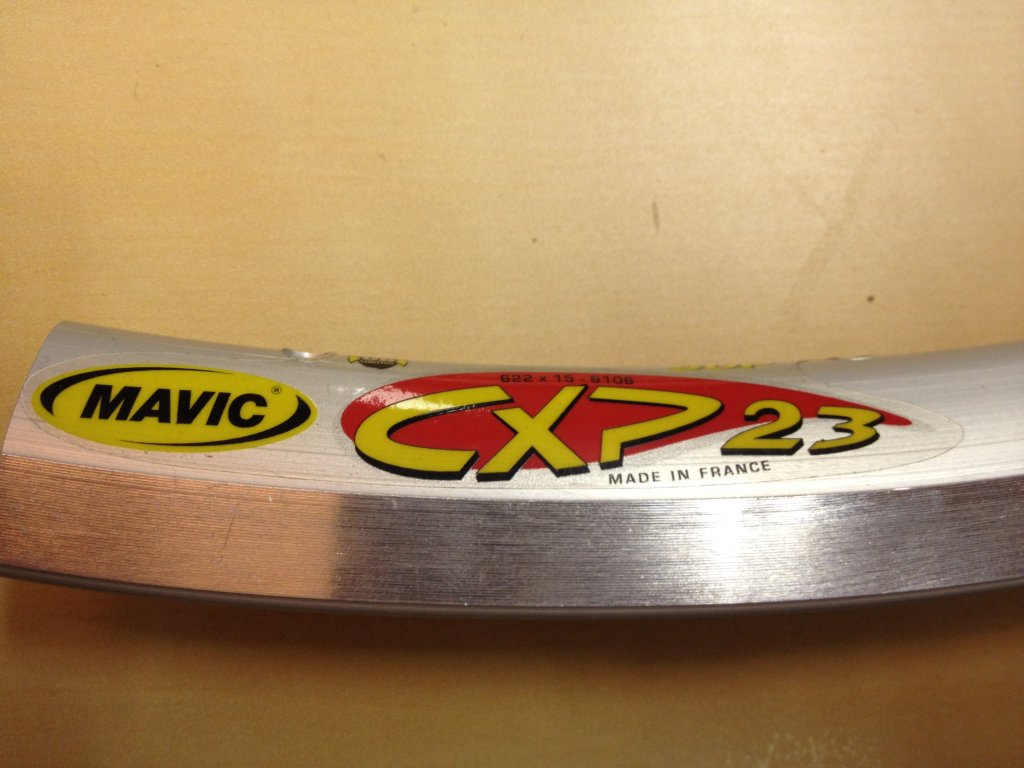
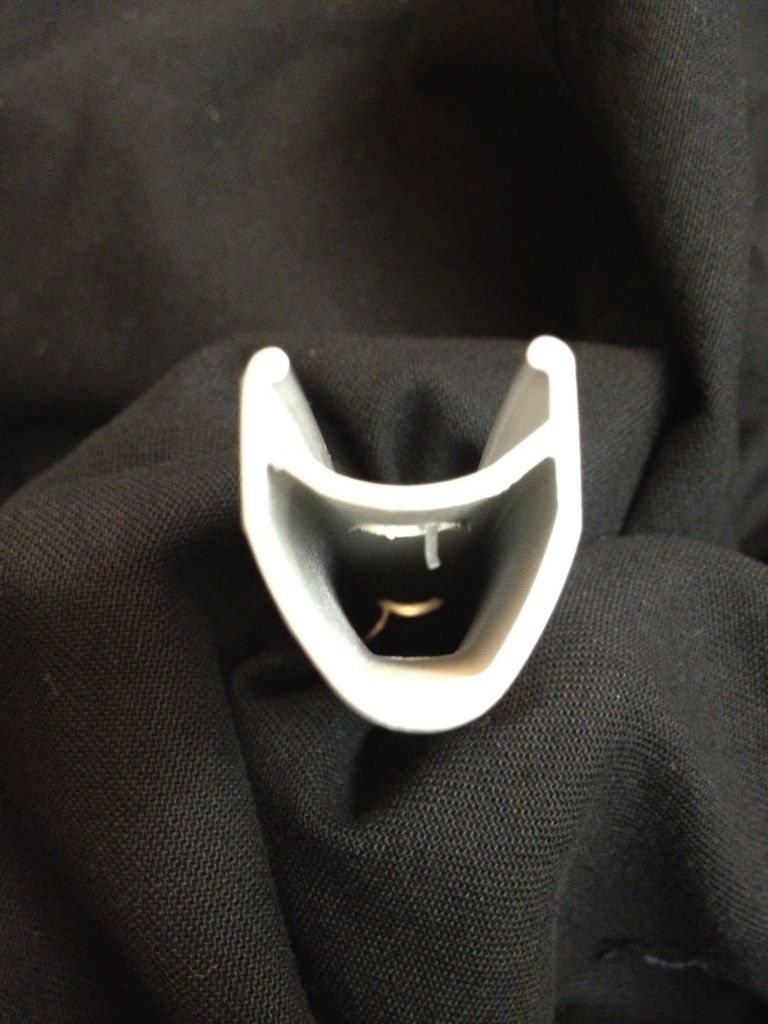
The CXP23. 19.3mm wide, 23.6mm high. Welded + machined.
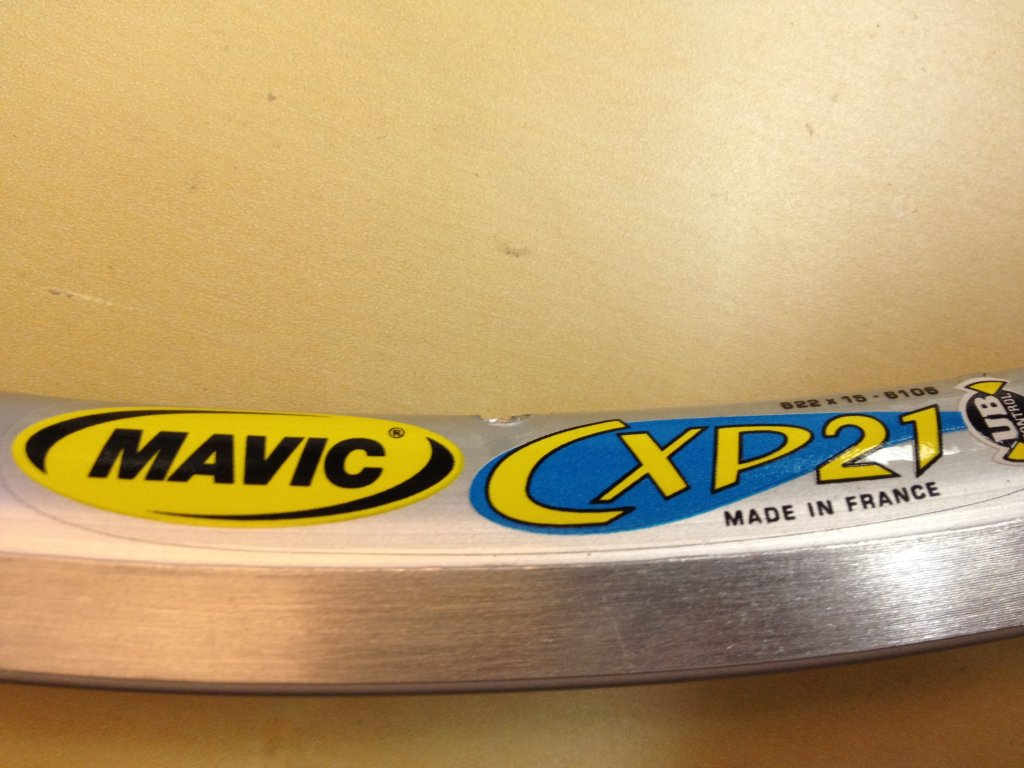
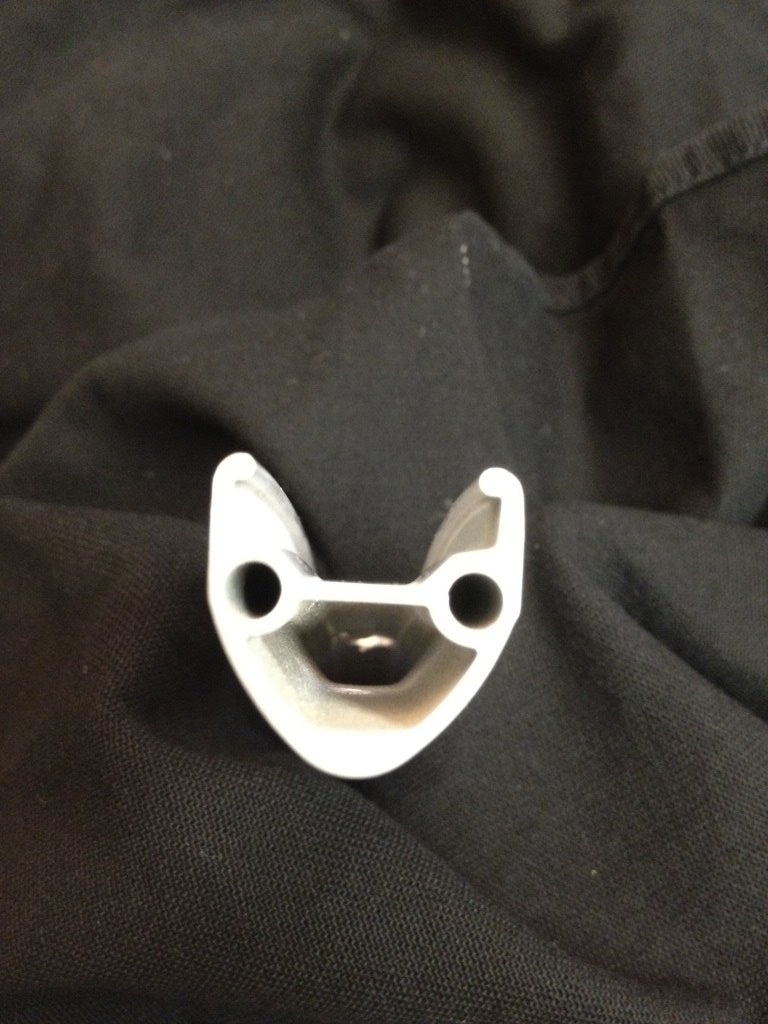
The CXP21. 20mm wide, 20mm high. Machined.
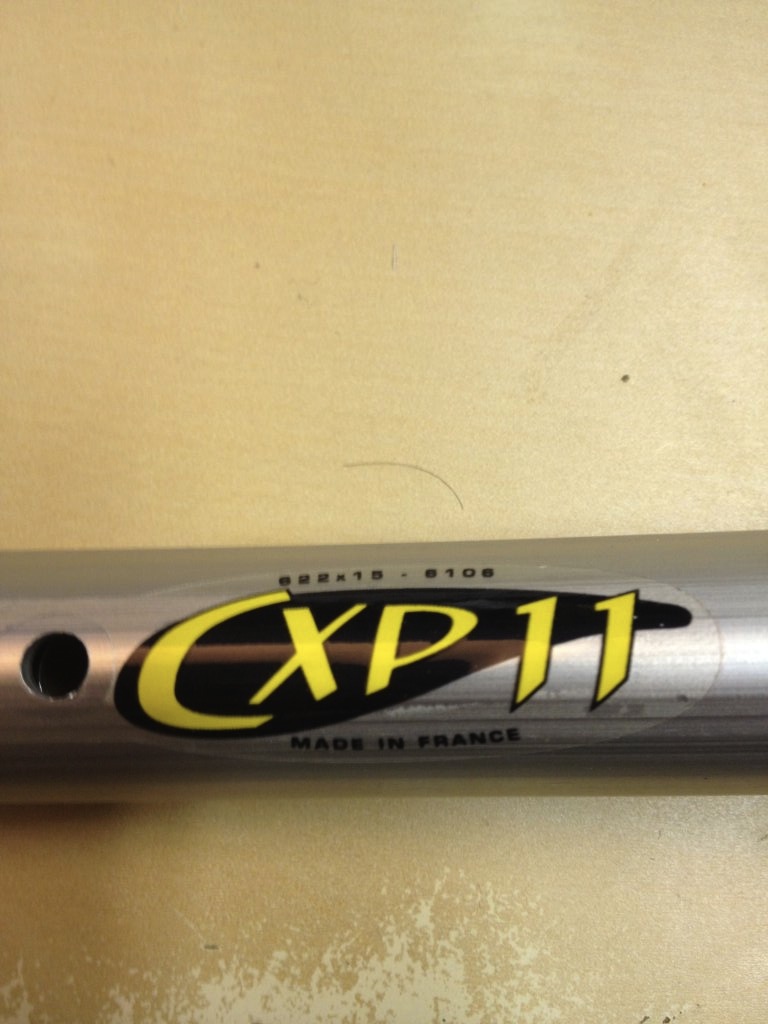
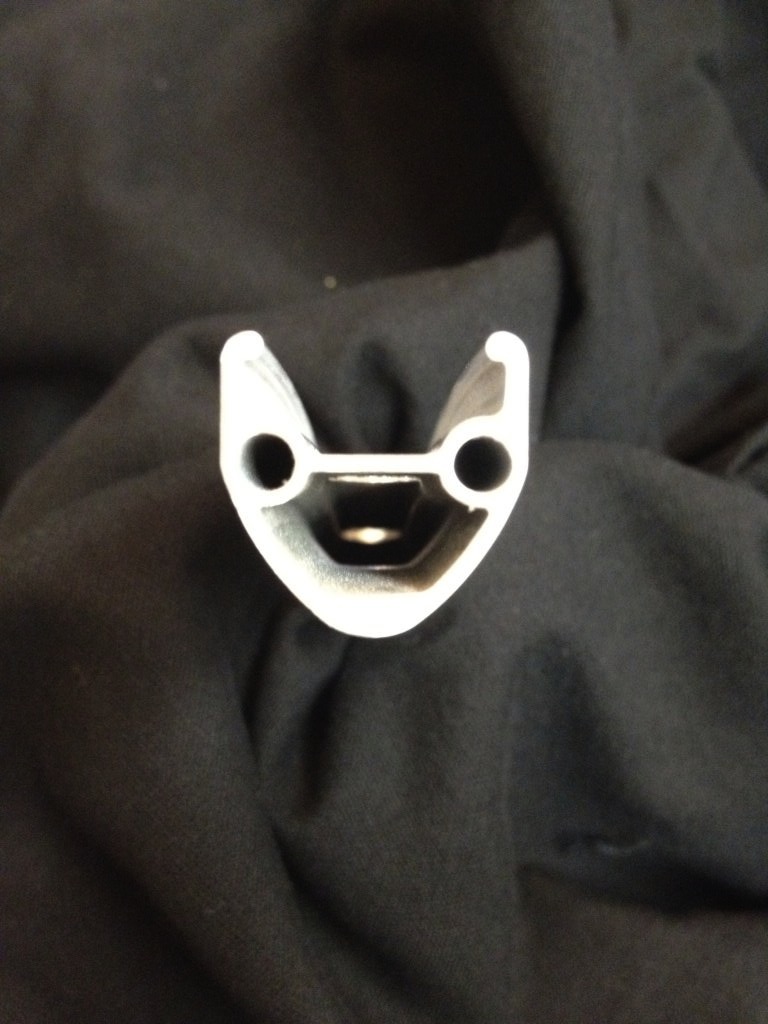
The CXP11. 20mm wide, 20mm high.

There are obviously CXP rims that came out after my catalog (and extrusion collection). I don't have extrusions for those, so for the time being, we'll all just have to consult the information available from the Mavic site. Good luck!

Thursday, November 17, 2011

'90's Pro Mavic parts you've never seen - or at least never noticed

Tour de France 1992 - On the roof-rack of the RMO team car, a mavic-equipped, "Gitane"-badged ALAN bike.
Photo by velo_denz on Flickr

The picture above comes from the 1992 Tour de France, which saw RMO's Pascal Lino spend 10 days in the Yellow Jersey before yielding to Miguel Indurain, who would go on to win his second Tour de France. Notice anything odd in a Mavic-y way?

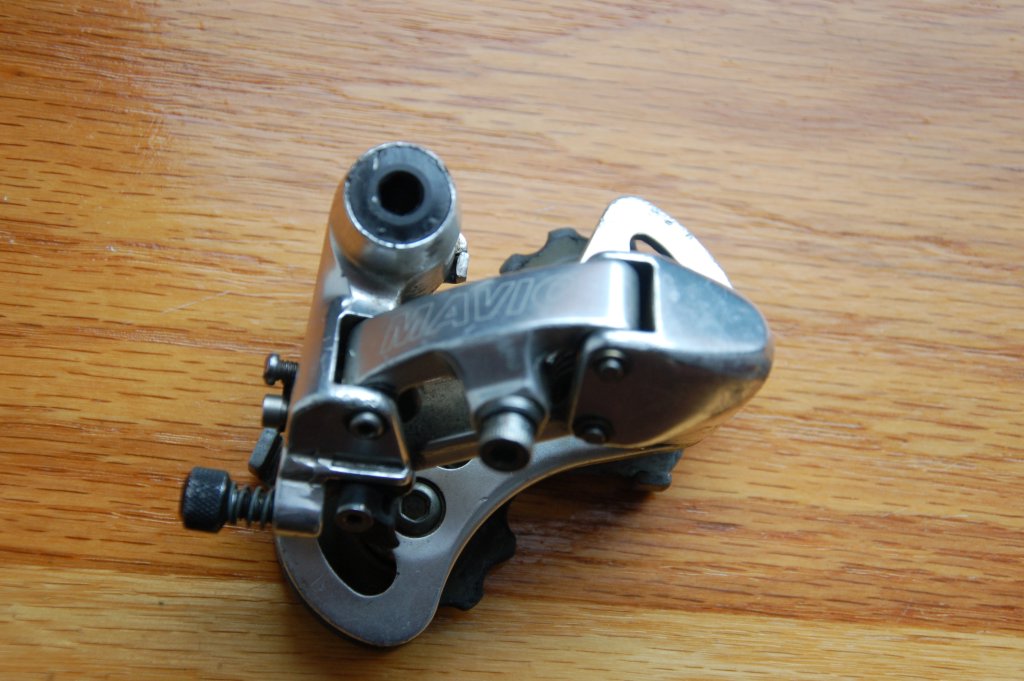
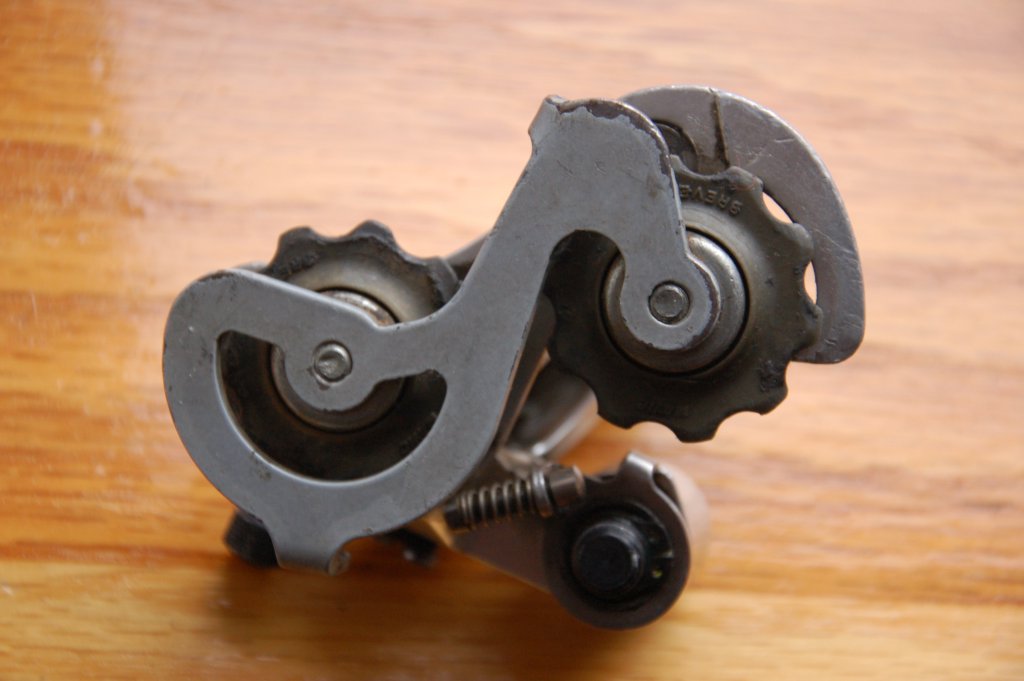
The oddity on this bike are the front and rear derailleurs. While they look largely like the "normal" 840 rear and 860 front derailleurs, they exhibit a number of details that aren't normal. Most obvious is the lack of black anodization. The derailleurs on the RMO bike are silver - probably clear anodized. The rear derailleur also features a number of cutouts on both the front AND back of the pulley cages, likely to reduce the weight of a derailleur that was heavier than the comparable offerings from Shimano and Campagnolo at that time.

I mentioned the backside is cutout, right?

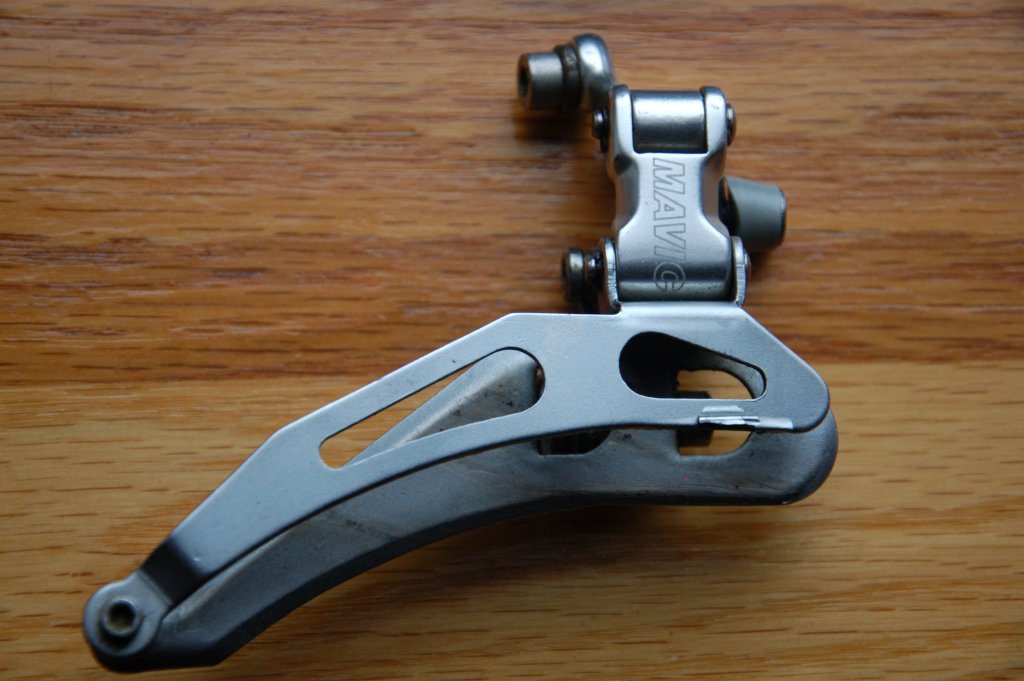
And before you go thinking the front is just a standard 810 derailleur, it's not - beside the fact they were no longer available by the late 80's, they also didn't have the Mavic logo etched in them.

These derailleurs came to me via Spain. I believe they were from an Once team bike belonging to pro Anselmo Fuerte. In the early 90's Once was sponsored by, and rode full groups from, Mavic. As far as I know, these derailleurs were never made available to the public. In 1992, Mavic was debuting the Zap system with select pro teams, and I suspect largely considered the 840/841 a product they would be able to phase out when the entire world went to their electric shifting system. That didn't happen, and the mechanical rear derailleurs continued to be available for several years, albeit in their original black anodized/cutout free form. These silver ones disappeared almost immediately from the pro ranks, as teams either switched to Zap, or switched to cobbled together drivetrains - witness Gan's Mavic/Campagnolo drivetrain from 1994.

I've known about these silver derailleurs for a few years now, but this is the first set I've seen. Anyone hiding additional sets in their spares box should feel free to contact me! :)

Monday, October 24, 2011

From the land of misfit Mavic toys...

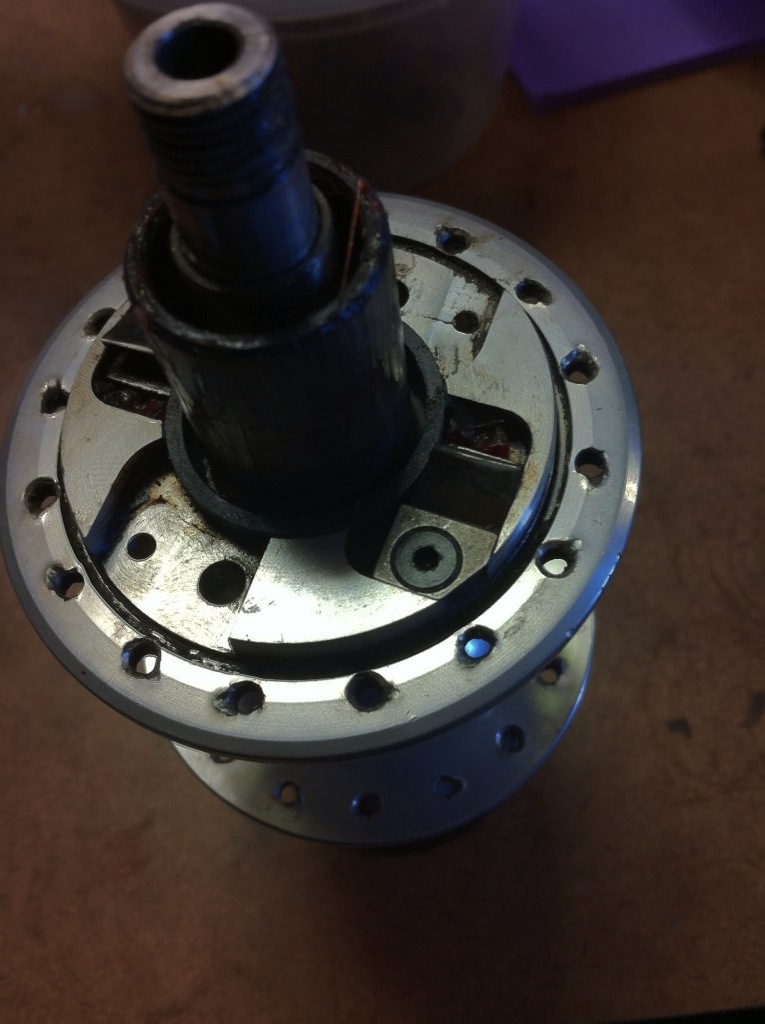
As far as I know this doesn't really exist.

4 pawl 571 cassette rear hub. It's labeled as a 571, not 571/2. Someone's aftermarket modification? The machining quality is very high, so that seems unlikely. An experiment by Mavic at increasing the number of pawls? Beats me. Anyone seen one before?

More oddball Mavic stuff that doesn't exist coming shortly...

Wednesday, October 19, 2011

Mavic Technical Manual Update!


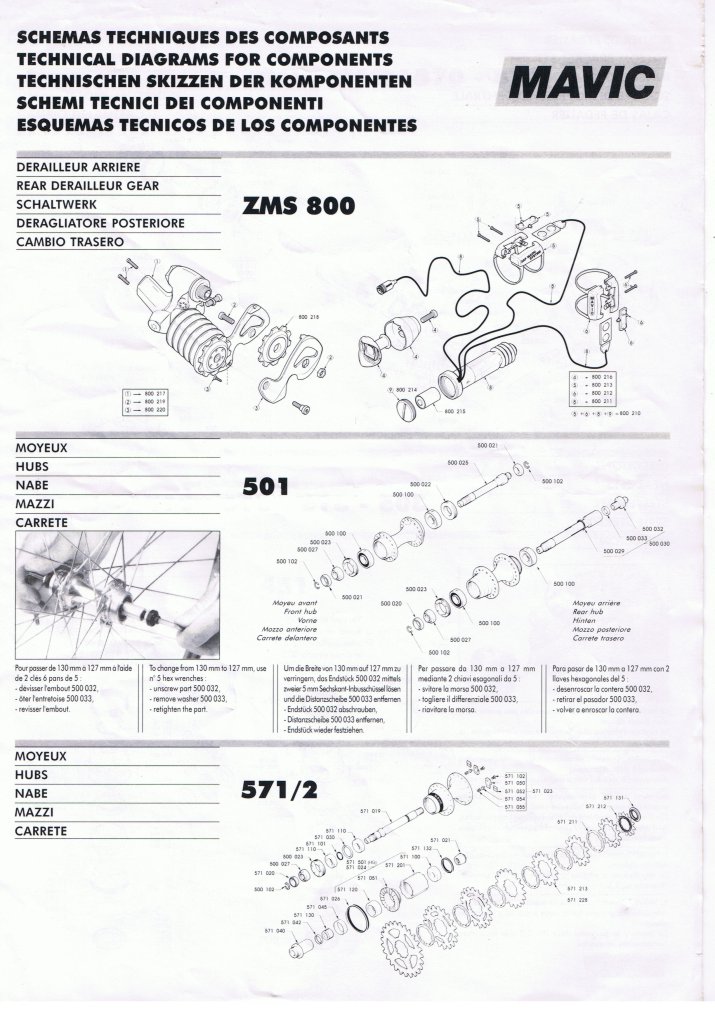
Came across a later version of the Mavic technical manual recently, so I figured I owed it to whatever readers I still have to publish the differences. This manual was from 1991 or later, and added 451 brakes, 501/531 hubs, and the 571/577 cassette hubs. You can find scans here. Enjoy!

Thursday, June 16, 2011

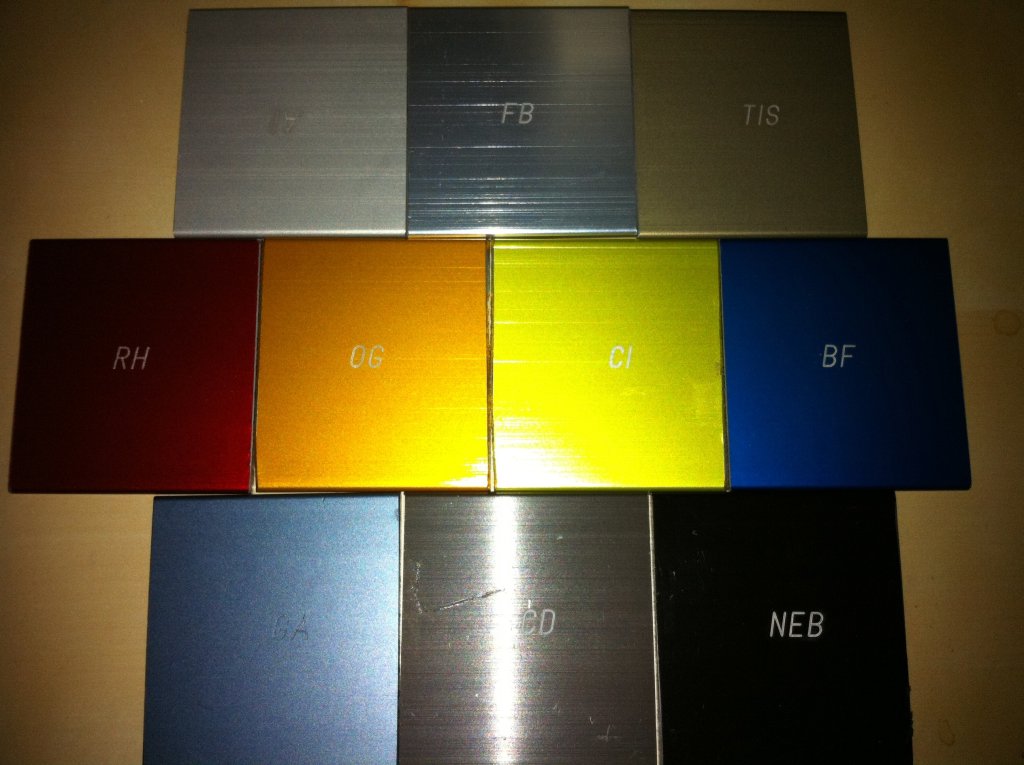
Mid 90's Mavic Rim Finishes

These days, rims come in every color under the sun. That hasn't always been the case - at least, not in a non-bmx rim. In the mid 90's, Mavic started offering their rims in a pretty wide range of colors.

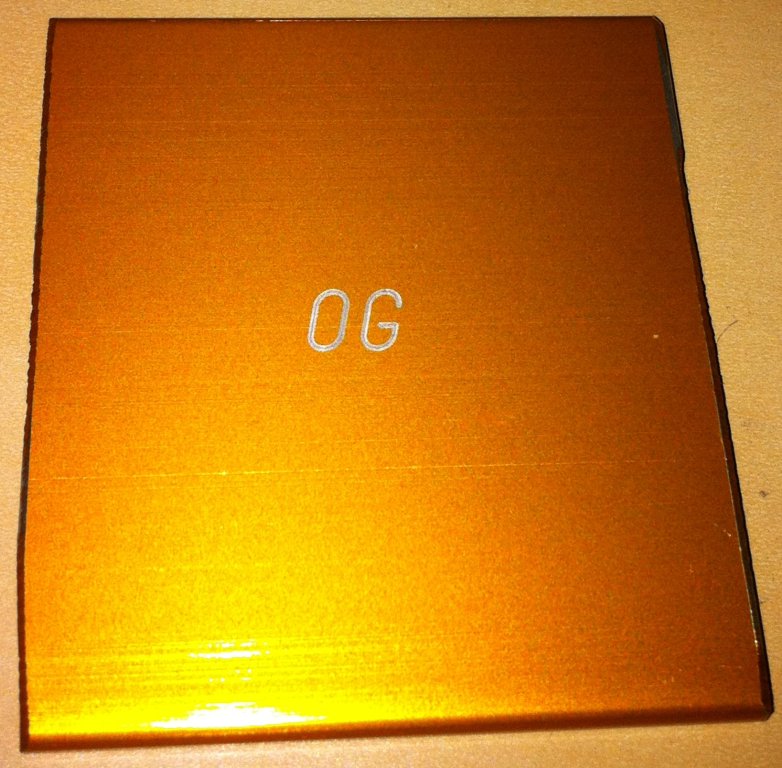
In order from top, left to right, Mavic called the colors Silver, Flash Brilliant, Titanium (or Titane), Red, Orange, Citron, Cosmic Blue, Steel Grey, Couche Dure (hard anodized) and Black.

OG indeed.


Who wants to see some rim extrusions?

Tuesday, January 04, 2011

Connie Paraskevin Young Merckx Pista

Someone presumably doing a little serial number research sent me these pics the other day, and I thought I'd share them with all of you. It's owner, Marc St. Martin, wrote me the following about it:

I recently purchased an Eddy Merckx pista and have confirmed with Eddy Merckx cycles (through Gitabike) that it was built in 1987 for Connie Paraskevin Young. I suspect it was used by her in the 1987 UCI Track Worlds in Austria. It was all white and equipped tout Mavic at that time. In 1988, Connie enlisted Keith Anderson (confirmed by Keith) to livery the bike as a Murray. It was then put into service late in 1988 for the Sundance Juice Sparkler series. It is serial #A 4694 A, Columbus SLX, 47cm.

Very cool! Enjoy the pics.

Thanks for sharing, Marc!

Thursday, December 02, 2010

Ugh I'm still here....

So I can't PROVE it, but shortly after I started going through all of my old magazines, I came down with a SERIOUSLY brutal cold/eye infection/general disgustingness. Did I, sorta like Howard Carter opening Tutankhamen's Tomb, receive the curse of every mother whose son never threw out a magazine? Perhaps some long dormant mold spore poisoning? Don't know! But I'm just about healthy, and I'll get back to my magazine project. Thanks for being patient!

Wednesday, November 17, 2010

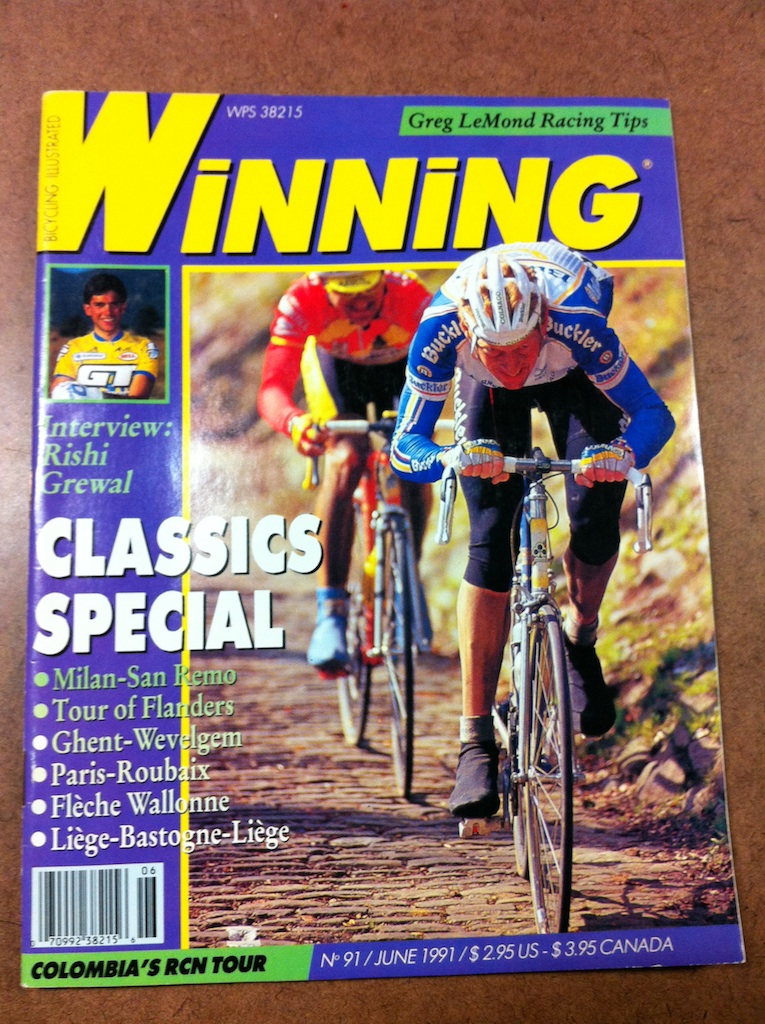
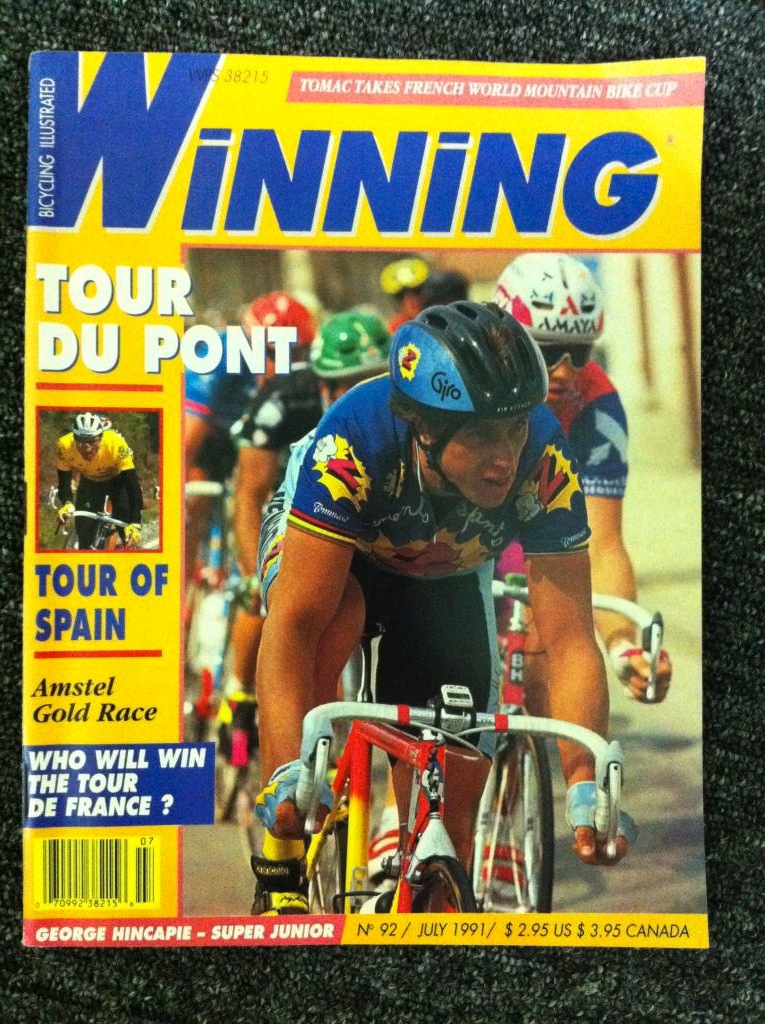
Winning - June 1991 - Issue 91

Today's reading...

Winning, June 1991. Issue 91.

Summary: Greg Lemond on climbing + descending. Davis Phinney on rites of passage. Chiapucci's Milan-San Remo Victory. 1991 Tour of Flanders/Hooydonck win. Ghent-Wevelgem sans Kemmelberg - Abdujaparov wins. Marc Madiot wins 1991 Paris-Roubaix. 1991 Fléche Wallonne - Moreno Argentin wins. 1991 Liége-Bastogne-Liége - Argentin wins. Colombia RCN Classic. Rishi Grewal Interview. What's in Store: Airwave by Profile (aero bars), Cook Bros. Cranks, Shimano PD-6402 Pedal, Cytomax Drink, Nike Cross-Terrain II shoe, Breezer Lightning MTB, Automaxi Click-On rack, Bell Scotchlite Helmet Covers

Tuesday, November 16, 2010

My new project - Winning, July 1991 - Issue 92

You may be shocked to learn that I have a pretty serious collection of magazines from the late 80's and early 90's. Its true. My name is Jeremy, and I'm a packrat.

The biggest problem with having a ton of magazines is knowing whats in them. There aren't really any online sources that'll tell you what's in the July 1991 issue of Winning, for instance. So to that end, I'm going to read a magazine a day (or at least, try to) on my travel to and from work, take a picture of the cover, and then post a quicky synopsis here. Then I'll know where to look to find pictures of a 17 year old George Hincapie if I ever need them, and you'll know what issue to bug me about if you want info on the Tour du Pont 1991.

Winning, July 1991. Issue 92

Summary: Greg Lemond on going for Number 4 TdF win. Davis Phinney on sprinting techniques. 1991 Tour of Spain/Vuelta a España. 1991 Tour du Pont. 1991 TdF Contenders. Johan Bruyneel profile. Frans Maassen wins Amstel Gold. ONCE profile. Jim Gentes on the Giro helmet and rider helmet strike. George Hincapie as a Junior profile. US to MTB World Cup. What's In Store: Ciclomaster CM 37, Titan Titanium Gel Saddle, Time Apres-Velo Socks, Blackburn MTN P90+ saddle bag, Trek 8700 Composite ATB, Scott Unishocks, Zefal Double Shot 100 Pump.

Tuesday, August 31, 2010

I pay attention to modern stuff too!

It's true! I like bikes and cycling of all ilk - even the racing going on in 2010. I've been contributing here and there to Pavé blog, where Whit Yost has been nice enough to let me play armchair directeur sportif on more modern topics than I normally cover here. My most recent post is on Garmin's Transitions, and what a merger with Cervélo might mean to them. Check it out!

Tuesday, August 24, 2010

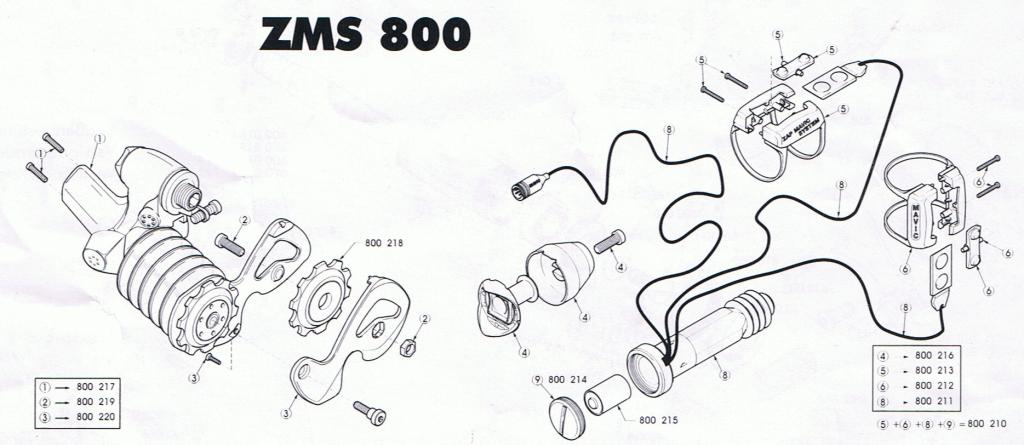
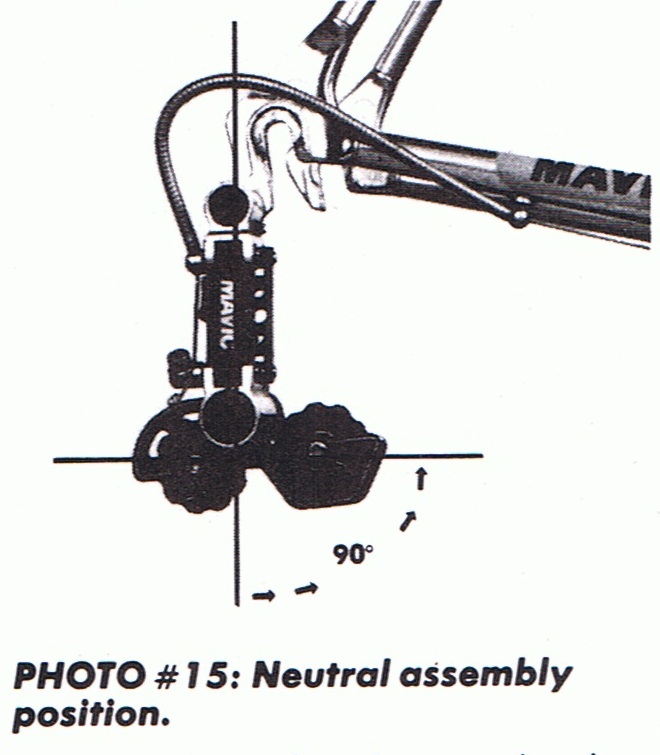
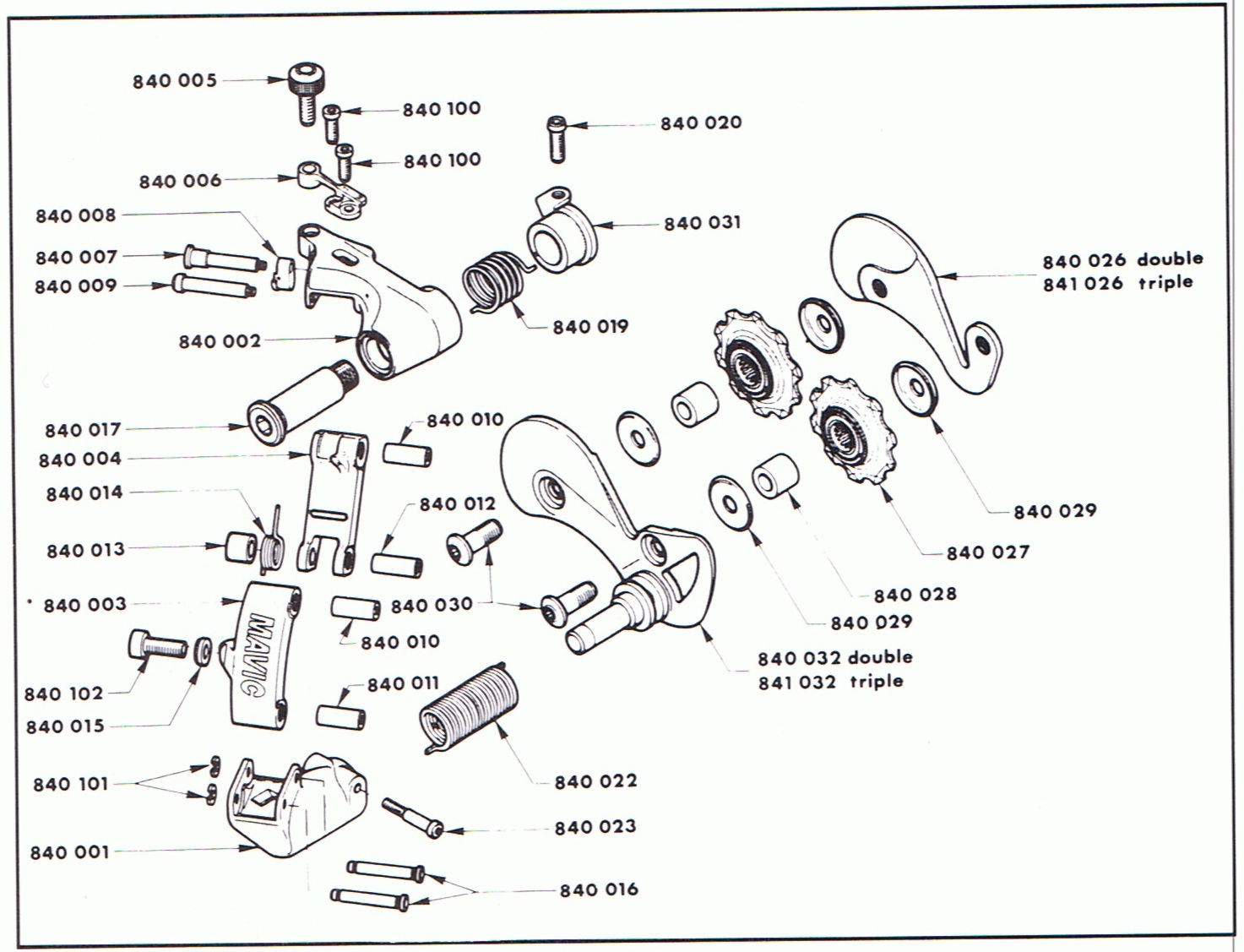
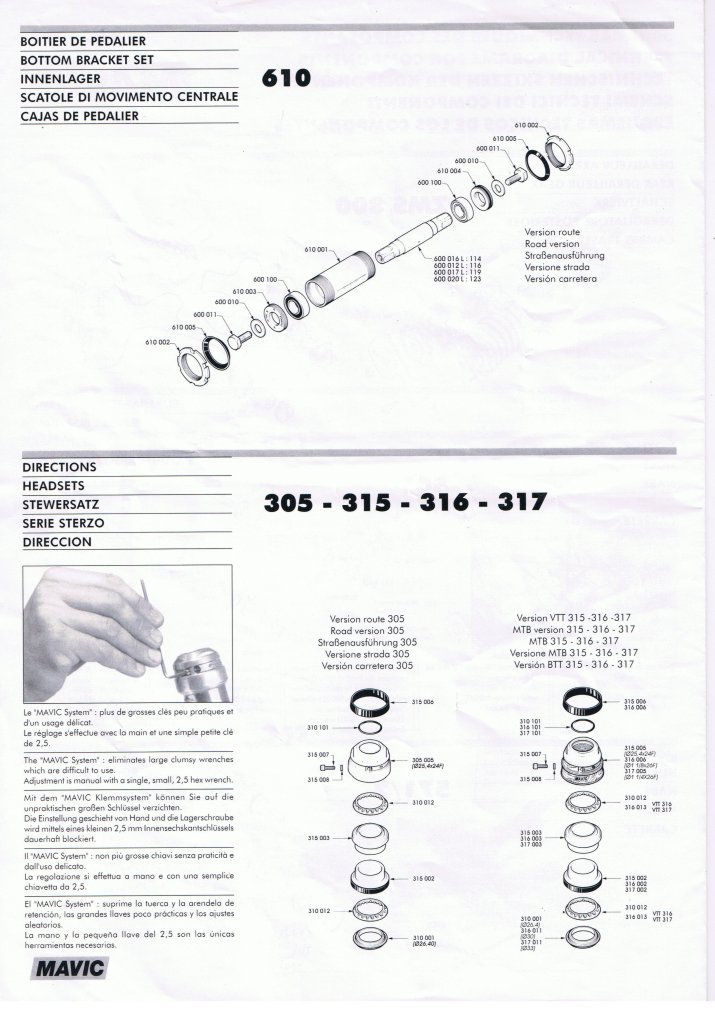
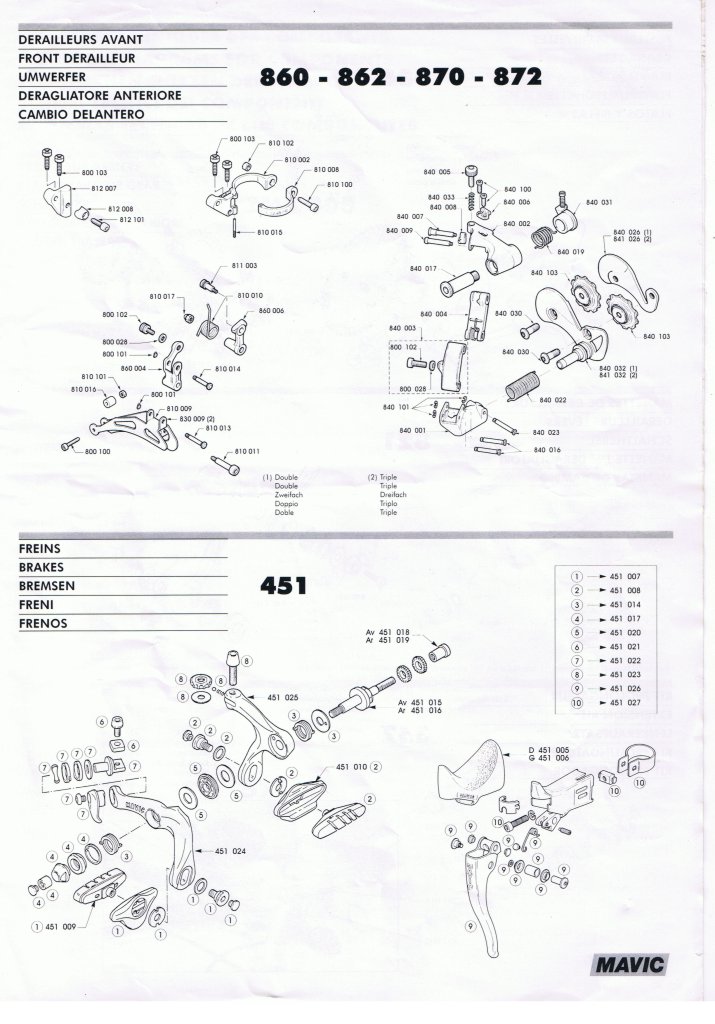
Mavic Tech Manuals

I recently came upon a couple of different caches of Mavic literature. Original marketing or technical materials are invaluable resources. Unfortunately, a lot of people agree, and pay absolutely ridiculous prices for them on eBay. That's fine for the collector, but what about the guy who just wants to know how to work on their 851 derailleur?


Or 840/841 derailleur?


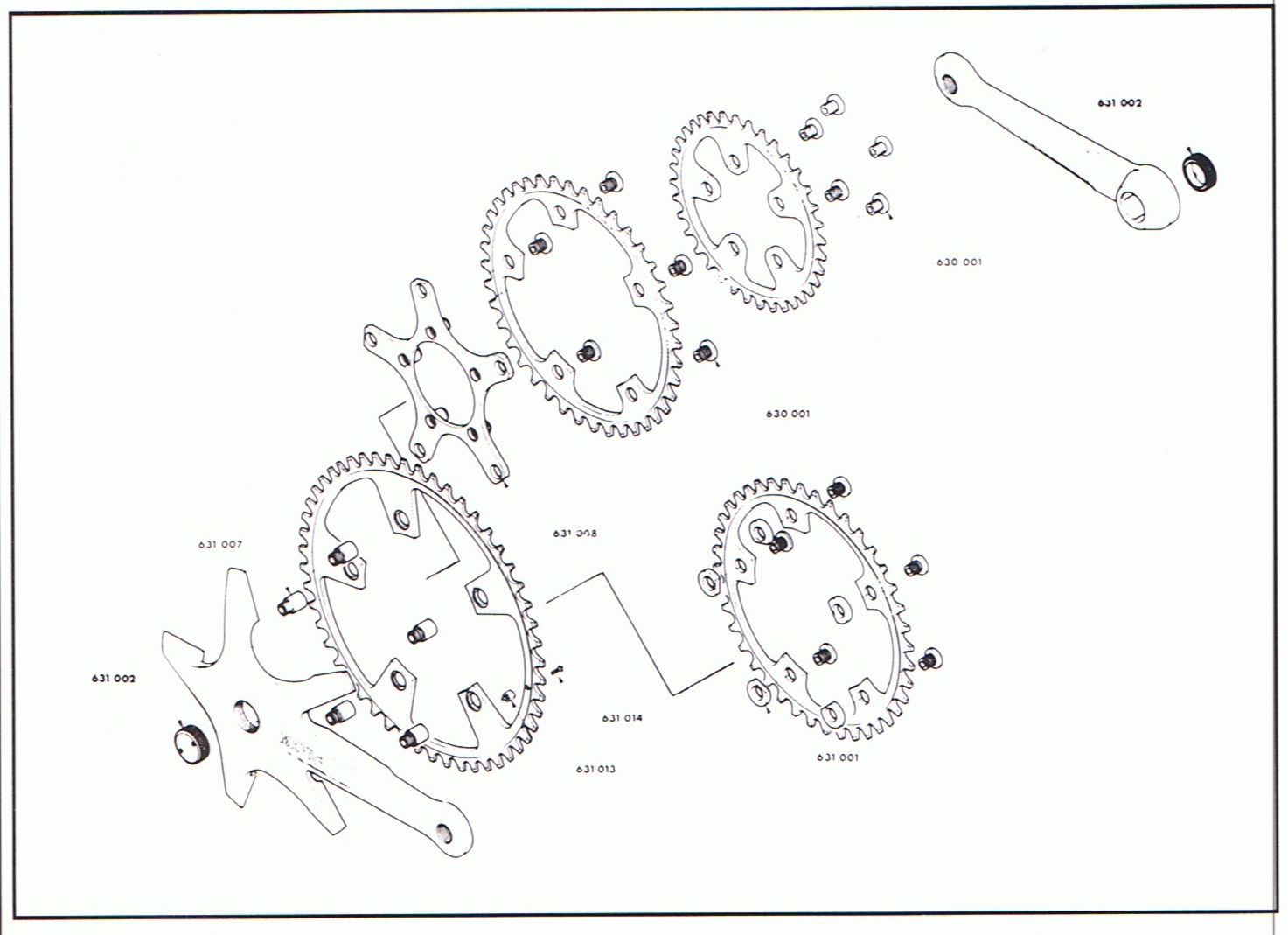
Or convert their 631 double crank in to a single? What about that guy?

Don't worry, 305, 315, 316, 317 headsets, 500, 510 and 550 RD hubs, 610 and 616 bottom brackets, 637 crank, 646 pedals, 820 and 821 shifters, 845 and 801 derailleurs, we remember you too.

Here's the 89/90ish technical manual. I'll post the later 1995ish technical diagram update tomorrow - that'll get the 571/2 hubs, 631/2 cranks, and a scad of other items in to the mix as well.

Now go forth and fix your Mavic stuff! If you promise to stop making up random numbers for Mavic components, I might even post more! And if you're sitting on resources that aren't already scanned, scan 'em. If you need help, let me know.

Thursday, July 22, 2010

Birth of a rim

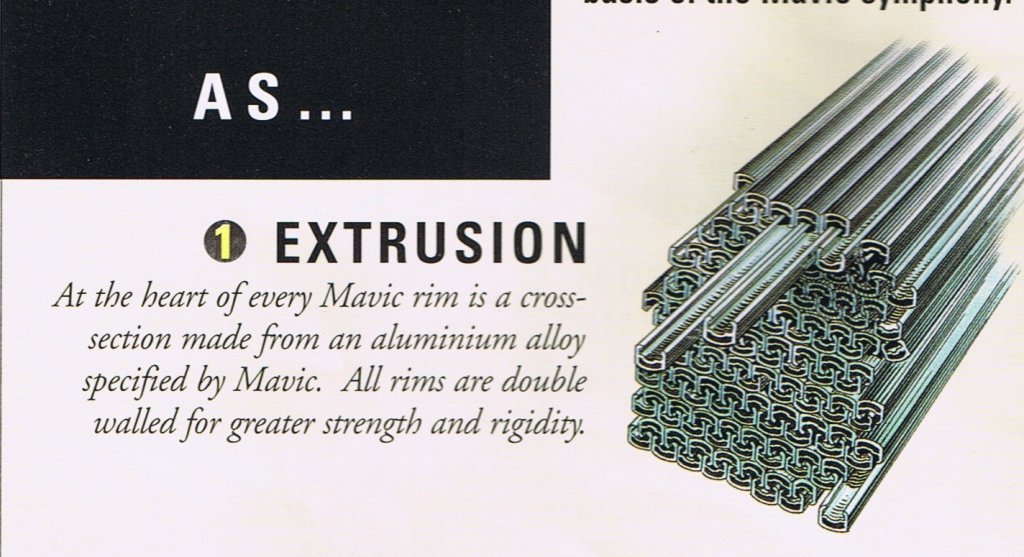
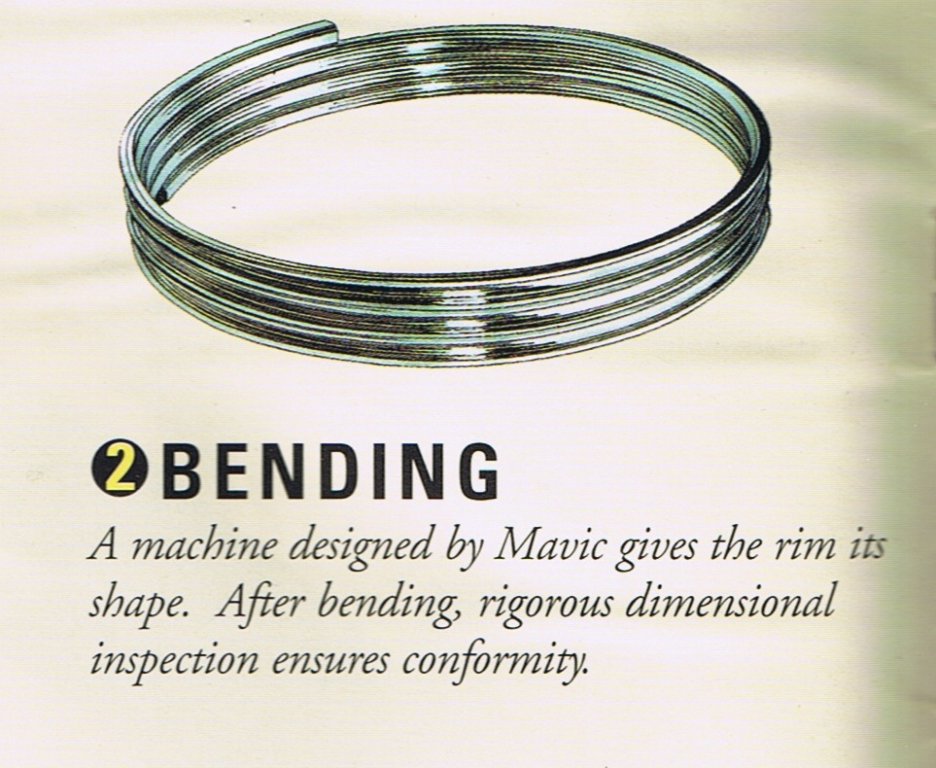
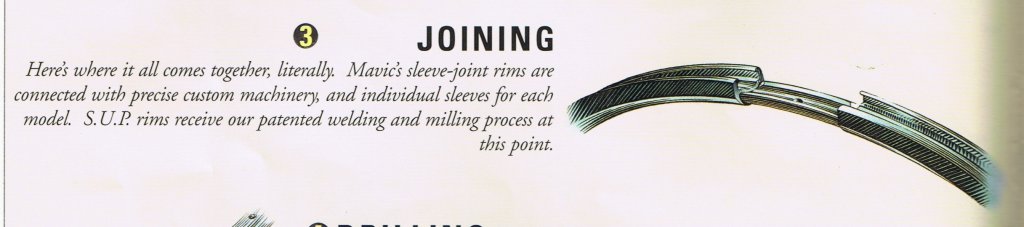
Ever wondered how aluminum rims are made? No? Too bad! Here's how it happens, with diagrams from the 1996 Mavic Rim catalog.


Step 1! Procure aluminum extrusion based on your rim profile. These come as straight sections, extruded via a die in to the desired shape.


Step 2! Coil the extrusions in to a continuous, spring-shaped loop of the right size. A straight line is then cut across the coil.


Step 3! Join the two ends together, forming a hoop. Some rims have an aluminum or plastic insert here to hold the shape. At this point, some rims are also welded.


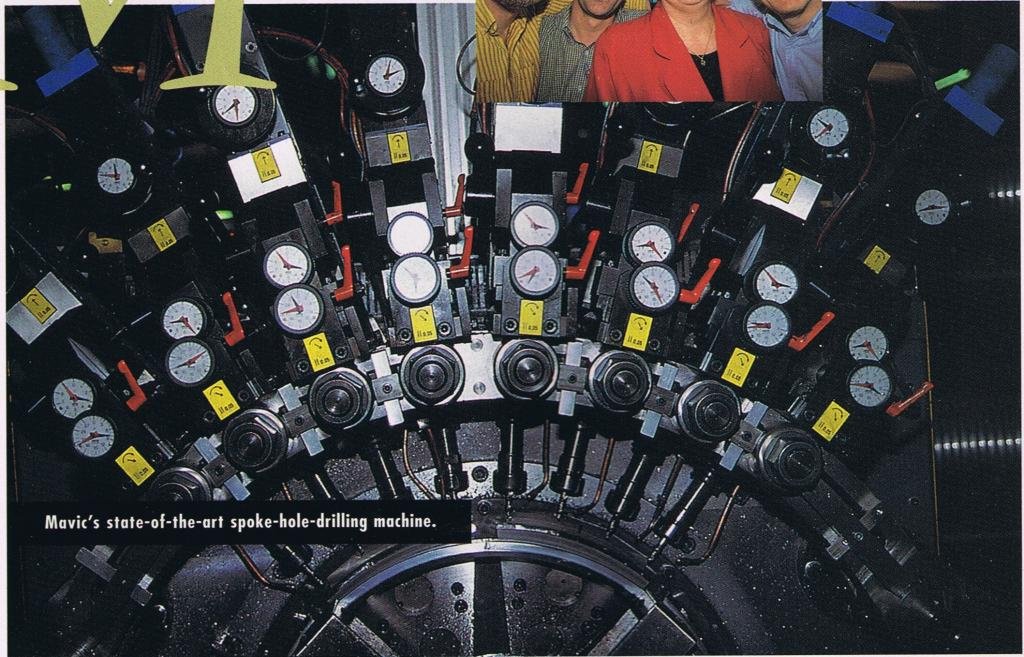
Step 4! Drilling the rim. This is done using a re-targetable, computer controlled drilling system.


Here's the drilling system Mavic was employing in the 1996 time frame. I doubt much, if anything, has changed.


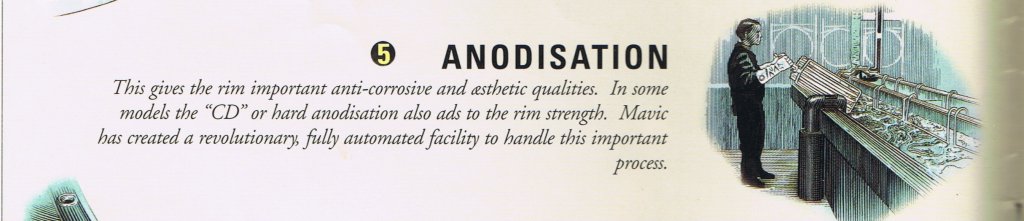
Step 5! Anodize. At least, this is where you anodize if the rim is. This is where another manufacturer's rim is painting or powdercoated. Machining of a brake track is probably also done here.


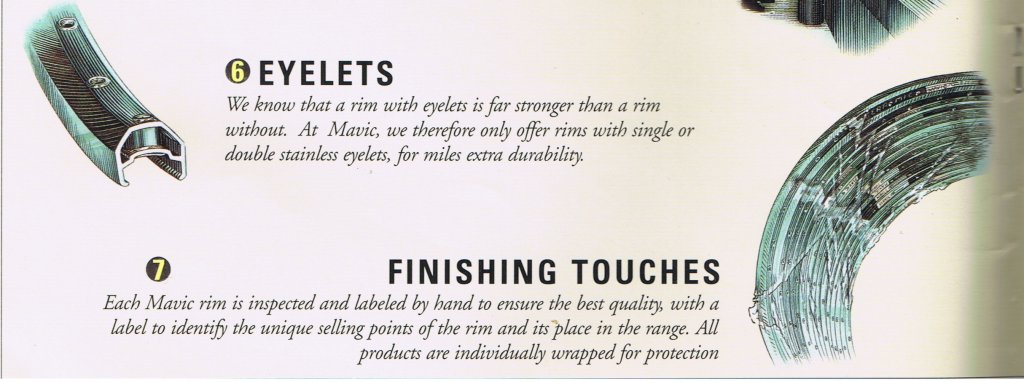
Step 6! Eyeletting! Again, if your rim has eyelets. No eyelets, no eyletting. At this point, any finishing touches are applied, like decals, inspection is performed (hopefully) and the rim is wrapped and ready to head out.

Carbon rims are obviously an entirely different process. I have some memory of a video that documented how they were made. Anyone have a link?

Wednesday, July 21, 2010

Practice makes perfe...pass the Doritos

Back in 2002, back in the dark ages before the waiting lists and hundreds of people clamoring to get in, I went to UBI to try my hand at frame building. Schedule-wise, the class that worked best for me was the steel TIG class. It was a ton of fun, and I learned a lot, but the learning curve on TIG was pretty steep for me - I've often described it as 2 weeks of self-administered shock therapy. It's not easy!

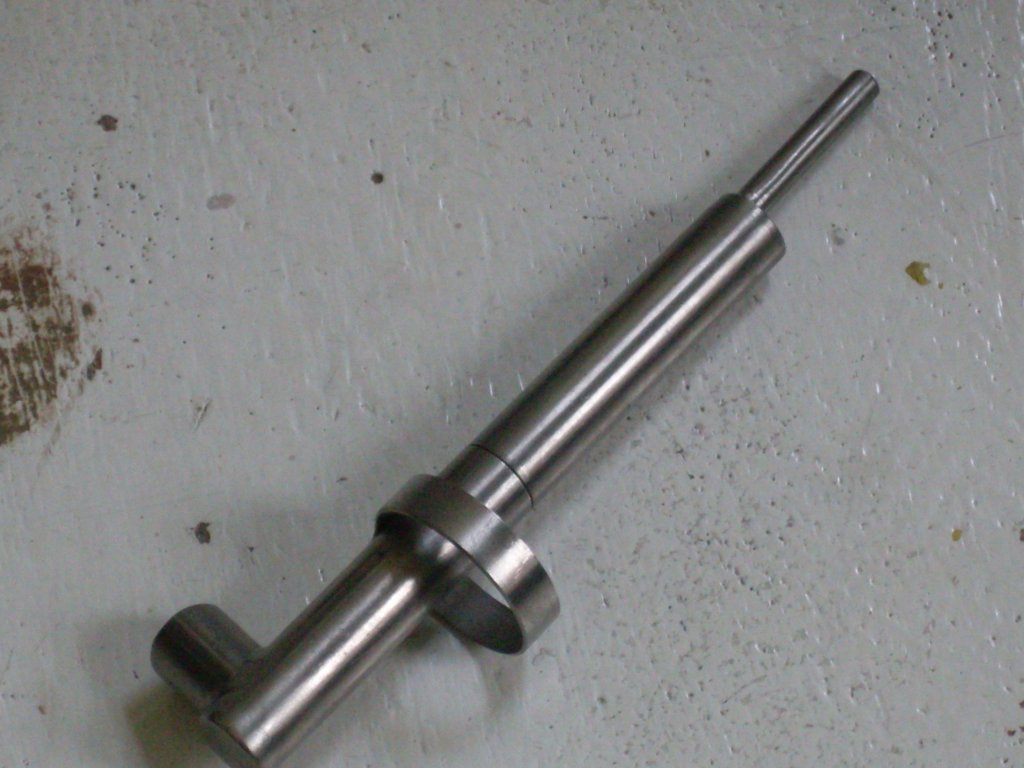
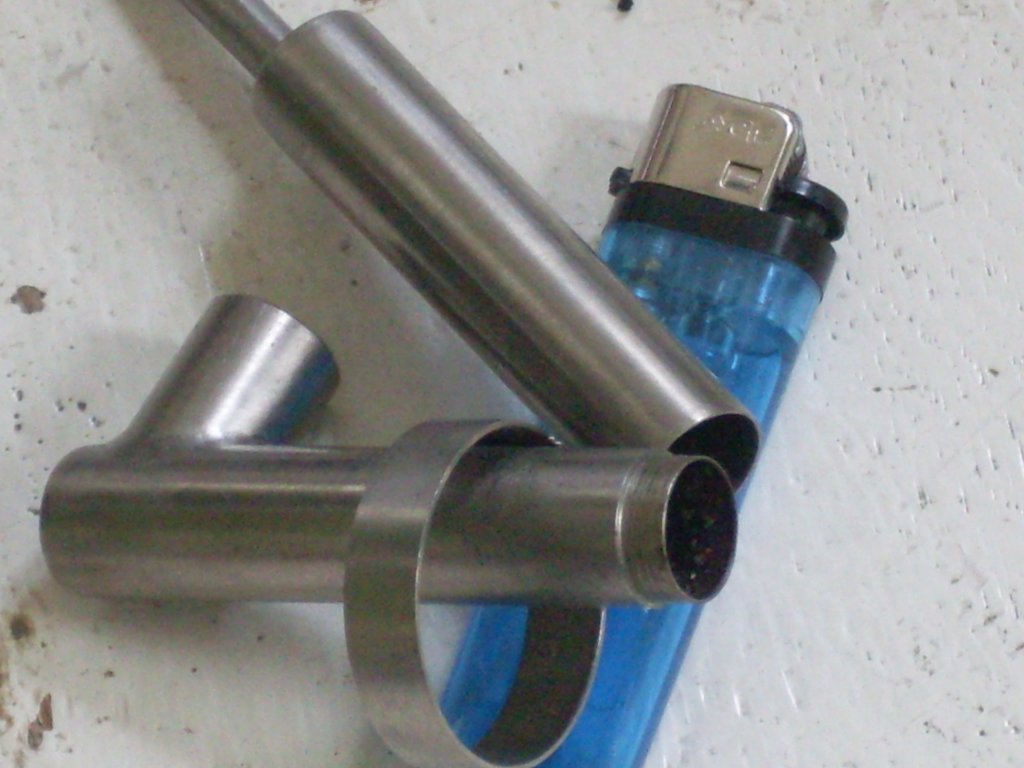
As you might guess, training people to do production welding takes some time, and teaching them to do it in titanium takes even more! Steel is pretty forgiving, but titanium is far, far less tolerant. So naturally, a largish titanium frame production line is going to have their people practice. Apparently, someone at a large Ti frame producer thought this..."air filter" made a perfect project.

As a practice project, it's got it all - mitered joints, tight radius welds, and milled-down tubing. It's owner tells me it has one fatal flaw as an "air filter" - you can't put it down without it tipping over, due to where the holding ring is welded. Bike frame design has been thoroughly refined over the last 100+ years, but every once in a while, someone tries something new that ends up not working as well as the classic triangle frame. Guess the same thing applies to the "air filter".

Any guesses as to what frame manufacturer this came from?

Friday, June 18, 2010

Revolution? If you say so...

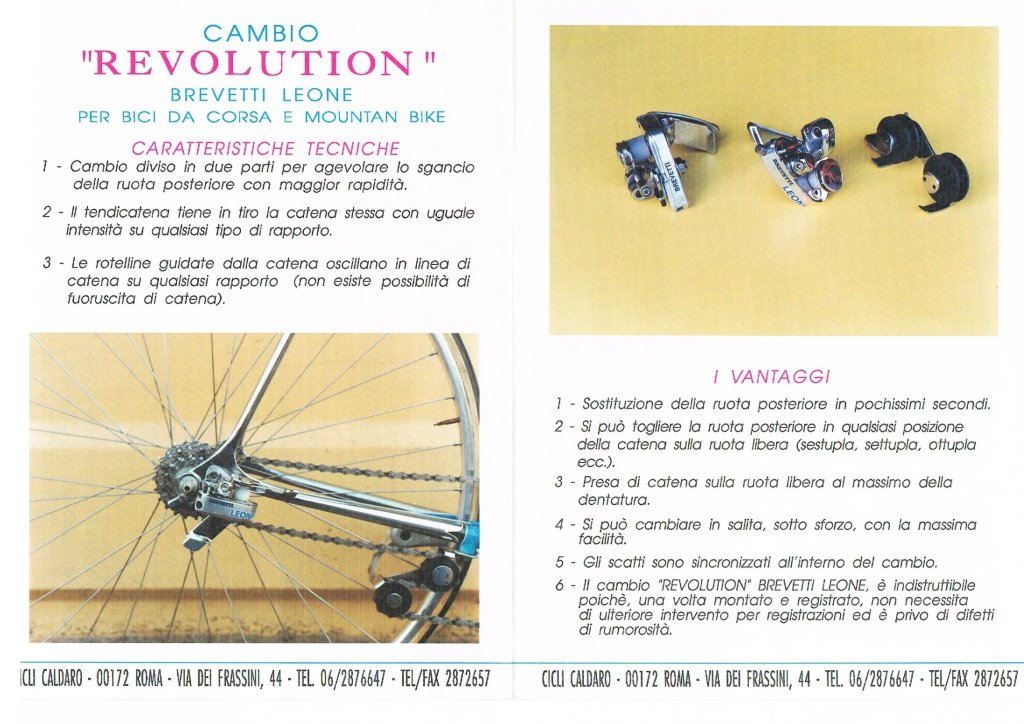
Harry just gave me a few more old magazines and catalogs - I guess after 15 years they stopped being interesting bathroom reading for him. Anyhow, this little pamphlet caught my eye. Early 90's, probably around 1991 or 1992 based on the materials it came with.

A new, totally Italian patent derailleur!

I can only assume this was one Italian bike shop's response to the adoption of the formerly Suntour patented slant parallelogram by Campagnolo. That the revolution came in something that clearly owes much to the Vittoria, Oscar Egg and Simplex derailleurs of the 1930's and 1940's, I can't explain. I've never heard of this derailleur before, never seen one, and would be more than a little surprised if they were ever really available. Does anyone know anything beyond whats in the booklet?

Monday, May 24, 2010

Mavic Paris-Roubaix SSC rims - not IMPOSSIBLE to find...


Just really hard to find, and doubly so at a reasonable price. A pair of new-old-stock rims seems to sell for approximately $500US - excessive to say the least.


Paris-Roubaix's are tough-as-nails rims, made to get down and dirty in the spring classics. They're made to be ridden, not hung on a wall and admired, so I was quite happy to find this gently used set, formerly the property of a Dutch rider from the Agu-Abus-Koga-Cordo team. Patience and careful watching let me pick up them for a fraction of the price of NOS - laced to a really nice set of Shimano Dura Ace 7403 hubs. They'll be relaced to a set of Mavic 571/2 hubs sometime between now and April, 2011 - at which point they'll revisit their cobbled past.

Thursday, May 20, 2010

Mavic 631 v. 631/2

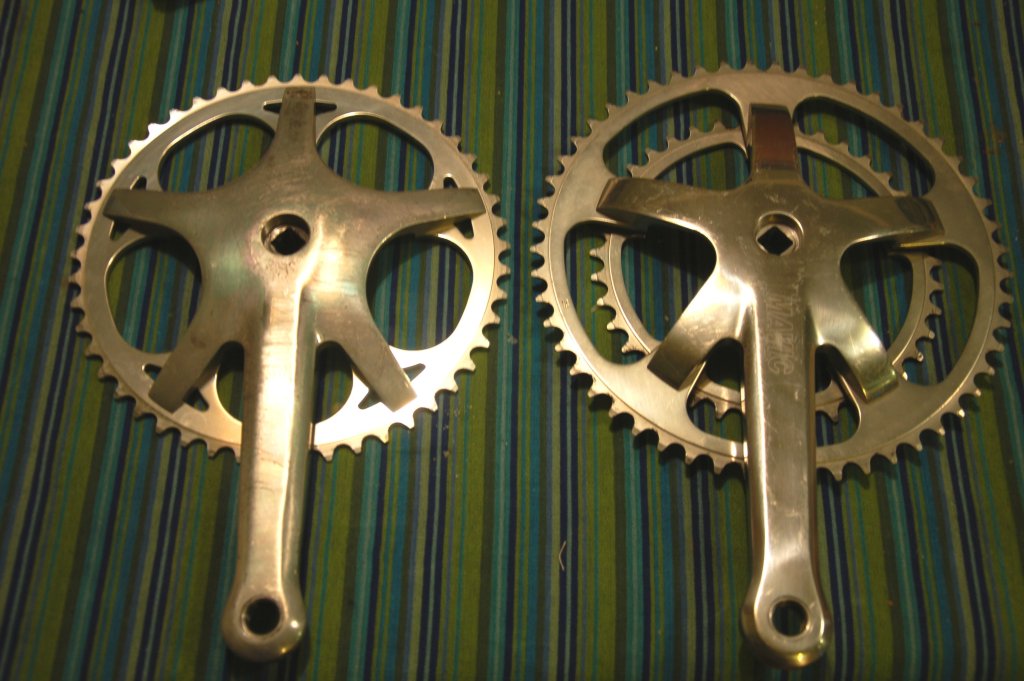
Not entirely sure what the difference between a Mavic 631 and a 631/2 is? Here are some pics that'll make the difference abundantly clear.


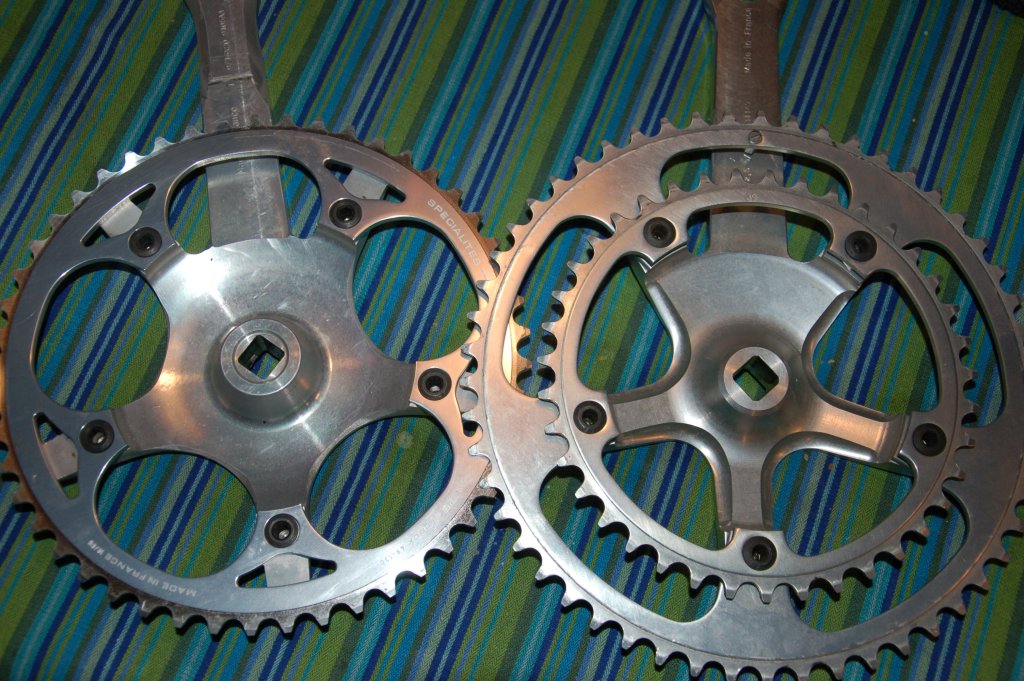
On the left, a 631. On the right, a 631/2. Most of the differences are pretty plain to see. The spider of the 631 narrows gracefully as it reaches its ends. The 631/2's spider largely stays consistent in width. The spider is a little shorter and stockier than the 631, which allows it to run a smaller chainring in the outermost position - down to a 42 I believe.

The crank arm itself is less rounded on the 631/2 as well. It's middle flat section is slightly wider.


The backside. The spider has much less material on the 631/2, with relief work evident on the backside. At the very top of the picture, you may also notice that the 631 has some material taken off the edges of the crank arm, while the 631/2 does not. There's also some material removed on the 631 around the spindle interface, while the 631/2 has none removed.

The 631/2 is quite a bit lighter than the 631 - though it's hardly a lightweight. This can probably be attributed to the shortening and relief work done to the spider.

Friday, May 14, 2010

Brooklyn Bike Jumble This Sunday!@#

The 2nd Annual Brooklyn Bike Jumble is going down this Sunday, 5/16/2010 at JJ Byrne Park at 4th St. + 5th Avenue in - you guessed it, Brooklyn, NY. I'll be there selling some cool items, including all sorts of vintage jerseys, NOS Campy bits + pieces, and a smattering of other cool items. Blog readers who say "hey" may even get better prices!

While you're there, check out Harry's Coney Island Velodrome exhibit as well!

Friday, May 07, 2010

A little Lemond Catalog reading for the weekend

Greg LeMond recently re-launched his personal website. To a lot of us, Greg represents everything good about pro cycling. He was an incredible talent, making winning seem easy in his earliest years. Following his unfortunate hunting accident, he used a combination of smarts, incredible bike handing skills, and sheer will to win an additional 2 Tour de France overalls and a Worlds title, to go with his pre-accidents wins.

Greg was an unfortunate victim of the pharmacological revolution in the pro peloton in the early 90's. Where natural talent and intelligence could compete with the cortisone and amphetamine jacked pro's of the '80's, contending in the face of EPO just wasn't going to happen. Greg's been pretty vocal about it, and has gotten a lot of shit from people for speaking his mind. I've seen the guy speak. He's not some ultra-polished PR-trained robot, but a normal guy, who speaks humbly and honestly about what he saw and sees as the undoing of cycling - and does so without an ounce of bitterness. 3 time tour champ. 2 time world champ. He has nothing in the world to be bitter about.

Anyhow, go check out his site, follow him on Twitter, be his friend on Facebook. Encourage and support the guy - he's awesome.

I'm disabling comments on this post - my blog, my soapbox. But in exchange for your forced silence on this topic, here are scans of the 1992 LeMond Bicycles catalog.


The Team Z version of the carbon frames were Calfee built. Where the consumer ones?


Carbon. Calfee or not? It has the webbing we associate with them, but I don't know...


Geometry. Long top tubes was (is?) the Lemond geom


TSX and SL. The rainbow TSX frame, along with the inverted version (black top tube) is the one I always associate with Lemond.